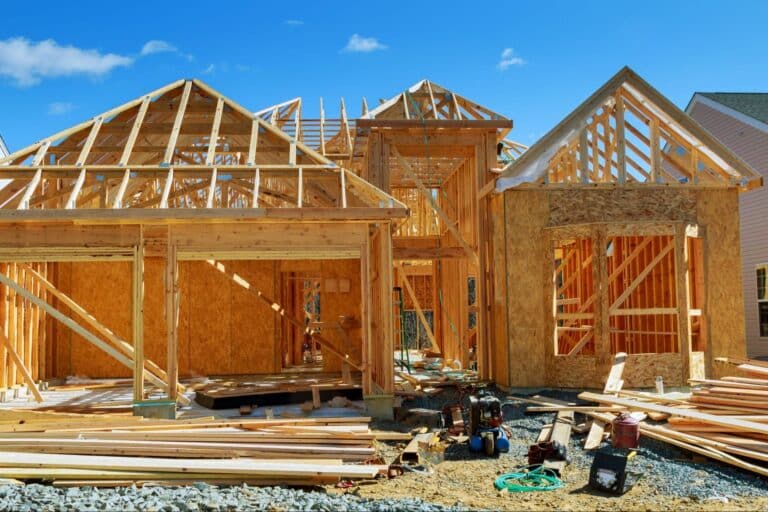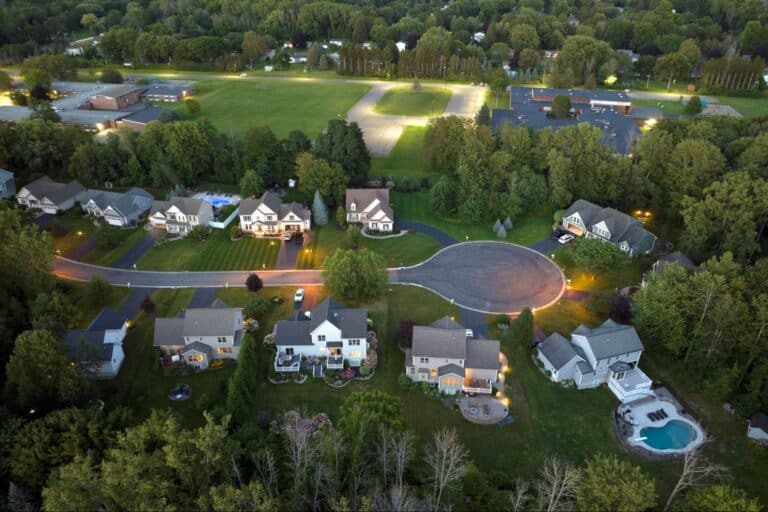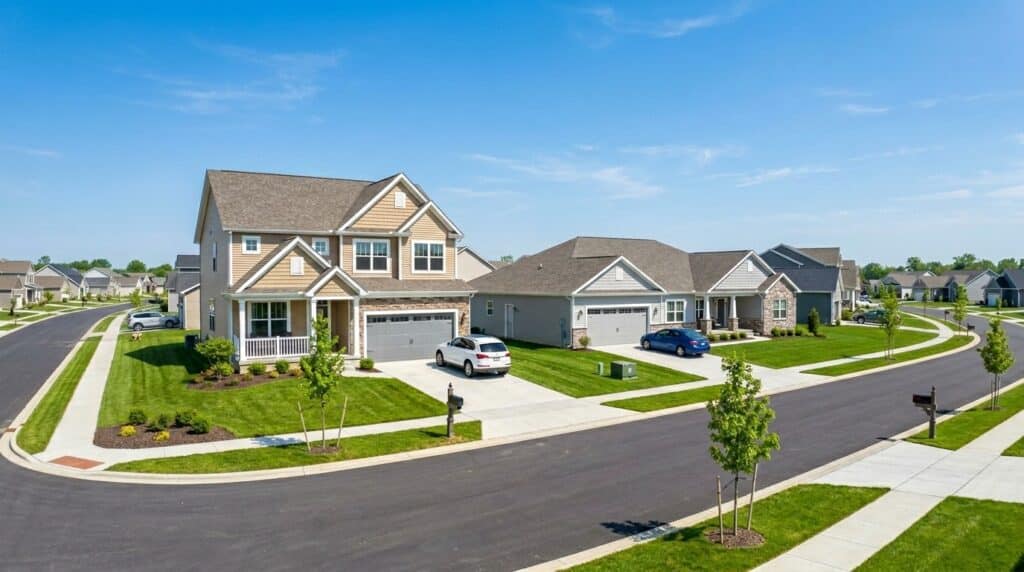
Choosing between a 1.5 story vs 2 story house (or a single-story home) comes down to three things: how much it costs to build, how you want to live in the space, and how long you plan to stay. A one-story home keeps everything on one level, a two-story home stacks living space to save on footprint, and a 1.5-story home blends the two with main-floor living plus finished space upstairs. Here is how the three compare on cost, layout, energy use, and aging in place, with the numbers Indiana buyers actually need.
Key Takeaways
- A two-story home is usually the most economical to build per square foot, because the foundation and roof (two of the most expensive systems) are spread across more living space.
- A one-story home typically costs the most per square foot, since the same roof and foundation cover only a single level of living area.
- In Indiana’s census region, the median custom home cost about $186 per square foot in 2024, above the national custom median of $166 per square foot.
- A 1.5-story or one-story home with a main-floor primary suite is the strongest choice for aging in place, which matters to the 75% of adults 50 and older who want to stay in their current home as they age.
- Cost per square foot is only part of the picture. Total package cost, including site work, financing, and what is bundled into the build, often matters more.
- The right story count depends on your lot, your budget, and your life stage, not on which style is objectively “best.”
1-Story vs. 1.5-Story vs. 2-Story Homes: A Side-by-Side Comparison
Each home style trades cost, space, and accessibility differently. Use this comparison to see where each one wins, then read the detail in the sections below.
| Feature | 1-Story Home | 1.5-Story Home | 2-Story Home |
|---|---|---|---|
| Cost per square foot to build | Typically the highest | Varies; complex rooflines and dormers can raise it | Usually the lowest |
| Footprint and lot size | Largest footprint; needs a wider lot | Moderate footprint | Smallest footprint; fits narrower lots |
| Energy and cooling | Large roof area to heat and cool; even temperatures | Upstairs can run warm in summer | Compact envelope; upper floor traps heat in summer |
| Accessibility and aging in place | Best; everything on one level | Good when the primary suite is on the main floor | Hardest; bedrooms are up a flight of stairs |
| Best for | Empty nesters, accessibility, single-level living | Buyers who want main-floor living plus extra space upstairs | Growing families maximizing space on a smaller lot |
What Is a 1.5-Story Home?
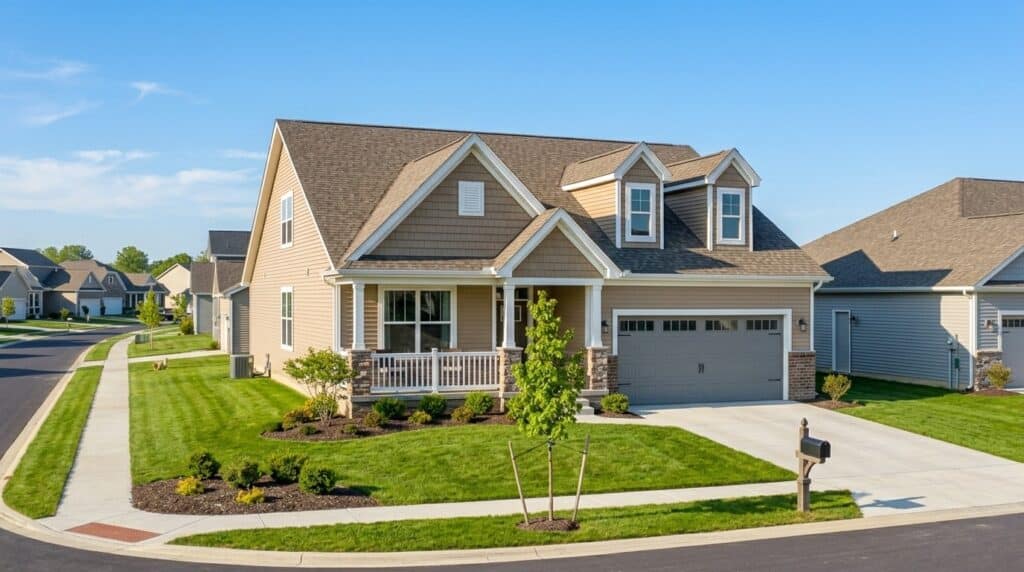
A 1.5-story home, also written as a 1 1/2 story or “story and a half” house, has a full main floor plus a smaller upper level tucked under a sloped roof, often lit by dormer windows. The main floor usually holds the primary living spaces, while the upstairs adds bedrooms, a bonus room, or storage. Many 1.5-story plans put the primary suite on the main floor, which is what makes the style popular with buyers who want single-level living without giving up extra space.
Here is how all three configurations compare at a glance:
- One-story home: All living space on a single level, with no stairs between rooms. Sometimes called a ranch-style home.
- 1.5-story home: A full main floor plus a partial upper level under the roofline, frequently with the primary bedroom downstairs.
- Two-story home: Two full levels of living space stacked on one footprint, with bedrooms typically upstairs.
Is It Cheaper to Build a 1-Story or a 2-Story House?
Per square foot, a two-story house is usually cheaper to build than a one-story house. The reason is structural: a two-story home stacks living space on a smaller foundation and under a smaller roof, so the two most expensive systems in a build cover more finished square footage. A one-story home spreads that same foundation and roof across a single level, which raises the cost per square foot.
A 1.5-story home usually lands between the two on a per-square-foot basis. The finished space under the roof costs less than a full second story, but the steeper rooflines and dormers that give the style its character add labor and material cost, so an elaborate 1.5-story design can run higher than a simple two-story of the same size.
How Much Does It Cost to Build per Square Foot?
Build costs vary by region, but national benchmarks give a useful starting point. The median custom-built home cost about $166 per square foot in 2024, while spec-built homes ran about $153 per square foot with lot value excluded.
For Indiana buyers, the regional figure is higher: homes in the East North Central census division, which includes Indiana, had a median custom-build cost of about $186 per square foot in 2024. These numbers cover the structure itself and do not include land, which is why the lot you choose has such a large effect on your total budget. Site preparation is part of that equation, and the cost of preparing a lot in Indiana can vary widely from one parcel to the next.
Why Total Package Cost Matters More Than Price per Square Foot
Cost per square foot is a helpful comparison, but it does not tell you what you will actually pay. The bigger question is what is included in the build and how it is financed. A turnkey builder folds the major site work into the package, so you are not chasing separate contractors after the contract is signed. A complete Value Built Homes package covers items that often appear as surprise line items elsewhere:
- Foundation and basement: including a poured-wall basement.
- Site utilities: running power, water, and the septic system.
- Exterior site work: the driveway, sidewalks, porches, and patios.
This bundling is what buyers tend to notice most. As one Value Built Homes homeowner shared, the team “took care of everything like running power, water, septic, poured wall basement, and even the driveway,” which keeps surprise costs from piling up later in the build.
Financing is the other half of the total-cost picture. Because Value Built Homes offers free construction financing and pays the loan interest during the build, buyers avoid one of the larger hidden costs of new construction. Standardized value-engineered floor plans also help hold costs down by simplifying construction across all three story configurations. For pricing on specific layouts, check the builder’s current floor plans, since published prices change with materials and plan updates.
Which Home Style Is Best for Aging in Place?
For aging in place, a one-story home or a 1.5-story home with a main-floor primary suite is the best choice, because the daily-use spaces (kitchen, primary bedroom, full bath, and laundry) sit on one level with no stairs to navigate. This matters to a large share of buyers: 75% of adults aged 50 and older want to remain in their current home as they age.
The demand for accessible, single-level living is not limited to retirees. More than half of adults 50 and older (51%) say they need a home that supports independent aging, and 44% expect to relocate, often because of housing costs. Building a home that works for the long term is one way to avoid a forced move later.
A 1.5-story layout is a practical middle ground here. It keeps the primary suite and main living areas downstairs while adding bedrooms upstairs for visiting family, a home office, or kids who will eventually move out. For households planning around several generations, designing for single-level and multigenerational living is worth thinking through early.
How to Choose the Right Home Style for Your Family
The right choice depends on four practical factors, not on which style is objectively best: your budget, your lot, your life stage, and how long you plan to stay. Work through them in order and the answer usually becomes clear.
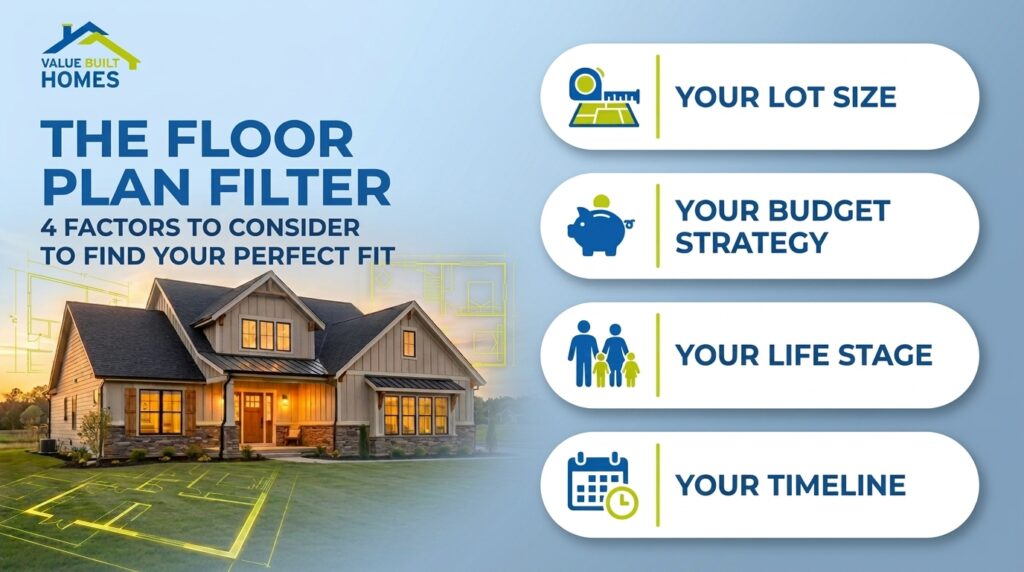

- Budget: Decide what you can spend in total, not just per square foot. A two-story plan stretches a budget further on a smaller lot, while a one-story plan may cost more to build but less to navigate as you age.
- Lot size and shape: A narrow or higher-priced lot favors a two-story footprint. A wider, more affordable lot makes a sprawling one-story plan realistic.
- Life stage: Growing families often want the bedroom separation of a two-story. Empty nesters and buyers planning to stay put lean toward single-level or main-floor-suite layouts.
- How long you will stay: If this is your forever home, weigh accessibility heavily. If you expect to move within ten years, resale demand in your area matters more.
Comfort and fit matter as much as the spreadsheet. As one Value Built Homes homeowner put it, their home turned out “very energy efficient, low/no maintenance, and just perfect for my lifestyle,” which is the goal whatever story count you land on. If you are weighing options, a practical guide to choosing a floor plan can help you match a layout to your daily routine, and the steps involved in building a house in Indiana explain what to expect once you decide. Working with an experienced new home construction team in Southwestern Indiana also takes much of the guesswork out of the process.
Frequently Asked Questions About 1-Story, 1.5-Story, and 2-Story Homes
What does “1.5 story” mean?
A 1.5-story home, sometimes written as 1 1/2 story or “story and a half,” has a full main floor and a smaller upper level built under a sloped roof. The upstairs space is usually lit by dormer windows and used for bedrooms, a bonus room, or storage. Many of these plans put the primary suite on the main floor.
Are 1.5-story homes more expensive to build than 2-story homes?
It depends on the roofline. A simple 1.5-story design usually falls between a one-story and a two-story on cost per square foot. More elaborate rooflines with multiple dormers add labor and materials, which can push a 1.5-story closer to (or above) a comparable two-story. The most reliable way to compare is to price specific floor plans rather than rely on a rule of thumb.
Is a 1-story or 2-story home better for energy efficiency?
Neither style is automatically more efficient. Build quality, insulation, and HVAC design matter most. That said, a two-story home has a more compact exterior envelope and a smaller roof relative to its living space, which can reduce heat loss, while a one-story home offers more even temperatures because there is no warm air rising to a second floor. Modern insulation and energy-saving materials make a bigger difference than story count alone.
Which home style holds its value best for resale?
Resale demand depends on your local market and buyer pool more than on story count. In family-heavy neighborhoods, two-story homes with several upstairs bedrooms are in high demand, while areas with many older buyers favor one-story and main-floor-suite homes. Choosing a layout that fits the typical buyer in your area helps protect resale value.
How long does it take to build a home in Indiana?
A site-built home from Value Built Homes typically takes about five to seven months from start to move-in, depending on the plan, weather, and site conditions. Because the floor plans are standardized, the schedule is more predictable than a fully custom build. You can follow progress in real time through the builder’s project-tracking portal.
Build a Home That Fits the Way You Live
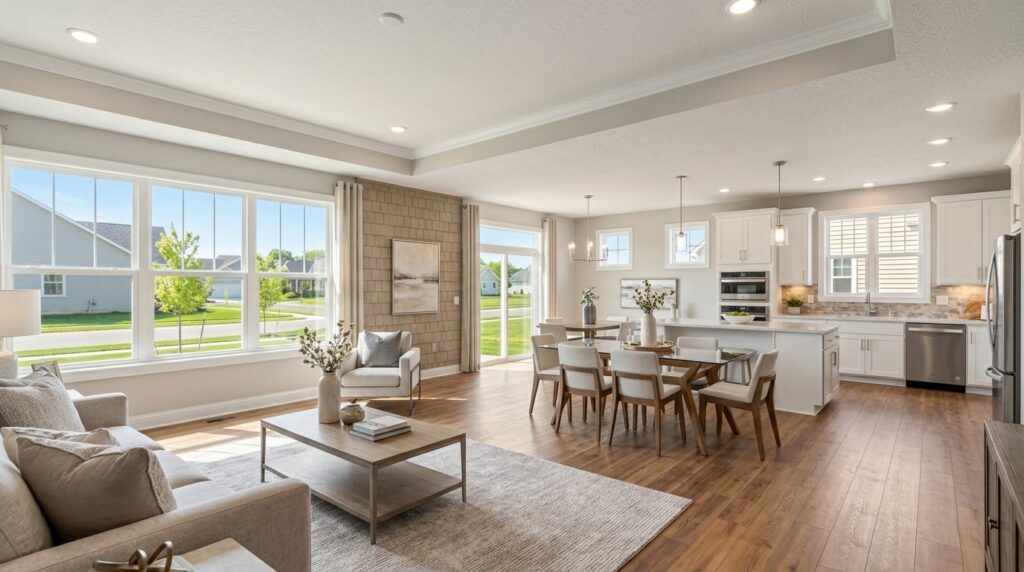
Whether you are drawn to single-level living, a flexible 1.5-story layout, or a space-saving two-story plan, the right choice is the one that fits your budget, your lot, and your stage of life. Value Built Homes builds all three across Southwestern Indiana and the tri-state area, with standardized plans designed to keep quality high and costs predictable.
Ready to find the right fit? Browse the current floor plans to compare layouts side by side, or reach out to the Value Built Homes team to talk through your options and request a personalized quote.