There’s one walk left before the keys are yours. A new construction punch list is the written record of what still needs fixing after that final walkthrough, and knowing what belongs on it (and what doesn’t) takes pressure off the day.
Key Takeaways
Here’s what to know before your walkthrough:
- A punch list documents what doesn’t match the contract. It’s prepared near the end of construction, and its items are fixed before closing or on a timeline agreed in writing.
- Blue tape marks each item. At a blue tape walkthrough, items that need repairing are typically marked with blue painter’s tape and added to the written list.
- Not everything you notice is a defect. A recessed nail head may not be worth a punch list entry, and seasonal ceiling cracks from truss uplift are cosmetic, not structural.
- A missing feature may be a scope question, not a defect. With Value Built Homes, if it’s part of the standard plan, it’s included. If it isn’t, it’s an optional add-on, available to discuss with the team.
- Your coverage continues after you sign. Value Built Homes homes carry the 2-10 Home Buyers Warranty (10-year structural, 2-year systems, 1-year workmanship and materials) plus a Value Built Homes workmanship warranty of 2 years in Indiana and 1 year in Kentucky. Appliances are covered by their manufacturers.
What Is a New Construction Punch List?
A new construction punch list is a document prepared near the end of a build that lists issues in the home that don’t conform to the contract. It covers the final stretch: touch-ups, repairs, and unfinished details.
It’s also the last of several quality checks. “When you’re building a house, there are actually about half a dozen punch lists throughout the building process,” a customer care manager at another home builder told NewHomeSource.
How Does a Blue Tape Walkthrough Work?
A blue tape walkthrough is the final walkthrough where you and the build team go room by room and flag anything that needs attention. Any item that needs repairing is typically marked with blue painter’s tape, and each one goes on the written punch list.
Timing and attendees vary by builder and contract, so ask your build team how yours will be scheduled. Expect three things:
- A room-by-room pace: You’ll check finishes, test fixtures, and open doors and cabinets.
- Tape on the spot: Each issue gets a strip of tape, so it’s easy to find when the repair happens.
- A written list: The tape is temporary. The written punch list is the record, so get a copy.
If you’ve followed your build in the Buildertrend project portal, you’ll walk in knowing the house. As one Value Built Homes homeowner shared, “Our contact kept up with pictures and updates on the BuilderTrend app. It was a nice way to see what had been done.”
How a New Construction Walkthrough Differs From a Resale Final Walk-Through
The two sound alike, but they do different jobs:
- Resale final walk-through: happens before you sign closing papers, to make sure everything that you and the seller agreed would be repaired has been repaired.
- New construction walkthrough: is where the punch list gets created, reviewing brand-new work against your contract.
New Construction Walkthrough Checklist: What to Check Room by Room
Take your time. You’re looking for work that’s unfinished, damaged, or not working. Work through these areas in order:
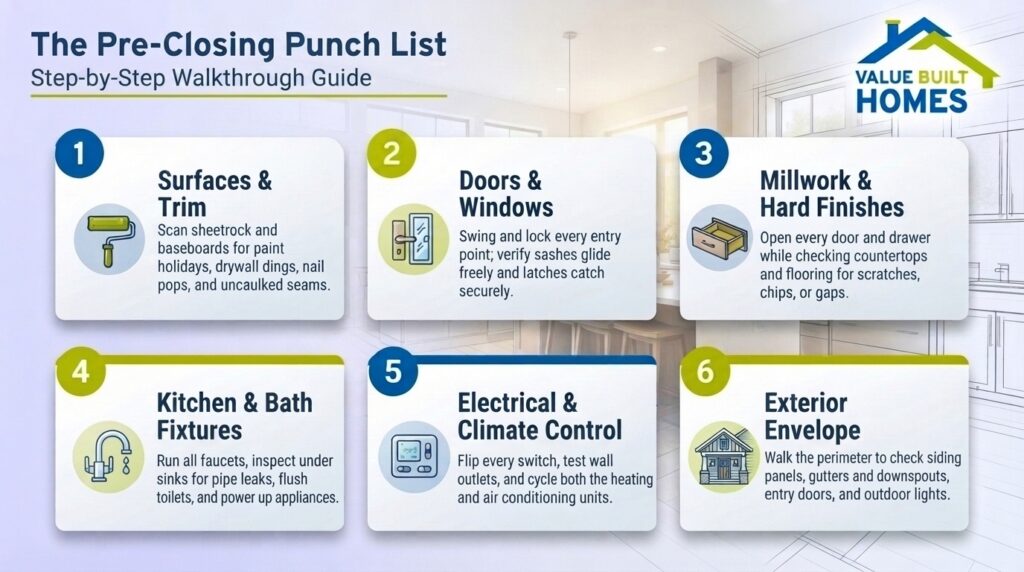
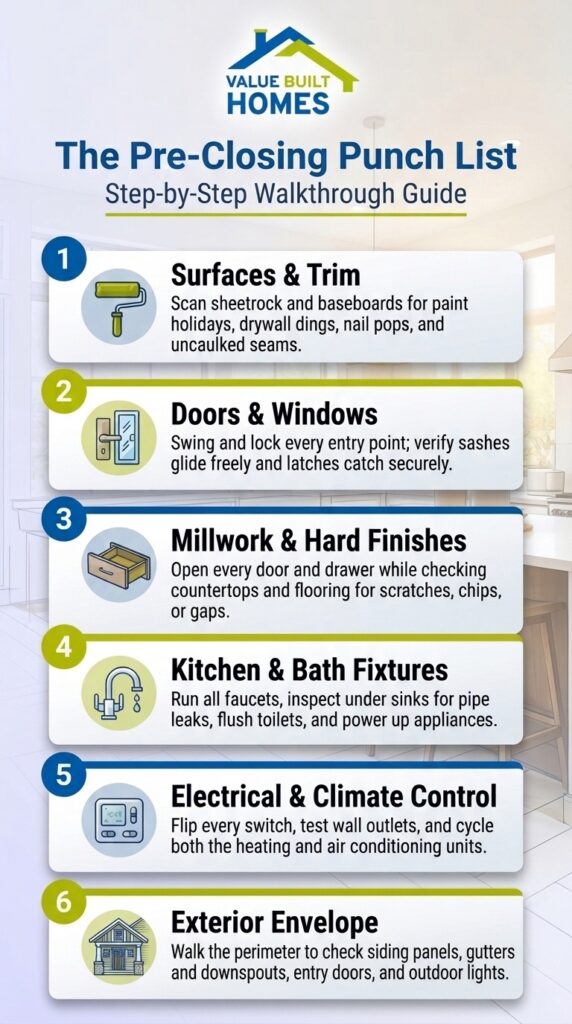
- Walls, ceilings, and trim: Look for scuffs, paint misses, caulk gaps, and dings.
- Doors and windows: Open, close, and lock each one. Doors should latch and windows should slide smoothly.
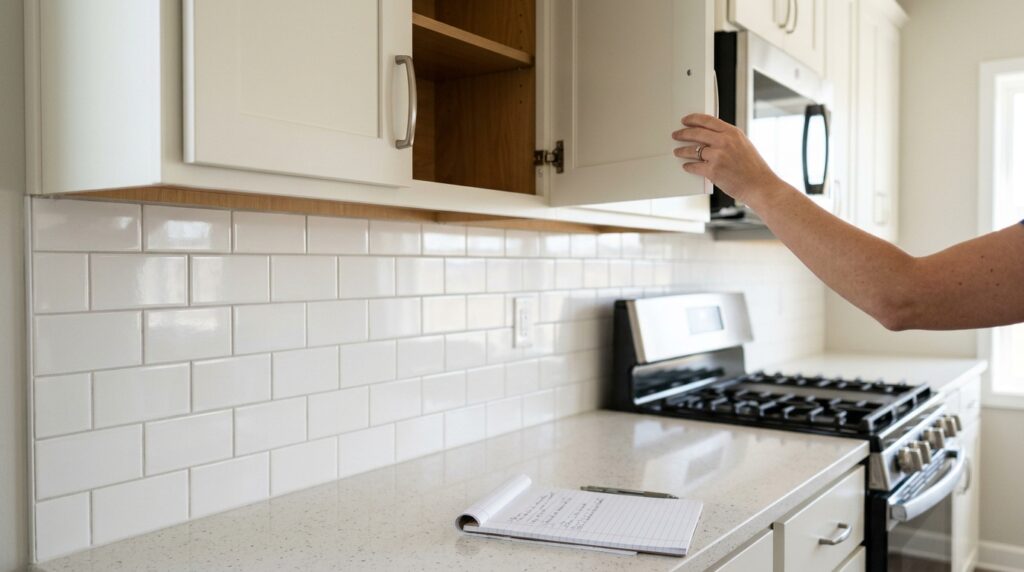
- Cabinets, counters, and floors: Open every drawer and door, and look for chips, scratches, or gaps.
- Kitchen and baths: Run every faucet, look under sinks for drips, flush each toilet, and power on the appliances.
- Electrical, heating, and cooling: Flip every switch, test outlets, and run the heat and air.
- Exterior: Check the siding, gutters, exterior doors, and outdoor lights.
What to Bring to Your Final Walkthrough
A few simple tools make the walk easier:
- Blue painter’s tape: A spare roll never hurts.
- Your phone camera: Photograph each item next to its tape for a dated record.
- A notepad or notes app: Write each item down in your own words.
Punch List, Warranty, or Add-On? Where Each Thing You Find Belongs
Everything you notice fits one of four buckets: fix before closing, normal for a new house, warranty after move-in, or never in your standard plan. This table sorts each finding for a Value Built Homes home.
| What you find | Examples | Where it goes | Source |
|---|---|---|---|
| Unfinished or damaged work, visible at the walkthrough | Painting imperfections, cracked tile | Punch list: marked with blue tape, written down, fixed before closing or on a timeline agreed in writing | 2-10 Home Buyers Warranty |
| Small items that may not warrant a punch list entry | A recessed nail head | Judgment call: discuss it at the walkthrough rather than assuming it is a defect | 2-10 Home Buyers Warranty |
| Workmanship issues that show up after move-in | Seasonal drywall cracks from truss uplift | Value Built Homes workmanship warranty: 2 years in Indiana, 1 year in Kentucky. Submit through the warranty claim form. | Value Built Homes warranty terms; truss uplift guide |
| Defects in systems | Wiring, piping, ductwork | 2-10 Home Buyers Warranty: two years of systems coverage | Value Built Homes warranty terms |
| Structural defects | Load-bearing components | 2-10 Home Buyers Warranty: ten years of structural coverage | Value Built Homes warranty terms |
| A product that malfunctions | An appliance | Manufacturer warranty. Value Built Homes helps coordinate, and labor tied to a manufacturer defect is the homeowner’s responsibility. | Value Built Homes warranty terms |
| Something you expected that is not there | A finished driveway, sidewalks, a porch not in the plan’s roofline | Not a punch list item. If it is not in the standard plan, it is an optional add-on, and it is available to discuss with the team. | What’s included in a Value Built Homes home |
What Should Not Go on a Punch List?
Items that are normal behavior for a new house, or too minor to count as a defect, don’t belong on a punch list. A recessed nail head, for example, might not be worth including on your punch list, and what counts as a nitpicky request is up to interpretation.
Industry standards help here. NAHB’s Residential Construction Performance Guidelines include more than 340 guidelines in 13 major construction categories, used to manage customer expectations and resolve complaints. For the gray areas:
- Seasonal ceiling cracks: Cracks where a ceiling meets an interior wall can come from truss uplift, which is cosmetic, not structural.
- Small cosmetic items: Point them out and ask whether it’s a fix or within the normal range.
- Cracks that keep changing: Cracks through walls, over doors, or at the foundation, or that keep widening, should be evaluated, not just patched.
What If Something You Expected Isn’t There?
If it isn’t in your standard plan, it isn’t a punch list item. Value Built Homes prices from standardized plans: if it’s part of the standard plan, it’s included. If it’s not, it’s an optional add-on.
Standard plans keep pricing clear and decisions simple. Items that are add-ons rather than defaults include:
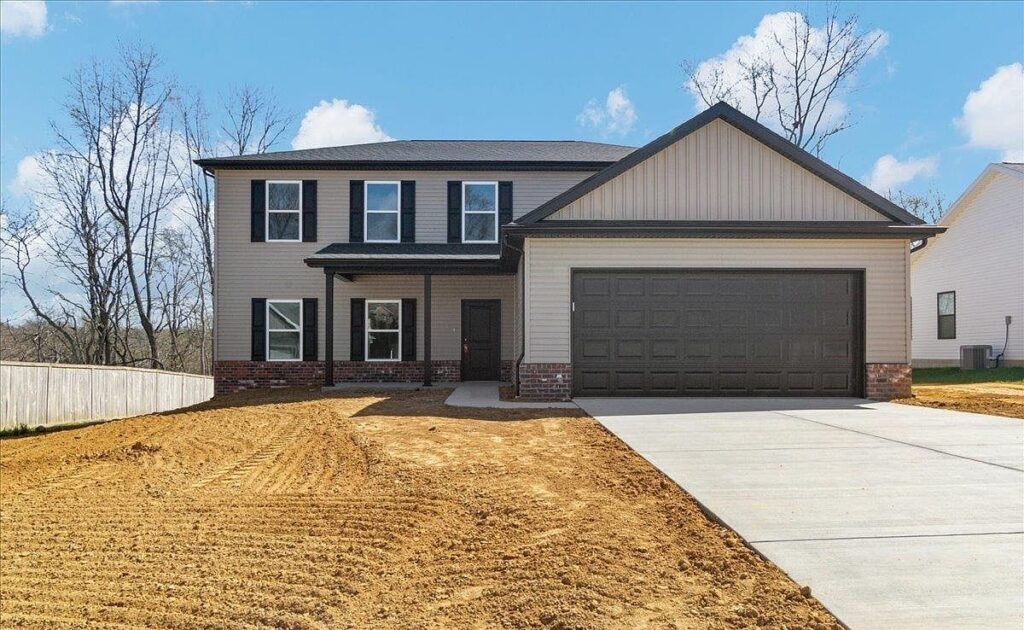
- A finished driveway: Homes come with a rock construction drive. A finished driveway is an upgrade.
- Sidewalks: Connections to a garage or front porch are add-ons.
- A porch or patio: These are included only when they’re part of the standard plan (and, for a porch, when the roofline is built for one). Otherwise, they’re add-ons.
- A basement: Basements are always an optional add-on.
The best time to sort out scope is before the walkthrough. Start with the Value Built Homes floor plans, then check your own plan against your contract. Want something that isn’t in your plan? Add-ons are available to discuss with the team and are simply priced separately.
What Happens If Punch List Items Aren’t Finished Before Closing?
Get the open items and a completion timeline in writing before you sign. Builders are encouraged to put the agreed repair timeline in writing, which protects you too. Before closing day, have:
- A copy of the final punch list: List every item in writing, with your photos.
- A timeline for open items: Agreed dates or the follow-up process should be documented.
- A point of contact: Know who on the build team handles follow-up.
From there, the new-build closing process moves on to reviewing and signing your closing documents.
What Happens After You Sign? The Warranty Handoff
After closing, anything new you find moves from the punch list to warranty coverage. Value Built Homes homes carry two separate layers of protection, plus manufacturer warranties. Here’s how they fit together:
- Value Built Homes workmanship warranty: It runs 2 years in Indiana and 1 year in Kentucky and comes directly from the builder.
- 2-10 Home Buyers Warranty: It covers load-bearing components for 10 years; wiring, piping, and ductwork for 2 years; and workmanship and materials for 1 year.
- Manufacturer warranties: Products in the home, including appliances, are under the warranty of their respective manufacturers.
As one Value Built Homes homeowner put it, “I was called when it was done and able to move right in with no problems.”
How to Submit a Warranty Claim After Move-In
If something comes up after move-in, the process is straightforward:
- Document it. Take clear photos and note when you first noticed it.
- Submit a claim. Use the Value Built Homes warranty claim form, which takes your closing date, a description, and photos.
- Watch for a reply. Allow 24 business hours for a response.
- Plan for access. You’ll be asked to provide access for warranty work during normal business hours (7 AM to 4 PM, Monday through Friday).
Claims outside the Value Built Homes workmanship warranty are filed through the 2-10 Home Buyers Warranty. Once you’re settled, this post-closing checklist for new homeowners covers locks, utilities, and routine maintenance.
Frequently Asked Questions About the New Construction Punch List
What’s the difference between a punch list and a final walkthrough?
The final walkthrough is the event, and the punch list is what comes out of it. You walk the home, mark issues with tape, and the written list becomes the record of what gets fixed.
Is the final walkthrough my last chance to catch problems?
No. It’s your best chance to catch visible finish issues, but coverage continues after closing through the Value Built Homes workmanship warranty and the 2-10 Home Buyers Warranty. Workmanship issues, systems, and structure each have their own coverage period.
Who fixes an appliance that stops working after closing?
The manufacturer’s warranty covers it. Value Built Homes helps coordinate the repair, but labor tied to a manufacturer defect is the homeowner’s responsibility.
Should I hire my own inspector for the final walkthrough?
You can. A private inspector checks whether the work was done well, while municipal inspectors check minimum safety standards. The most valuable window comes earlier, before drywall goes up. This guide to home inspections on new construction explains when to schedule one.
Ready to Build Your Forever Home in Southern Indiana?
A final walkthrough isn’t a test you can fail, just one step toward a finished home with coverage that continues afterward. Have questions about building in Southwestern Indiana or the tri-state area? Contact the Value Built Homes team to get started.