If you’ve noticed a small gap or a hairline crack where your ceiling meets an interior wall, you’re not alone, and it’s probably not what you fear. This seasonal effect is called truss uplift, and in most new homes it’s a cosmetic quirk of how modern roofs are built, not a sign that anything is wrong with your foundation or structure. Here’s what it is, why it happens, and how Value Built Homes handles it.
Key Takeaways
- Truss uplift is a seasonal gap or crack that can appear where the ceiling meets an interior wall, usually near the center of the home.
- It happens because the top and bottom of a roof truss sit in different moisture and temperature conditions in winter, which makes the truss arch upward and lift the attached ceiling.
- Truss uplift is cosmetic, not structural. The cracks open in cold months and close again as the weather warms, then tend to return on a seasonal cycle.
- Homes built with factory-made roof trusses are still stick-built. Engineered trusses are the standard in modern new construction.
- It doesn’t happen in every home, and there’s no exact way to predict which homes will show it.
- Value Built Homes addresses truss uplift during the workmanship warranty period, and a flexible sealant can reduce how often it comes back.
What Is Truss Uplift?
Truss uplift is the seasonal separation that can appear where a ceiling meets an interior wall, most often near the center of the home. It’s caused by normal movement in factory-made roof trusses as the seasons change. You may also hear it called truss lift or partition separation.
It usually shows up as a thin gap or a line of cracked drywall tape running along the top of the wall. The key thing to know up front: it comes and goes with the seasons rather than getting steadily worse.
Why Does Truss Uplift Happen?
Truss uplift happens because the top and bottom of a roof truss are exposed to different moisture and temperature conditions, especially in winter. When the bottom of the truss stays warm and dry while the top sits in cold attic air, the truss arches upward at the center and lifts the ceiling away from the interior wall below.
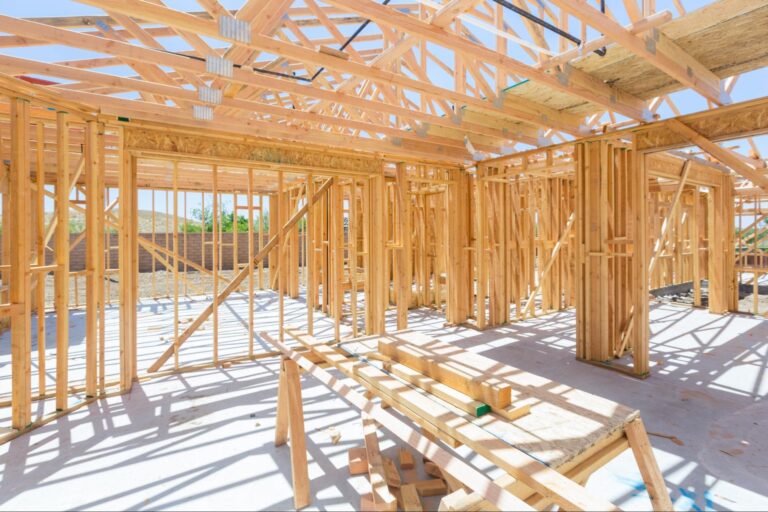
The trusses in a modern roof are made from lumber joined by metal plates. Wood expands and contracts as it takes on and releases moisture, and the long bottom chord of a truss reacts differently than the shorter members above it. That difference is enough to bow the truss slightly. Because the ceiling drywall is fastened to that bottom chord, the movement creates a gap in the winter that closes in the summer.
Where and When You’ll Notice Truss Uplift
You’ll usually notice truss uplift at the ceiling-to-wall joint of interior partition walls near the center of the home, where those walls run at right angles to the trusses. The gap opens during cold months and closes again as the weather warms, following the same seasonal cycle year after year.
Exterior walls rarely show it, because they carry the roof load differently. If a crack is opening and closing with the seasons at the top of an interior wall, that pattern is a clear sign of truss uplift, not a problem to worry about.
Is Truss Uplift a Structural Problem?
No. Truss uplift is a cosmetic condition, not a structural failure or a foundation problem. A professional inspection firm describes the cracks as “not the result of foundation settling, or a structural failing”. The ceiling lifts slightly and settles back with the seasons while the wall itself stays put.
The easiest way to tell truss uplift apart from something worth investigating is to look at where the cracks appear, how they behave over time, and which way things are moving. Here’s a side-by-side:
| What you notice | Truss uplift (cosmetic, seasonal) | Structural or foundation movement (worth investigating) |
|---|---|---|
| Where it shows up | A gap or cracked tape at the ceiling-to-wall joint, usually on interior partition walls near the center of the home that run at right angles to the trusses | Cracks that run through walls, over doors and windows, in masonry, or at the foundation, with evidence of shifting support in the walls |
| Timing | Appears in cold months and closes again as it warms; tends to return on a seasonal cycle | Tends to appear and stay, or widen over time, rather than on a seasonal cycle |
| Direction of movement | The ceiling lifts away from the top of the wall; the wall itself stays put | The structure settles or shifts; floors may slope and doors or windows may stick |
| What it usually means | A cosmetic effect of normal seasonal wood movement in the roof trusses, not a structural failure | Possible foundation or framing movement that should be assessed |
| Typical response | Addressed during the workmanship warranty period; a flexible sealant can reduce how often it returns | Have it evaluated before any cosmetic repair |
If what you’re seeing looks like the right-hand column, or you’re ever unsure, have it evaluated before doing any cosmetic repair. When it clearly matches the left, it’s the normal seasonal movement described above.
Are Homes With Factory-Made Trusses Still Stick-Built?
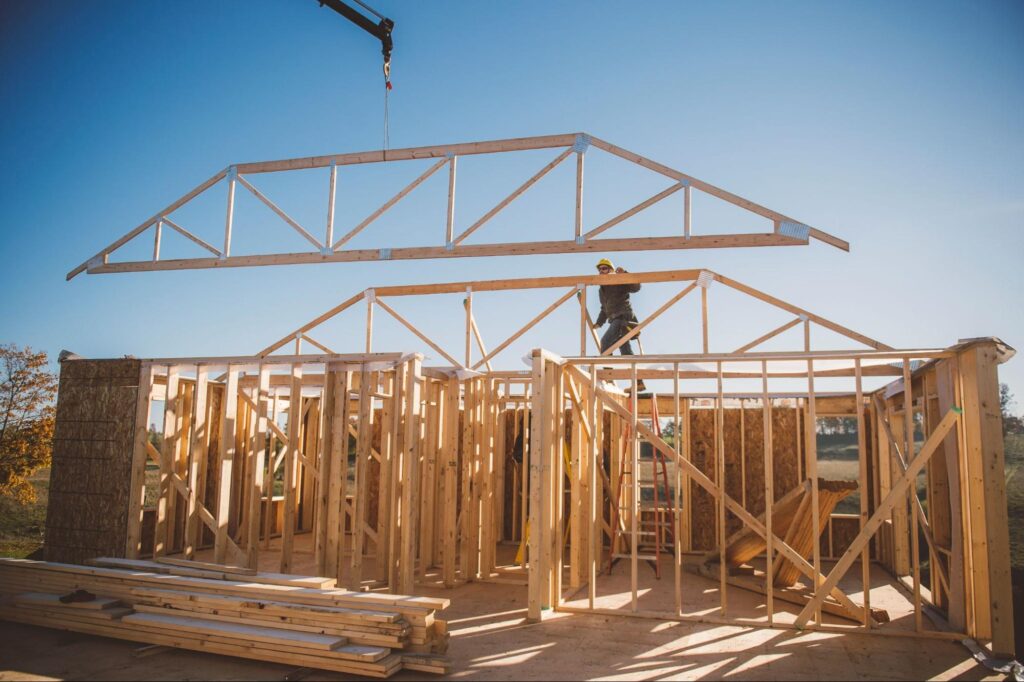
Yes. A home framed on-site is still stick-built even though its roof trusses are made in a factory. Trusses are a manufactured component, not a sign of a manufactured home. A house only moves into a different category when the whole structure is built in a factory and set in place, which is not how Value Built Homes builds.
Engineered roof trusses are the modern norm. Roughly seven in ten new single-family homes in the U.S. (72% in 2025) were framed with engineered roof trusses, a share reported by Home Innovation Research Labs in its Annual Builder Practices Survey.
Value Built Homes builds traditional, site-built homes constructed entirely on-site, using factory-made trusses the same way most builders do. For the full comparison of how site-built homes differ from modular and prefabricated construction, our guide to factory-built vs. site-built homes walks through it.
Does Truss Uplift Happen in Every Home?
No. Truss uplift doesn’t occur in every home, and there’s no exact way to predict which homes will show it. How likely it is depends on factors like the truss type, the span of the roof, whether the home has a bonus room, and how the attic is configured.
Because it comes down to normal wood movement and the specific geometry of each roof, two similar homes can behave differently. That’s why it’s best understood as a known possibility to plan for, not a defect to worry about.
How Truss Uplift Is Prevented and How Value Built Homes Handles It
Builders reduce truss uplift during construction by not fastening the ceiling drywall tightly to the trusses right where they meet an interior wall, so the ceiling can flex a little without cracking the corner. Techniques like drywall clips or a floating-corner method give the ceiling that small amount of room. When it does appear, Value Built Homes addresses it during the workmanship warranty period.
Value Built Homes backs every home with layered coverage. Value Built Homes’ own workmanship warranty runs 2 years in Indiana and 1 year in Kentucky, and the 2-10 Home Buyers Warranty covers systems for 2 years and structural elements for 10 years. You can see how the coverage works on our home buyers warranty page.
Cosmetic drywall cracks from truss uplift fall under workmanship coverage. During the workmanship warranty period, the drywall is patched, and a flexible sealant is sometimes used so the gap is slower to reappear. Because the movement is seasonal, it can come back over time, and it can’t be permanently eliminated while keeping the ceiling built to code. Value Built Homes treats that as a normal, manageable part of owning a new home rather than something to hide.
What to Do If You Notice Truss Uplift in Your Home
If you spot a seasonal gap where your ceiling meets a wall, don’t panic. It’s almost always truss uplift rather than a structural issue. Seasonal movement like this is one of several things that are normal in a new build, and our guide to new construction home maintenance covers what to watch for over your first year.
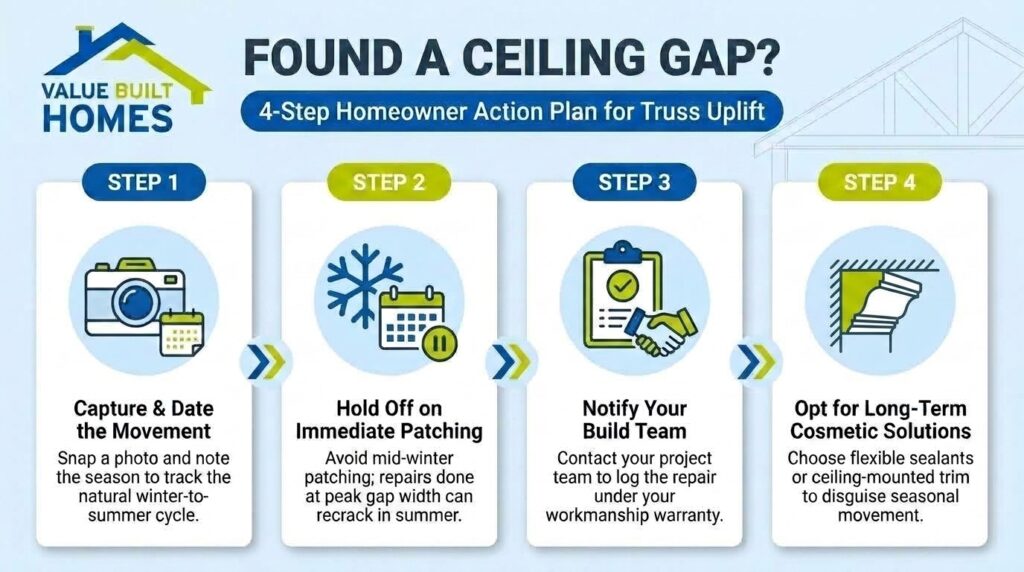
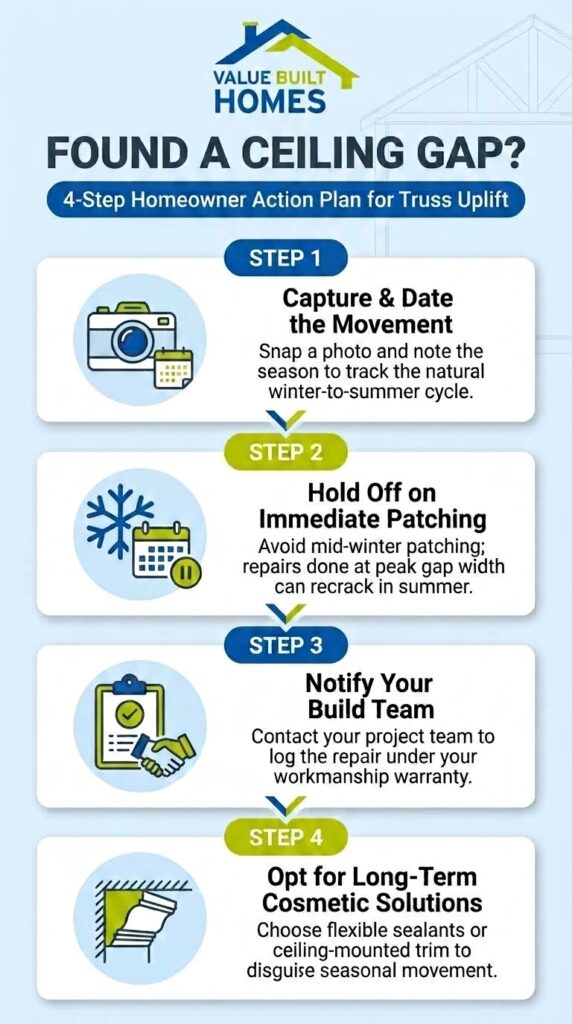
A simple approach:
- Document it. Take a photo and note the season, so you and your builder can confirm it’s opening and closing on the normal seasonal cycle.
- Don’t rush a repair. Patching in the middle of winter, when the gap is at its widest, can crack again when the ceiling settles back in summer.
- Contact your build team. Reach out to your dedicated project contact or the Value Built Homes team so it’s logged and handled under your workmanship warranty.
- Consider simple cosmetic options. A flexible sealant, or trim such as crown molding attached to the ceiling, can make a recurring gap far less noticeable.
Frequently Asked Questions About Truss Uplift
Is truss uplift dangerous?
No. Truss uplift is a cosmetic condition caused by seasonal wood movement, not a structural or safety problem. The ceiling lifts slightly and settles back as the seasons change, while the wall and structure stay in place. If cracks instead run through walls, over doors, or across the foundation and don’t follow a seasonal pattern, that’s worth having evaluated.
Why do the ceiling cracks appear in winter and close in summer?
The gap opens in winter because the bottom of the roof truss stays warmer and drier than the top, which sits in cold attic air. That difference makes the truss arch upward and lift the ceiling. As the weather warms and moisture levels even out, the truss relaxes and the gap closes again.
Can truss uplift be permanently fixed?
Not completely, at least not while keeping the ceiling built to code. Because the movement is seasonal, the gap tends to return over time. Patching and a flexible sealant can reduce how noticeable it is, and cosmetic trim can hide it, but the underlying seasonal movement is normal and expected.
Is a home still stick-built if it uses factory-made trusses?
Yes. Using factory-made roof trusses doesn’t make a home modular or manufactured. The house is still framed and built on-site, which is what stick-built means. If you’re weighing construction methods, our comparison of barndominium vs. stick-built homes breaks down the differences.
Is truss uplift covered under warranty?
Cosmetic drywall cracks from truss uplift are handled under Value Built Homes’ workmanship coverage. The drywall is patched during the workmanship warranty period, and because the movement is seasonal, it may need attention again over time. Your warranty documents spell out what’s covered and for how long.

Building a New Home You Can Feel Confident About
Understanding the small, normal quirks of new construction, like truss uplift, is part of building with confidence. Value Built Homes is happy to walk you through what to expect at every stage of building your forever home. Have questions about building in Southwestern Indiana? Contact the Value Built Homes team to get started, or browse our floor plans to find the right fit for your family.