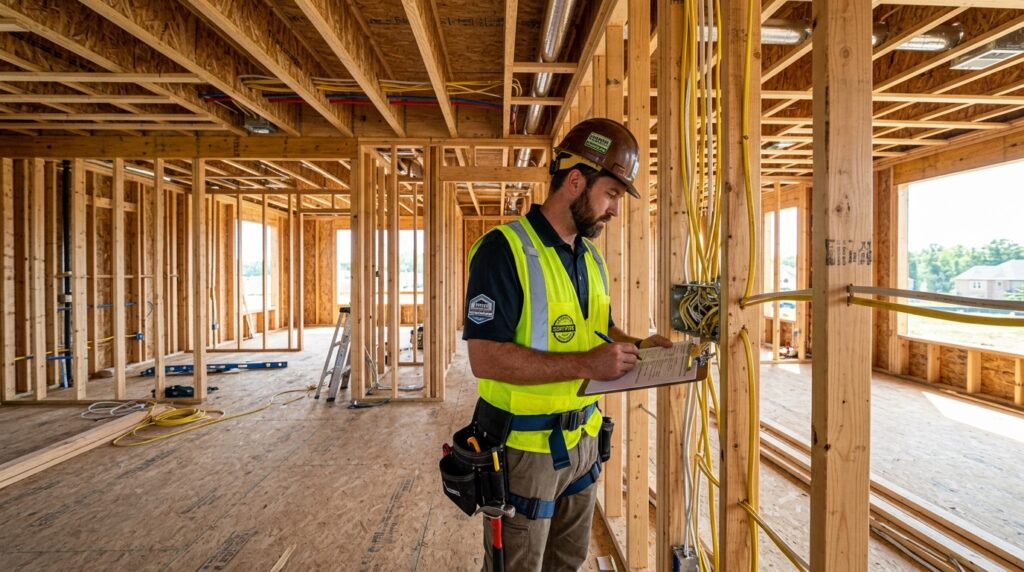
If you’re building a new home, the question comes up eventually: does a brand-new house actually need a home inspection? The answer is yes. It comes down to understanding what the inspections that happen during construction actually cover, and what they don’t. Knowing the difference puts you in a much stronger position as a buyer.
Key Takeaways
- Brand-new does not mean defect-free. Research cited by U.S. News suggests 65% of buyers who had new construction homes inspected found at least one issue worth addressing before move-in.
- Municipal and private inspections serve different purposes. Municipal inspectors verify code compliance. A private inspector evaluates craftsmanship and whether systems are built to last.
- The pre-drywall inspection is the most valuable window in a new build. It’s your one opportunity to have framing, insulation, rough-in plumbing, and electrical checked before the walls close.
- Home inspections in Indiana typically cost between $350 and $425 for a standard single-family home, according to current cost data, a modest investment relative to what it protects.
- An inspection creates a documented baseline. A written inspection report at move-in makes future warranty claims cleaner and easier to support.
- Value Built Homes’ 2-10 Home Buyers Warranty and Buildertrend portal give buyers real-time visibility throughout the build. An independent inspection adds one more layer of confidence that everything checks out.
Municipal Inspections and Private Inspections Are Not the Same Thing
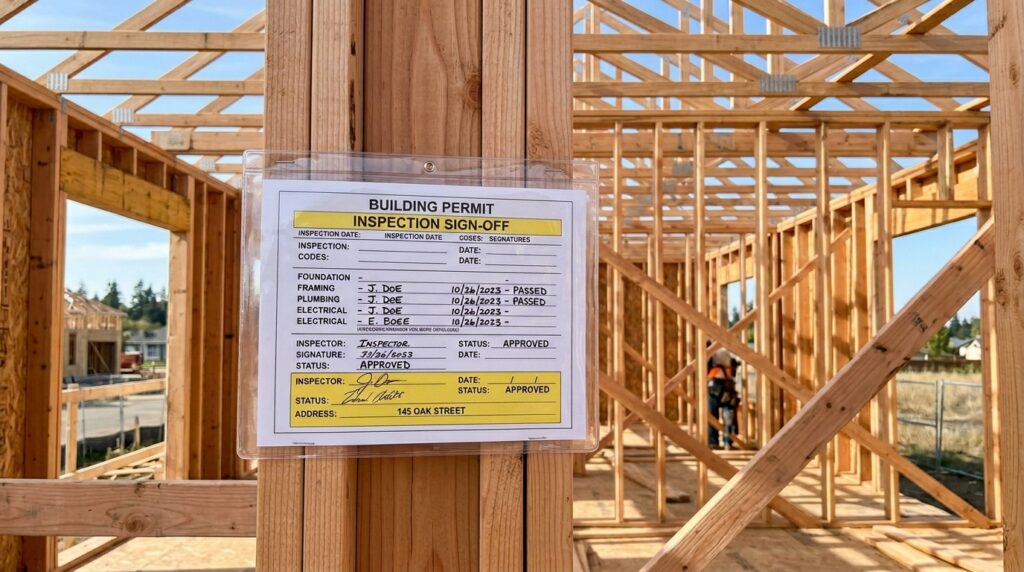
Municipal building inspections and private home inspections do two different jobs. Municipal inspectors are government employees who visit the construction site at required phases to confirm the home meets local building codes and minimum safety standards. A private inspector you hire does something different: they evaluate whether the work was done well.
Code compliance and build quality are two different standards. “Municipal inspectors check whether the home meets minimum safety standards,” as one real estate resource explains. “Your inspector checks whether the home is actually built well.”
Passing a code inspection means the electrical panel is wired to legal minimums. A private inspector looks at whether the wiring is properly grounded, cleanly run, and unlikely to cause problems down the road. Those aren’t the same question.
Here’s how the two roles compare:
| Municipal Building Inspector | Private Home Inspector | |
| Who arranges it? | Required by local government | Hired by the buyer |
| When? | During required construction phases | Pre-drywall and/or at final walkthrough |
| What do they evaluate? | Code compliance and minimum safety standards | Craftsmanship and quality across all major systems |
| What’s the outcome? | Certificate of occupancy | Written inspection report for the buyer |
A municipal inspection gives your home the green light to be occupied. A private inspection gives you the honest picture of how it was built.
Why the Pre-Drywall Inspection Matters Most
The pre-drywall inspection is the most valuable opportunity in new construction, and it’s one you can’t recreate after the fact. Once the walls close, a significant portion of your home’s systems (framing, insulation, rough-in electrical and plumbing, HVAC ductwork) become inaccessible without opening them back up.
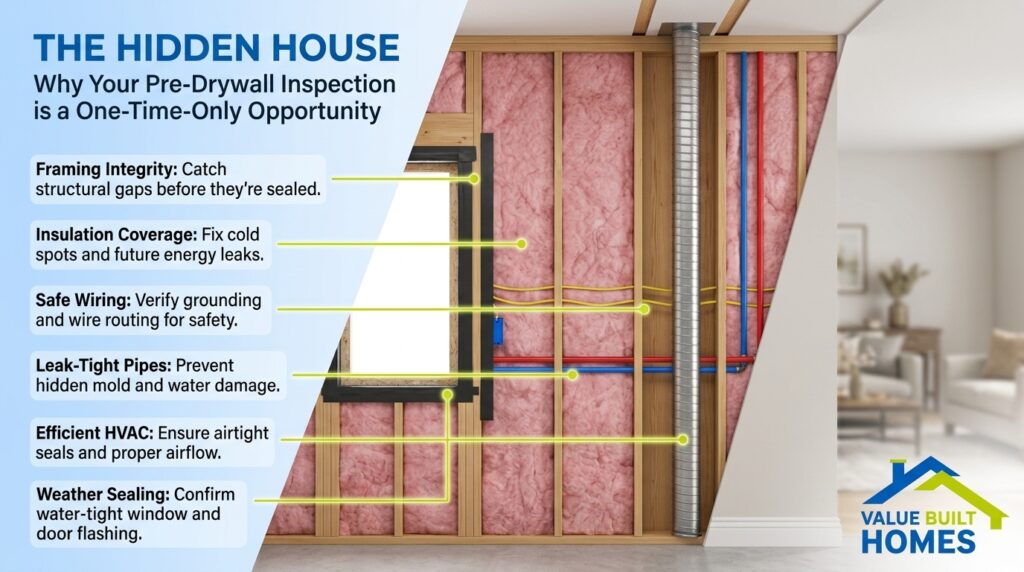
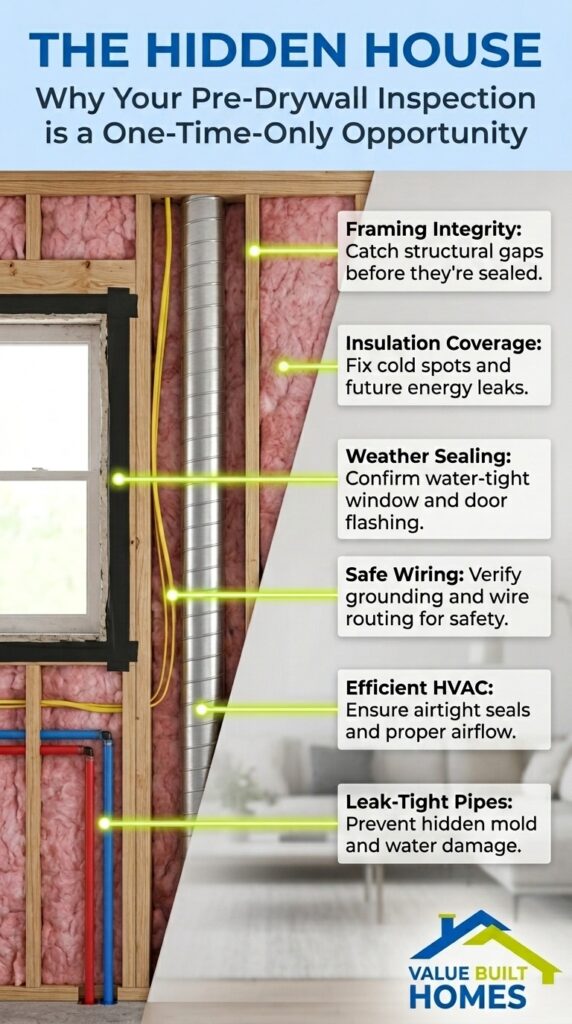
Scheduling a private inspector during the framing stage, before drywall goes up, allows them to check:
- Insulation installation and coverage (gaps and voids are invisible once walls are finished)
- Framing connections and structural components
- Rough-in electrical wiring and grounding
- Rough-in plumbing supply and drain lines
- HVAC ductwork routing and connections
- Window and door rough openings before exterior finishes are applied
Value Built Homes’ home building timeline gives buyers a clear picture of where this window falls in the construction schedule. If you’re planning to hire an inspector, coordinate early so the pre-drywall visit doesn’t get missed.
How Your Inspection Works With Your Warranty
A private home inspection and a builder warranty are not the same tool, and one doesn’t make the other unnecessary. Your warranty covers defects that emerge after you move in. Your inspection report documents the condition of the home before you do. They complement each other.
Value Built Homes provides a 2-10 Home Buyers Warranty with every home. Here’s what the coverage includes:
- 10-year structural defect coverage
- 2-year systems defect coverage (electrical, plumbing, HVAC)
- Workmanship coverage: 2 years in Indiana, 1 year in Kentucky
An independent inspection at move-in creates a written baseline of the home’s condition, which is exactly the kind of documentation that makes a warranty claim easier to support if issues arise. For a full breakdown of what the coverage includes, the guide to new home warranties covers every detail.
One Value Built Homes homeowner described the experience this way: “They took care of everything like running power, water, septic, poured wall basement, and even the driveway. Our contact was very helpful with anything we asked for and always very quick to answer any questions and keep us updated throughout the process.”
That kind of scope doesn’t make an independent inspection less useful. It makes it easier, because the quality is there to confirm.
How to Find a Qualified Inspector in Your Area
Not all home inspectors have the same training. For new construction in particular, look for certification through ASHI (American Society of Home Inspectors) or InterNACHI. Both organizations maintain searchable directories of certified inspectors and publish standards of practice that define what a home inspection must cover.
Home inspections in Indiana typically run between $350 and $425 for a standard single-family home, according to current data for the Indiana market. Square footage and optional add-ons like radon testing can affect the final cost. For most buyers, that expense is small relative to what it protects.
When you contact an inspector, ask specifically about their experience with new construction. The pre-drywall inspection requires familiarity with open framing; it’s a different scope than inspecting a finished home.
Frequently Asked Questions About Home Inspections on New Construction
Is a home inspection necessary for a new build?
A private home inspection is not legally required in most cases, but it’s one of the most practical decisions you can make as a buyer. Research cited by U.S. News suggests 65% of buyers who had new construction homes inspected found at least one issue. The most common findings are not structural failures but installation errors: roofing and ventilation issues, electrical grounding problems, window installation defects, and grading that runs water toward the foundation. These are among the most frequently documented defect categories in home inspections, and they’re far less expensive to address before move-in than after.
Does a builder warranty replace the need for an independent inspection?
No. A warranty covers defects that surface after you move in. An inspection documents the condition of the home before you do. The 2-10 Home Buyers Warranty provides meaningful post-move-in protection; an independent inspection provides a documented baseline that supports any future claims. They’re complementary tools, not substitutes.
Why do brand-new homes have defects?
New construction involves many tradespeople working across overlapping phases. Most issues found in new homes are installation errors rather than design failures: a vent not properly sealed, a door frame slightly out of alignment, grading that runs toward the foundation instead of away from it. These are normal outcomes of complex work, and they’re the reason an independent inspector adds value even when the builder has done excellent work.
When should I schedule a pre-drywall inspection?
Schedule it after framing is substantially complete and rough-in electrical, plumbing, and HVAC work has been done, but before insulation and drywall go up. Review the home building timeline for a sense of where this falls in a typical build, and coordinate with your builder as early as possible to make sure the window is confirmed.
How much does a home inspection cost in Indiana?
A standard home inspection in Indiana typically runs between $350 and $425, according to current pricing data for the state. The final cost varies by square footage and whether optional tests like radon or sewer scope inspections are added. Look for an ASHI or InterNACHI-certified inspector and confirm their experience with new construction before booking.
Building in Southwestern Indiana? Value Built Homes Is Here to Help
Value Built Homes builds affordable site-built homes across Southwestern Indiana and the tri-state area, and we welcome the scrutiny of an independent inspector. We build homes we’re proud of, and we want buyers to feel confident from the first pour to move-in day.
Ready to explore your options? Browse Value Built Homes’ floor plans to find the right fit for your family, or contact the Value Built Homes team with any questions about the building process.