When building your new Indiana home, it’s easy to focus on floor plans and finishes. But what about the invisible foundation of your modern life: your internet connection? A homebuilder, like Value Built Homes, helps ensure your property is future-ready—and that includes planning for fiber internet to avoid frustrating dead zones and costly renovations. This guide explains why planning for fiber internet from the start is essential for remote work, smart home technology, and future-proofing your investment, ensuring your home is ready for the digital age from day one.
The Importance of Internet Access in Modern Homes
In an increasingly connected society, internet access is no longer a nice-to-have convenience. It’s a core component of daily life, offering everything from remote work opportunities to uninterrupted streaming and interactions with friends and family.
Evolving Lifestyles Require Strong Connections
Modern lifestyles demand a connection that can keep up. A strong internet backbone is essential for:
- Seamless Remote Work: Prevents dropped video calls and ensures you and your family can stay productive while working or learning from home.
- Uninterrupted Entertainment: Easily handle streaming 4K movies, sharing large files, or playing online games without frustrating slowdowns.
- Essential Services: Provides reliable access to telehealth appointments, online learning courses, and virtual collaboration tools.
- Staying Connected: Effortlessly interact with friends and family through video chats and social platforms.
Connectivity as a Key Feature for Home Value
In today’s market, prospective buyers increasingly view fast internet as a critical factor when evaluating a property. Homes outfitted with reliable, high-performance connectivity often attract more interest and higher sale prices. According to data from the Indiana Association of Realtors, strong internet availability can significantly influence a home’s desirability in the eyes of future buyers. Staying ahead of this trend ensures your Indiana home remains competitive in a digital-first era. By collaborating with your builder you can integrate internet planning alongside other key features like functional floor plans and energy-efficient systems.
Additionally, high-speed internet helps future-proof the home, making it an asset that can adapt to shifting technology trends. Even if you’re not planning to resell immediately, consistent, strong internet connectivity can pay off in higher property evaluations down the line and can significantly improve your overall living experience.
Supporting Smart Homes of the Future
A well-planned network is the brain of a modern smart home, enabling all your devices to operate at peak performance. With robust internet, you can:
- Enhance Convenience: Smart appliances can alert you when groceries are low or let you preheat the oven on your way home.
- Increase Efficiency: Energy management systems can optimize your heating and cooling to save money on utility bills.
- Bolster Security: High-resolution security cameras can stream live footage directly to your mobile device, giving you peace of mind.
- Automate Daily Life: Control everything from lighting and thermostats to door locks and speakers with a stable, secure connection.
Understanding Fiber and High-Speed Internet Options in Indiana
If you’re looking for the fastest and most reliable internet, fiber is often the go-to choice. Yet each household has different needs, and cable, DSL, or satellite could be viable alternatives depending on your location and budget.
Types of Internet Services: A Closer Look
- Fiber Internet: Often praised for its speed and reliability, fiber carries data via light signals through glass or plastic cables. Since it can deliver symmetrical upload and download rates, fiber is ideal for busy households that run numerous devices. For a deeper exploration of how fiber works, visit this helpful guide or check out PCMag’s article on fiber internet benefits.
- Cable and DSL: Cable internet uses the same infrastructure as cable TV, offering solid download speeds but sometimes slower uploads. DSL travels through telephone lines; it can work well but may be limited by distance from network hubs.
- Satellite: Satellite internet is accessible in remote areas where other services are limited. However, it can suffer from latency issues and may not easily handle heavy streaming or frequent video conferencing.
Why Fiber Internet Stands Out
Fiber’s capacity to handle high-demand usage with minimal slowdown makes it especially attractive for modern households. With ongoing broadband initiatives in Indiana, fiber connectivity is gradually becoming available in select areas, offering improved reliability with reduced buffering and fewer dropped connections. However, fiber availability is not yet universal, and its deployment can vary significantly by location. It’s wise to check with local providers and planning resources to determine whether fiber service is a viable option for your specific area.
To help determine local fiber availability, utilities in certain regions occasionally partner with homebuilders, creating direct incentives for fiber-ready infrastructure. Keep in mind that early coordination ensures smoother installation, particularly when planning out trenching or conduits for cables.
Indiana’s Expanding Fiber Network
According to CNET, Indiana residents have an expanding variety of seamless, high-speed internet options. Numerous local initiatives are boosting broadband infrastructure in both urban and rural parts of Indiana. The Indiana Office of Community and Rural Affairs broadband resources offer valuable information on current and upcoming expansion projects that might affect your potential home site. By keeping tabs on these initiatives, you can gauge whether fiber connectivity will soon be available in your area.
Before you finalize a property purchase or construction timeline, verify which providers serve the area and if fiber is readily accessible. You can also reference the FCC’s National Broadband Map to check coverage details or planned expansions for your specific location.
Making the Right Choice: How to Assess Internet Providers During Home Planning
Selecting an internet provider early in the construction process safeguards against unnecessary delays and ensures your home is properly wired for connectivity from day one. Here’s how to approach it.
1. Research Providers in Your Build Area
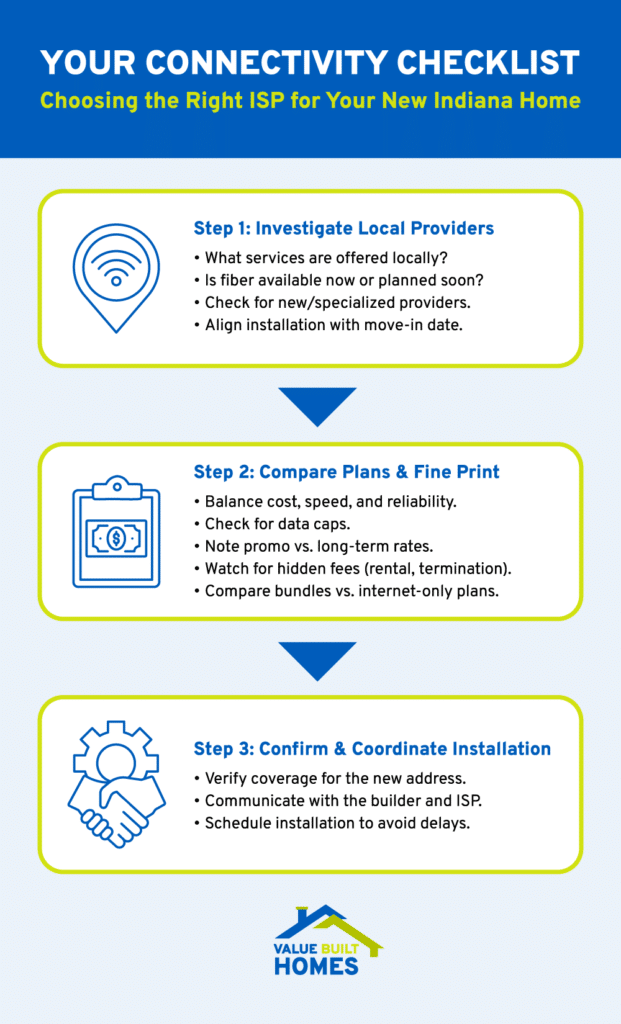
After identifying potential build sites, like those offered by Value Built Homes, contact local ISPs to confirm if fiber is offered in those locations. If fiber isn’t available, compare the cable, DSL, or satellite options. It’s also a good idea to ask about any upcoming plans to expand fiber coverage, as that might influence your decision.
In smaller towns or rural regions, emerging providers may be piloting new services—like fixed wireless or localized fiber runs—so it’s worth inquiring. This can potentially open doors to better speeds at competitive prices. Always map out the provider’s installation timeline to see whether it aligns with your planned move-in date. Additionally, local building codes might affect conduit planning or equipment placement.
2. Evaluate Costs, Speeds, and Terms
When evaluating internet services, balance speed, reliability, and cost based on your household’s needs. Resources like Bluebird Fiber offer pointers to compare ISP options effectively. Internet plans vary widely in their upload/download speeds, monthly fees, data allowances, and contract terms.
Pay close attention to data thresholds, as heavy usage like streaming, cloud backups, or gaming might be limited by certain plans. This helps you avoid frustrations or extra costs down the road. For more insights on typical data usage constraints, explore EarthLink’s details about data caps.
Many providers offer promotional rates that expire after a set period, leading to significant price spikes. Be sure you’re aware of any long-term pricing, early termination fees, or equipment rental charges. Some also offer bundle deals with TV or phone services; think carefully about whether these extras bring genuine value to your lifestyle. An internet-only plan is often more cost-effective if you prefer streaming services and use your mobile phone for calls.
3. Confirm Coverage and Coordinate Installation
Even if a provider is listed for your ZIP code, it’s wise to confirm directly that your new address is included in their coverage area. Timing is also crucial—coordinate your home’s wiring and ISP installation with the construction team so everything runs efficiently. By having open communication among the ISP, you, and the homebuilder, you can finalize cable entry points, plan external wiring routes, and schedule installation without causing hold-ups in the construction timeline.
Key Considerations for Internet Setup During Construction

As we discussed earlier, early planning is key. Here are the specific steps to take during construction so you won’t have to tear open walls or rewire down the line. Your builder can incorporate your wiring specifications into your overall floor plan so you’re set from the start.
Structured Wiring for Optimal Performance
A dependable network begins with structured wiring. This typically involves installing Ethernet cables to key rooms, often routed to a central area. Although Wi-Fi is widespread, wired connections maintain greater stability and speed for activities such as online gaming or home office work. Getting this wired backbone right helps your wireless devices perform better overall.
Consider installing CAT6 or CAT6A cables for a future-proof solution, as they can support faster transfer rates than older cable standards. If your home includes basement or attic spaces, plan the wiring layout in a way that allows easy access if you choose to upgrade cables or network devices in the future.
Centralized Network Planning and Signal Distribution
Setting aside a dedicated space—sometimes referred to as a “network hub”—for your router, modem, and any switches contributes to cleaner organization. For advice on major networking components, check out Meraki Go’s networking basics. Larger homes may benefit from a mesh Wi-Fi system or extenders to minimize dead spots, but good planning can reduce how much extra equipment you need.
It can also be worthwhile to analyze your floor plan for potential interference from thick walls or metal appliances that can weaken Wi-Fi signals. Strategically placing wireless access points can boost performance. By leveraging structured wiring and thoughtful access point placement, you’ll maximize coverage with minimal complexity.
Coordinating with Homebuilders and Internet Providers
Collaboration is key. Share projected internet needs with your builder and coordinate when providers should run cables or install junction boxes. This avoids project slowdowns and leaves you free to enjoy reliable service the moment you move in. In some cases, you might need to work with local utility companies for trenching or for securing easements if you’re expanding service to a new location. A synchronized schedule ensures no aspect of connectivity is overlooked, resulting in a smooth transition from the construction phase to your fully connected home.
Future-Proofing Your Home’s Connectivity
Technology is always evolving. By planning ahead, you can ensure your home’s network is ready for what’s next without the need for expensive retrofits. Here’s how to future-proof your connectivity:
- Accommodate Growing Demands: Design your infrastructure to handle an increasing number of devices, from video doorbells to new smart home security technology.
- Prepare for Faster Speeds: Install high-quality cabling like CAT6 or CAT6A to support emerging standards like Wi-Fi 6 (and beyond) and faster fiber speeds.
- Allow for Easy Upgrades: A strong foundational setup with accessible wiring makes it simple to adopt new networking protocols and devices as they become available.
- Build Smart from the Start: Remember, it is always easier and more affordable to run extra cable while the walls are open than it is to rewire after construction is complete.
Frequently Asked Questions (FAQ)

Why should I plan for internet before my new home is built?
Planning for internet access during the construction phase is more efficient and cost-effective. It allows you to install structured wiring, such as Ethernet cables, directly into the walls. This ensures optimal connection speeds, minimizes Wi-Fi dead spots, and prevents the need for costly and disruptive retrofitting after you’ve moved in.
Is fiber internet available everywhere in Indiana?
While Indiana’s fiber network is expanding rapidly, availability still varies, especially in rural areas. It is crucial to check with local Internet Service Providers (ISPs) for your specific address. You can also consult the FCC’s National Broadband Map for current and planned coverage in your build area.
How much does it cost to install fiber internet in a new construction home?
The cost can vary based on the provider, your location, and the complexity of the installation. Some providers may offer free or discounted installation as part of a promotional package. The cost of pre-wiring your home with Ethernet ports typically ranges from $100 to $250 per port, but this investment adds significant value and functionality to your home.
What is structured wiring and do I really need it?
Structured wiring is a centralized system of low-voltage wiring (like CAT6 Ethernet cables) that runs to various rooms in your house from a single distribution panel. While Wi-Fi is convenient, structured wiring provides a faster, more stable, and more secure connection for devices like work computers, smart TVs, and gaming consoles. It is highly recommended for any modern home to support the growing number of connected devices.
Future-Ready Connectivity: Enhancing Modern Living with Thoughtful Planning
Internet connectivity is an essential aspect of any modern household. Whether you opt for fiber internet’s top-tier speeds or choose another high-speed option, planning for connectivity early on can save time, money, and hassle. By wiring your home for efficient internet performance—complete with structured cabling and a well-located network hub—you’ll enjoy uninterrupted remote work, buffer-free streaming, and seamless smart home technology.
Value Built Homes streamlines your construction timeline from start to finish. If you’re ready to build your dream home in Indiana and want guidance on simplifying the construction process—connectivity included—contact Value Built Homes today. Their focus on stress-free building, standardized floor plans, and swift construction ensures that your new home is fully equipped for life in the digital age.