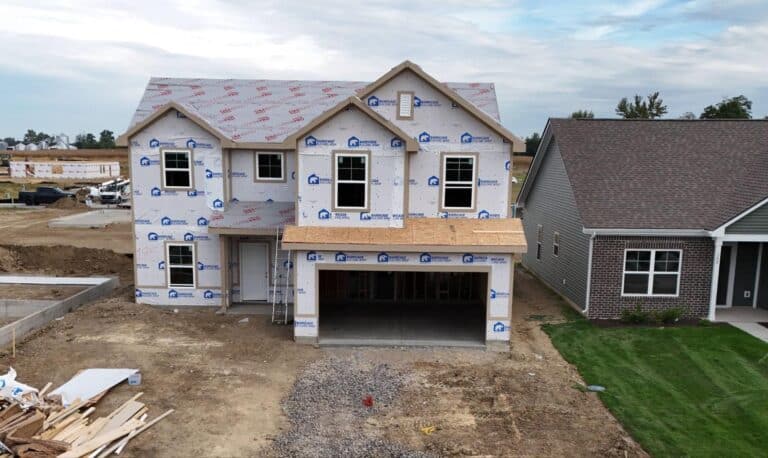
Signing a construction contract means betting on an interest rate for a home that doesn’t exist yet. A construction loan rate lock is usually quoted in days or weeks, but a real build runs for months, and that gap is where most of the anxiety around financing a new home comes from. Here’s what actually sets your rate, what a lock covers, and what to ask your lender before the clock starts running.
Key Takeaways
- A standard mortgage rate lock typically runs 30, 45, or 60 days, sometimes longer, while new single-family builds average close to 9 months from start to finish nationally.
- Being underwritten on your permanent mortgage terms at the start of a single-closing loan isn’t the same as having your rate locked yet. Those happen at different points in the process.
- For single-closing construction-to-permanent loans sold to Fannie Mae, no construction period can run longer than 12 months, and the total can’t exceed 18 months, with no exceptions.
- Extending a rate lock can be expensive, and your Loan Estimate won’t show you that cost. Ask your lender directly and get the answer in writing.
- Value Built Homes’ Free Construction Financing pays the interest on your construction loan while you build. It does not lock, fix, or protect your permanent mortgage rate, that’s a separate agreement with your lender.
- Your builder controls the schedule. Your lender controls the rate and the lock. Knowing which is which tells you who to ask, and when.
What Is a Construction Loan Rate Lock?
A construction loan rate lock is your lender’s promise that your interest rate won’t change between now and closing, as long as you close within the agreed window and your application doesn’t change. Rate locks are typically available for 30, 45, or 60 days, and sometimes longer (figure current as of a May 2023 review), which works fine for a home that’s already built and ready to close. A new construction loan almost never closes that fast.
It’s also worth separating two things that get blurred together: the rate on the construction loan itself while your home is being built, and the rate on your permanent mortgage once you move in. On a single-closing construction-to-permanent loan, those can be the same loan start to finish, but whether that rate is actually locked, and when, is a separate question from whether you’re underwritten on it. That’s the distinction this post exists to untangle.
That’s the mismatch this entire post is about: a lock measured in weeks, stretched across a build measured in months.
Why a Standard Rate Lock Doesn’t Match a Real Build Timeline
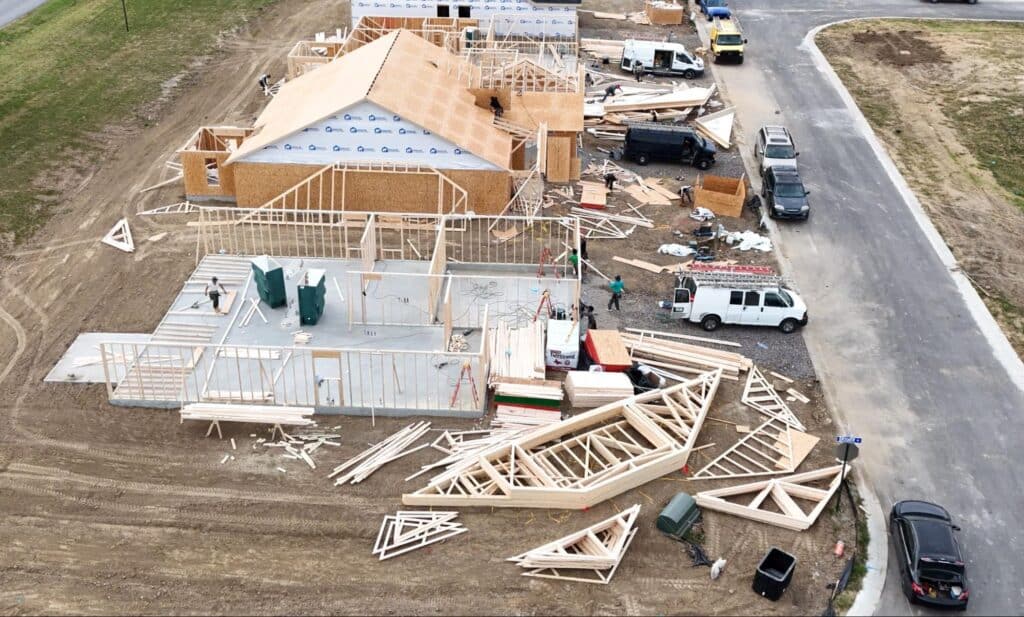
A rate lock is measured in weeks. A new home build is measured in months, and that gap is where the real risk sits.
Nationally, single-family homes completed in 2025 took an average of 8.8 months from start to finish, including 7.4 months of construction time. Homes built for sale took the least time, averaging 7.4 months from obtaining building permits to completion. Those two 7.4-month figures measure different things, construction time within the total versus permit-to-completion, so they aren’t directly comparable to each other.
Value Built Homes builds on a different clock: approximately 5 to 7 months from breaking ground to move-in, a different starting point than the national permit-to-completion figures above. Whichever number applies to your build, a lock quoted in weeks has to survive months of actual construction.
The Rate-Lock Exposure Timeline During Your Build
The table below walks through each stage of a construction loan, from before you apply through closing, pairing what’s happening to your rate with the question worth asking your lender at that point.
| Stage | What’s Happening to Your Rate | What to Ask Your Lender | Your Exposure |
|---|---|---|---|
| Before you apply | Nothing is locked yet. Any rate you’ve been quoted is indicative only. | At what point in my build will you let me lock, and what lock lengths do you offer? | Full exposure to market movement, but also nothing to extend or lose yet. |
| At application and underwriting | On a single-closing loan, your lender underwrites you based on the terms of your permanent financing | Are you underwriting me on my permanent terms now, and does that set my rate or just qualify me for it? | Being qualified at a rate isn’t the same as holding it. This is the most commonly misunderstood moment. |
| At your first closing | If you have a one-time close loan, this is typically where a lock is established. A two-closing structure leaves your permanent rate still ahead of you. | Which structure am I in, what exactly is locked today, and for how many days? | A lock quoted in days, set against a build measured in months. Write both numbers down and compare them. |
| Mid-build | The lock clock is running while your build schedule runs. Delays consume the lock. | What does an extension cost, how is it charged, and when do I have to decide? | Your Loan Estimate won’t show extension costs, so you have to ask for this figure directly. |
| Approaching completion | On a single-closing loan, your rate is among the few terms that may be modified, and that has to happen before or at conversion | If rates have moved, is a float-down available, and what triggers it? | Float-down terms are lender-specific. Don’t assume your program includes one. |
| Closing | Your lock has to still be valid when your loan closes. | Will my Closing Disclosure arrive with enough margin before my lock expires? | Your lender must deliver your Closing Disclosure at least three business days before closing. A lock expiring inside that window is a real problem. |
How Your Loan Structure Changes What’s Locked
Whether your rate is locked at all before your home is finished depends on how your construction loan is structured: a single closing or two separate closings. Value Built Homes’ guide to one-time-close vs. two-time-close construction loans walks through both structures in detail.
On a single-closing construction-to-permanent loan, your lender underwrites you based on the terms of your permanent financing from the start. But being underwritten on those terms isn’t the same as your rate being locked. Only a short list of terms, including the interest rate, may be modified when the loan converts, and that modification has to happen before or at conversion.
A two-closing structure keeps your construction loan and your permanent mortgage separate. Your permanent rate isn’t locked until you close that second loan, which can mean more flexibility to shop around, but also more exposure if rates move against you in the meantime.
Is There a Limit on How Long Your Construction Period Can Run?
Yes, for loans sold to Fannie Mae. No single construction period may run longer than 12 months, and the total construction period can’t exceed 18 months, with no exceptions granted.
That cap applies specifically to single-closing construction-to-permanent loans delivered to Fannie Mae. It isn’t a universal rule for every construction loan, but it’s the clearest outer boundary on record for how long your build and your financing are allowed to stretch together, and it rarely shows up in builder or lender marketing.
What Does It Cost to Extend a Rate Lock?
It depends on your lender, and your Loan Estimate won’t tell you. Your Loan Estimate will not show you what it costs to extend a rate lock, and a lock may be expensive to extend if your transaction needs more time. The Consumer Financial Protection Bureau specifically advises asking: “What if my closing is delayed and the rate lock expires?” before you sign anything.
And if you don’t close in time, you might have to pay a fee to extend your rate lock. If you don’t pay to extend, your lender will typically offer you a new rate based on current market conditions instead, which could be higher or lower than the one you’d locked in.
Questions worth putting to your lender before you sign:
- What does an extension cost, and how is it charged?
- When do I have to decide whether to extend?
- Is there a point where an extension is no longer possible?
Get the answers in writing. A verbal assurance early in the process is easy to forget by the time your build hits a delay.
What Can Your Builder Actually Control?
Your builder controls the schedule. Your lender controls the rate and the lock, and the two aren’t the same thing, even though it’s easy to blur them.
Value Built Homes builds from simplified floor plans, which means fewer complex decisions during the build and a streamlined, affordable process. That’s the reason its typical timeline, 5 to 7 months from breaking ground to move-in, stays predictable. That predictability is what a builder can actually influence: a schedule you can plan a lock around.
While your home is under construction, you’re also typically making interest-only payments on the construction loan until it converts or pays off. Value Built Homes’ Free Construction Financing pays the interest on your construction loan while your home is being built, which removes that carrying cost so you’re not paying to hold the loan while you wait. It does not lock, fix, or protect your permanent mortgage rate. Your lender sets and locks that rate, not your builder, and it’s worth saying plainly because the two are easy to confuse.
Frequently Asked Questions About Construction Loan Rate Locks
How long is a mortgage rate lock, and is it long enough for a build?
Rate locks typically run 30, 45, or 60 days, sometimes longer, which is usually shorter than a full construction timeline. That’s why the lock’s start date matters as much as its length. Ask your lender when in your build they’ll let you lock, not just how long the lock lasts once it starts.
What happens if my home isn’t finished before my rate lock expires?
Your lock can expire before you close, and extending it isn’t automatic or necessarily cheap. If you don’t close in time, you might have to pay a fee to extend your rate lock, or your lender may reprice the loan to its current rate instead (see “What Does It Cost to Extend a Rate Lock?” above for how that typically works). Some buyers assume a lock just quietly continues until the home is finished, but it doesn’t. Build in a buffer, and ask your lender upfront what your options are if your closing date slips.
Can I lock my rate before construction even starts?
That depends on your lender and your loan structure. Some lenders won’t let you lock until later in underwriting or at your first closing, especially on a two-closing loan. Ask your lender directly when in the process they’ll let you lock, since this varies by program and isn’t standardized.
What if rates drop after I lock?
Some loan programs include a float-down option that lets you move to a lower rate if rates fall after you lock. It’s a feature some programs offer, not something to assume is standard. Ask your lender whether float-down is available on your loan and what triggers it.
Does Value Built Homes’ Free Construction Financing lock my interest rate?
No. Free Construction Financing pays the interest on your construction loan while your home is being built, which lowers your carrying cost during construction. It doesn’t lock, fix, or protect your permanent mortgage rate. That rate, and the lock on it, is a separate agreement between you and your lender.
Ready to Build on a Timeline You Can Plan a Lock Around?
A construction loan rate lock only works in your favor when you understand its timing, not just its length. Value Built Homes’ standardized floor plans keep builds predictable, which gives you a real schedule to bring to your lender.
Ready to see what fits your family? Browse Value Built Homes’ floor plans to find the right plan, or contact the Value Built Homes team to talk through your timeline and financing questions.