The decisions you make with your builder during new construction determine whether finishing your basement later is a weekend project or a major renovation. If you plan a basement finish during new construction, a few inexpensive rough-ins now can save you thousands when you’re ready to build out the space. This guide walks through the five decisions that matter most, and why you need to make them before the slab is poured.
Key Takeaways
- The cheapest time to set up your basement for a future finish is during construction, when rough-ins, egress windows, and ceiling height can be added or adjusted for a fraction of what they cost later.
- Plumbing rough-ins added during construction are typically much cheaper than retrofitting a basement bathroom later, when concrete cutting, drain rerouting, and floor patching substantially raise the price.
- International Residential Code (IRC) Section R310.2 requires an egress window for any basement bedroom, with a net clear opening of at least 5.7 square feet (5.0 square feet at grade level).
- IRC Section R305.1 requires a minimum finished ceiling height of 7 feet for habitable basement space. That gets locked in with foundation wall height, long before drywall.
- Plan electrical panel capacity, HVAC supply and return provisions, plumbing stub-outs, egress windows, and ceiling height with your builder before construction begins.
- Value Built Homes includes the basement in every standard home package, so planning rough-ins is an add-on conversation, not a structural one.
Why Pre-Construction Is the Cheapest Time to Plan a Basement Finish
Planning during new construction is dramatically cheaper than retrofitting later because plumbing, electrical, and structural adjustments can be made before concrete is poured and walls are closed in. Rough-ins installed during the build are an add-on spec, not a renovation, and that distinction usually saves thousands in demolition and labor.
A basement is one of three main foundation options, and the only one that gives you expandable living space without growing your home’s footprint. Once a basement is in the plan, the cost gap between planning the finish up front and retrofitting it later can be significant.
A basement bathroom is the clearest example of how that gap plays out:
- During construction: Plumbing rough-ins are part of the standard build sequence and add a relatively modest line item to the budget.
- After construction: Retrofitting that same bathroom into a finished basement involves breaking concrete, rerouting drain lines, and patching floor finishes, and it typically runs several times the cost of the same rough-in installed during construction.
The timing window is tight. A typical Value Built Homes build takes about 5 to 7 months from ground-break to move-in, and foundation and plumbing decisions happen in the first few weeks. For a broader view of what to lock in before breaking ground, see the Value Built Homes pre-construction checklist for a low-stress build.
Five Basement Rough-Ins to Discuss With Your Builder
A complete basement pre-finish package can include plumbing stub-outs, electrical pre-wire, HVAC supply and returns, egress windows, and a ceiling height that supports a finished space. Not every builder includes all of these by default, so ask what’s standard and what’s an add-on during your pre-construction meeting.
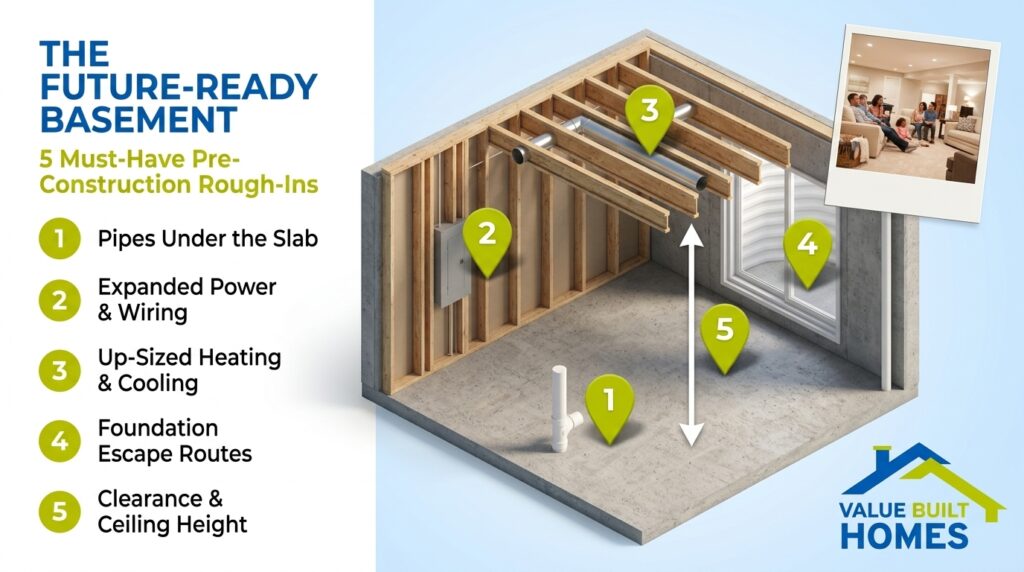
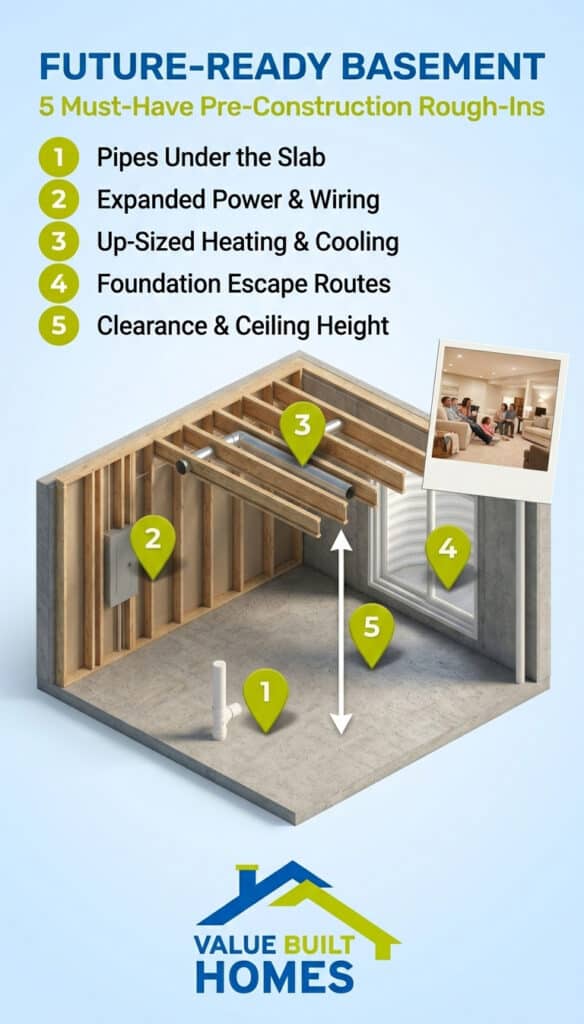
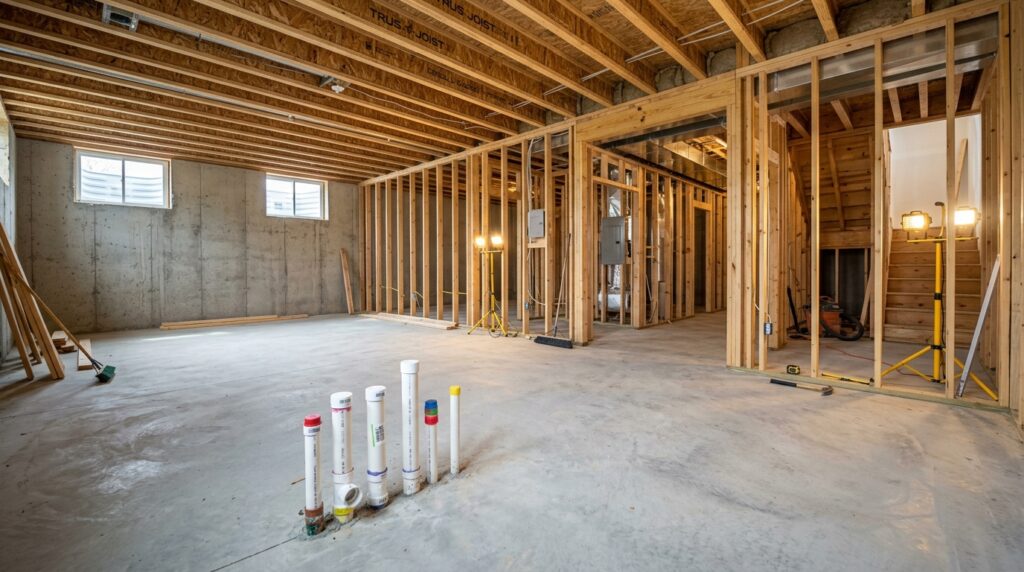
- Plumbing stub-outs for a future bathroom or wet bar: Ask for supply lines and waste lines roughed in at the approximate location of your future bathroom. Rough-ins installed before the slab is poured are far cheaper than cutting concrete to add them later.
- Electrical pre-wire and panel capacity: Confirm the electrical panel has spare breaker slots for future basement circuits. Home runs for future lighting, outlets, and low-voltage wiring (Cat6, coax) can be pulled before drywall, which avoids drywall damage and retrofit labor later.
- HVAC supply and return provisions: A finished basement needs heating and cooling. Ask whether the HVAC system is sized to serve the basement, and whether supply vents and cold air returns are roughed in for the future finished space. For more on how builders size these systems, see the Value Built Homes guide to HVAC sizing for comfort in your new home build.
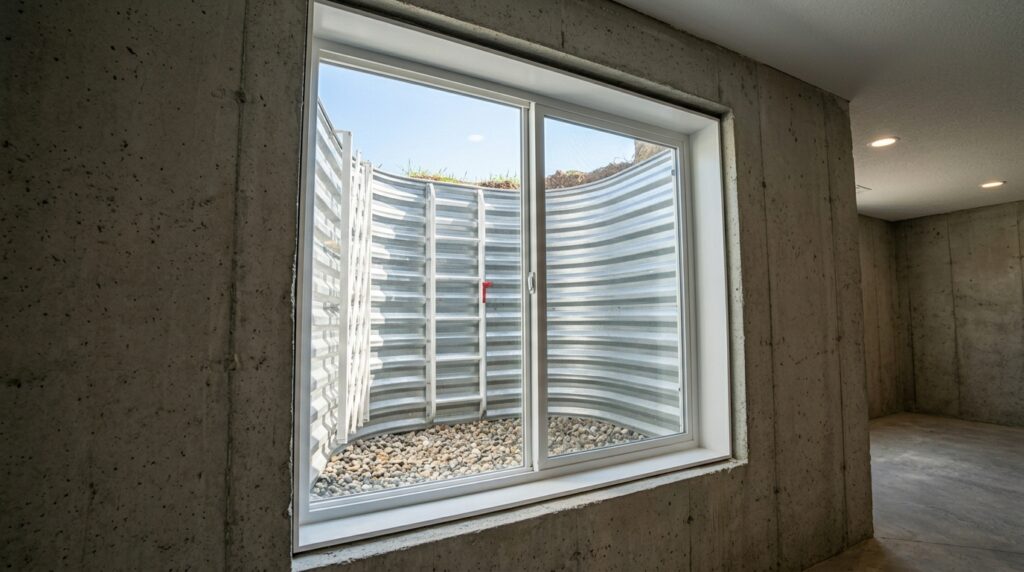
- Egress windows in the right locations: If you plan a future basement bedroom, the egress window must be planned during foundation layout. Window wells and cutouts in the foundation wall are not easy to add later.
- Ceiling height and ductwork planning: Finished basement ceiling height gets locked in at the foundation wall pour. Ductwork, plumbing drops, and beams need to be coordinated so the finished ceiling still clears code minimums.
A basement is a standard part of every Value Built Homes home package, so the question is what provisions to include inside it. Bring a short list of your intended basement uses (bedroom, bathroom, rec room, wet bar, storage) to your build meeting so your Value Built Homes team contact can advise on which rough-ins make sense for your plan.
Basement Code Requirements to Plan Around Before the Pour
Two IRC code sections drive the most expensive basement-finish surprises: egress windows for bedrooms and minimum ceiling height for habitable space. Both are structural decisions that get locked in during foundation and framing, so they belong in your pre-construction conversation with your builder.
Egress Windows for Basement Bedrooms
Any basement bedroom needs an emergency escape and rescue opening that meets International Residential Code (IRC) Section R310.2. The code requirements are specific:
- Net clear opening area: minimum 5.7 square feet (5.0 square feet at grade level)
- Net clear opening height: minimum 24 inches
- Net clear opening width: minimum 20 inches
- Maximum sill height: 44 inches from the finished floor
If the basement window is below grade, you’ll also need a window well large enough to allow the window to fully open and provide escape space. Window wells also have to integrate with your basement’s waterproofing and radon mitigation system, which is already part of the construction plan in Indiana and the tri-state area.
Adding an egress cutout to a poured foundation wall after the fact is a significant and expensive retrofit. Planning it into the foundation design up front is nearly free by comparison.
Ceiling Height for Finished Basement Space
Finished basement habitable space requires a minimum ceiling height of 7 feet, per IRC Section R305.1. That 7-foot minimum applies to habitable space, hallways, bathrooms, and laundry rooms. Bathrooms have an exception that allows the ceiling to drop to 6 feet 8 inches at the front clearance area for fixtures, and non-habitable portions of the basement (like a utility room or unfinished storage area) only need 6 feet 8 inches under R305.1.1.
Practically, that means the foundation wall needs to be tall enough to account for:
- Finished floor buildup (subfloor and flooring)
- HVAC ductwork, plumbing drops, and structural beams hanging below the joists
- Drywall and finished ceiling
A foundation wall height of 8 feet or more gives most homeowners room to hit the 7-foot finished minimum without fighting for inches at the HVAC trunk. Ask your builder to model the finished ceiling height across the basement layout, not just at the walls.
The numbers above reflect the 2020 Indiana Residential Code, which is currently in effect for Value Built Homes buyers in Indiana. Illinois and Kentucky readers should verify with their local permitting office, since the adopted code edition can differ. Either way, your local permitting office or county inspector is the final authority.
Budgeting for Your Basement Finish
Basement finishing typically averages around $32,000 nationally, though final costs vary widely based on the size of the space, whether plumbing and egress are already in place, and the finish level (flooring, fixtures, lighting, built-ins).
The biggest cost variable is what was planned during construction. A basement with plumbing rough-ins, code-compliant egress, adequate ceiling height, and pre-wired electrical already in place typically finishes at the low end of that range. One that needs any of those added after the fact finishes at the high end.
For Value Built Homes buyers planning the finish as a future project, the cost-avoidance playbook is simple:
- Decide the rough-in list during the pre-construction meeting.
- Include plumbing, electrical, HVAC, and egress provisions in the build spec.
- Plan ceiling height and structural clearances into the foundation.
Because Value Built Homes offers free construction financing during the build, the cost of adding rough-ins is rolled into the construction loan rather than paid out of pocket later. For a broader look at costs that can catch new-construction buyers off guard, see the Value Built Homes post on hidden costs in your new home budget.
Frequently Asked Questions About Planning a Basement Finish
Is it cheaper to finish a basement during new construction?
Yes, in most cases. Plumbing, electrical, HVAC, and egress window provisions can be added during construction for a fraction of what they cost to retrofit later. A basement finished as a separate project after move-in is usually more expensive because it involves breaking concrete, rerouting utilities, and undoing finishes that were already in place.
What should I ask my builder to include in the basement?
Ask about plumbing stub-outs for a future bathroom, electrical pre-wire and panel capacity for future circuits, HVAC supply and return provisions, code-compliant egress windows for any future bedroom, and a finished ceiling height that clears the IRC 7-foot minimum. Value Built Homes buyers should raise these items during the pre-construction meeting with their build contact.
How much does it cost to rough in a basement bathroom?
Costs vary widely depending on layout, distance to the main plumbing stack, and whether slab work is required. The most reliable way to budget is to ask your builder for a specific add-on quote during pre-construction. A rough-in installed during the build typically costs a fraction of what it costs to retrofit one into a finished basement, since the latter involves breaking concrete and patching floors.
Is it worth paying the builder to rough in the basement plumbing?
In almost every case, yes. Rough-ins done before the slab is poured avoid the biggest cost drivers of a retrofit (concrete demolition, floor repair, and drain line rerouting). If there’s any chance you’ll finish the basement in the next 5 to 10 years, pre-plumbing is typically the cheapest way to preserve that option.
Can you add plumbing to a finished basement later?
Yes, but it involves breaking through the concrete slab, running new drain lines to the main stack, and patching the floor. Depending on your finishes, you may also need to redo flooring, drywall, and trim in the affected area. Adding plumbing after a basement is already finished is typically the most expensive way to end up with a basement bathroom.
Plan Your Basement With the Right Builder
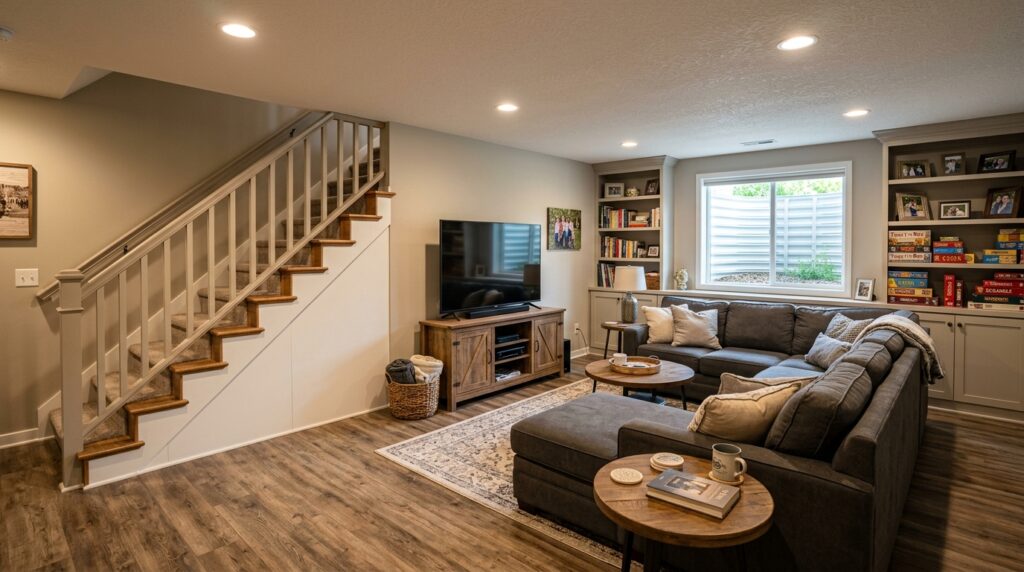
Planning a basement finish during new construction is one of the smartest moves you can make when building a forever home. A few rough-ins and structural choices now can save thousands later and keep the option open for a future bedroom, bathroom, or family room. Contact the Value Built Homes team to talk through your options, or browse current floor plans to see which layouts work best with a finished basement in mind.