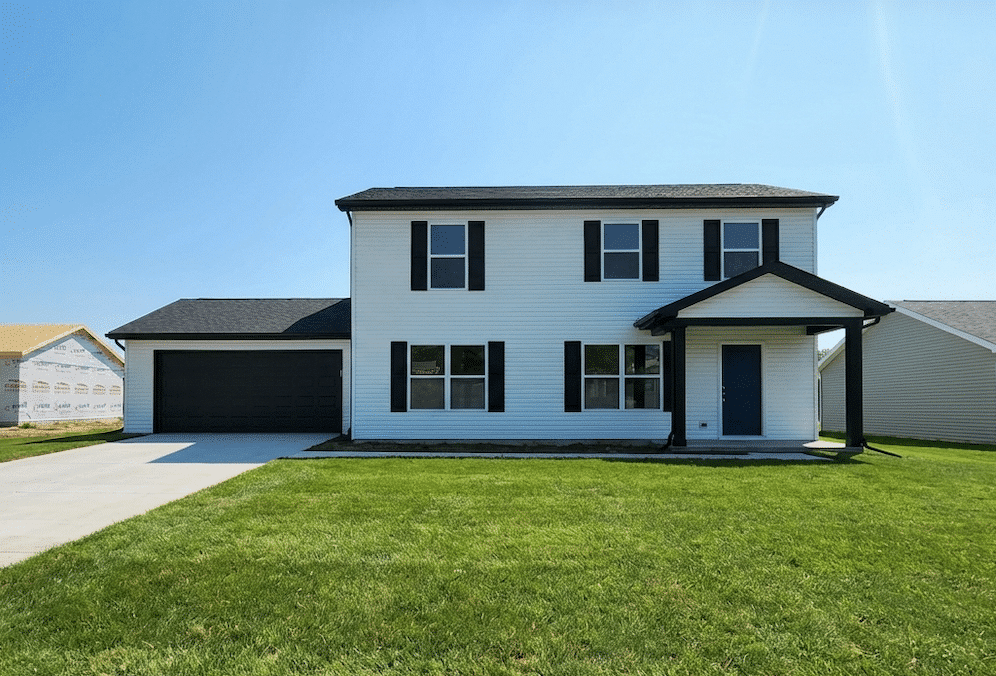
For the first time since September 2022, mortgage rates in Indiana dipped below 6% — and if you’ve been watching the headlines and wondering whether now is the right time to build a new home, this is the moment worth paying attention to. According to Freddie Mac’s Primary Mortgage Market Survey, the weekly average 30-year fixed rate hit 5.98% as of February 26, 2026. Rates have since edged back to around 6.08%–6.12% in Indiana. But the broader shift is real: rates today are meaningfully lower than they were a year ago, and forecasters expect them to stay near this level through 2026.
Key Takeaways
- The 30-year fixed mortgage rate briefly fell to 5.98% (Freddie Mac, Feb. 26, 2026) — the first time below 6% since September 2022. As of early March, the Indiana average had edged back to approximately 6.12% (Bankrate).
- On a $162,000 loan — a mid-range Value Built Homes floor plan with 10% down — today’s rate environment saves approximately $83/month compared to this time last year. That’s nearly $1,000 per year.
- Value Built Homes’ Free Construction Financing program covers the interest on the construction loan during the build phase, so the rate you lock in at closing is the only rate that matters to your budget.
- Value Built Homes builds in approximately 5–7 months. Start the process now and you could be moving in by late summer or fall 2026 — when forecasters expect rates to remain near current levels.
- Fannie Mae projects the 30-year fixed rate at 6.1% for both Q1 and Q2 2026 (per NerdWallet’s March 2026 mortgage outlook). A dramatic additional drop is not what the data suggests. Waiting for rates to fall further is a gamble without strong forecasting support.
- Indiana first-time buyers may also qualify for down payment assistance through the Indiana Housing & Community Development Authority (IHCDA), including 3.5%–6% of the purchase price in DPA.
What “Below 6%” Actually Means Right Now
The sub-6% milestone matters because it’s a reference point the market hadn’t seen in more than three years. According to Freddie Mac, the 30-year fixed average was 6.76% in February 2025. Crossing below 6% — even briefly — signals a meaningful shift in the rate environment, not just a single-day fluctuation.
Rates have since moved back above 6%. That’s normal behavior; rates don’t fall in a straight line. The more important story is the trajectory. Bankrate’s Indiana mortgage data as of early March showed the state’s 30-year average at 6.12% — a level that would have been considered a significant improvement just 18 months ago.
Why did rates fall? The Federal Reserve delivered three rate cuts in late 2025. Steps taken to expand the purchase of mortgage-backed securities added further downward pressure, as reported by CNN Business. The result was a brief but real crossing of the 6% threshold — the first since September 2022.
What the Rate Drop Means for Your Monthly Payment
Rate news is easier to understand when you translate it into dollars. Here’s a concrete look at what the current environment means at a Value Built Homes price point.
Take a $180,000 home — squarely in the middle of the Value Built Homes floor plan range — with a 10% down payment ($18,000), leaving a $162,000 loan.
| Scenario | Monthly P&I Payment |
| At 6.76% (Freddie Mac avg, Feb. 2025) | ~$1,052/month |
| At 5.98% (Freddie Mac avg, Feb. 26, 2026) | ~$969/month |
| Monthly savings | ~$83/month |
| Annual savings | ~$996/year |
That’s nearly $1,000 per year staying in your pocket instead of going to interest — from the rate shift alone, without changing the home, the down payment, or anything else.
CNN Business cited a Chase Home Lending executive who noted that a 0.25% rate reduction allows a buyer to afford approximately 2.5% more house at the same monthly payment. Across the full year-over-year rate improvement, that buying power gain is real and adds up.
How Construction Loans Work in a Falling-Rate Environment
Building a home involves two financing phases, and understanding both matters when rates are moving.
During construction, you carry a short-term construction loan — a credit line that funds the build as work progresses, with interest charged on drawn funds. When the home is complete, the construction loan converts to (or is replaced by) a permanent mortgage: the 30-year loan you’ll hold for decades.
The construction phase typically lasts several months. During that time, rates can change. For most builders, the rate you lock in for the permanent mortgage isn’t determined until construction is complete and you’re ready to close. You start the process today in one rate environment; you finalize your permanent financing months later when conditions may have shifted.
This is where the Value Built Homes build process removes a significant layer of uncertainty.
How Value Built Homes’ Free Construction Financing Changes the Equation
One of the biggest concerns buyers have when building a home is double-layer financing costs: construction loan interest during the build, followed immediately by the permanent mortgage. Value Built Homes eliminates the first layer entirely.
Their Free Construction Financing program covers the interest on the construction loan during the build phase. You don’t carry an additional interest burden while your home is being built. The only financing cost you’re managing is your permanent mortgage rate — and nothing else.
That simplicity matters in any rate environment. As one Value Built Homes homeowner described it: “After the initial ordering of my Value Built Homes home I was able to concentrate on moving and packing. [They] managed the building process and called me when it was done and I was able to move right in with no problems.”
For specifics on how the program works alongside today’s lenders and rates, reach out to the Value Built Homes team directly. Details vary by lender and loan type, and the team can walk you through current options based on your situation.
Should You Start Now or Wait for Rates to Fall Further?
This is the question most buyers have when they see a rate headline. Based on current forecasting, the case for starting sooner is stronger than the case for waiting.
Fannie Mae’s Economic and Strategic Research Group projects 30-year rates at 6.1% for Q1 and Q2 2026. The Mortgage Bankers Association forecasts 6.2% for Q1, settling to 6.1% through the remainder of the year. Neither organization anticipates a return to the 3%–4% rates of the pandemic era. The people whose job it is to model these things are signaling that where rates are right now is roughly where they’ll stay.
The timing math also works in your favor. Value Built Homes builds homes in approximately 5–7 months. Starting the process in March 2026 puts move-in around late summer or early fall — when rates, according to forecasters, should be in a similar range to today. Waiting six months means paying rent (or staying put) for six months while hoping for a shift that experts aren’t predicting.
There’s also a competition factor worth noting: a Clever Real Estate and Best Interest Financial survey of 1,000 prospective buyers found that 94% said they would change their home-buying plans if rates don’t fall below 6% in 2026. Buyers are watching. When rates dip, demand for lots and available homes tends to pick up quickly.
Frequently Asked Questions About Mortgage Rates and Building a New Home in Indiana
Will mortgage rates stay below 6% through 2026?
Probably not consistently. Freddie Mac’s weekly average briefly hit 5.98% on February 26, 2026, but rates climbed back above 6% within days. Both Fannie Mae and the Mortgage Bankers Association project 30-year rates in the 6.0%–6.2% range for the first half of 2026. The sub-6% dip may have been short-lived, but the overall rate environment is still meaningfully lower than it was in 2024 and early 2025.
When do I lock in my mortgage rate when building a new home?
With a standard construction-to-permanent loan, the permanent rate is typically locked in closer to or at the time your home is complete and you’re ready to close. The exact timing varies by lender. With Value Built Homes, the Free Construction Financing program means you’re not paying construction-phase interest at all — so your primary rate question is the permanent mortgage, not the interim loan.
How does a construction loan differ from a regular mortgage?
A construction loan is a short-term credit line that funds the building process in stages as work is completed. You pay interest only on the funds drawn during construction. Once the home is finished, the loan either converts to a permanent mortgage or is replaced by one. For most Value Built Homes buyers, the Free Construction Financing program means the construction loan interest question is already answered — Value Built Homes covers it.
Are there programs to help Indiana first-time buyers with down payments?
Yes. The Indiana Housing & Community Development Authority (IHCDA) offers down payment assistance equal to 3.5%–6% of the purchase price for qualifying buyers. An IHCDA Mortgage Credit Certificate can also provide up to $2,000 in annual federal tax savings. For details and eligibility, visit the IHCDA website or speak with a lender familiar with Indiana first-time buyer programs.
Ready to See What You Can Build in Southern Indiana?
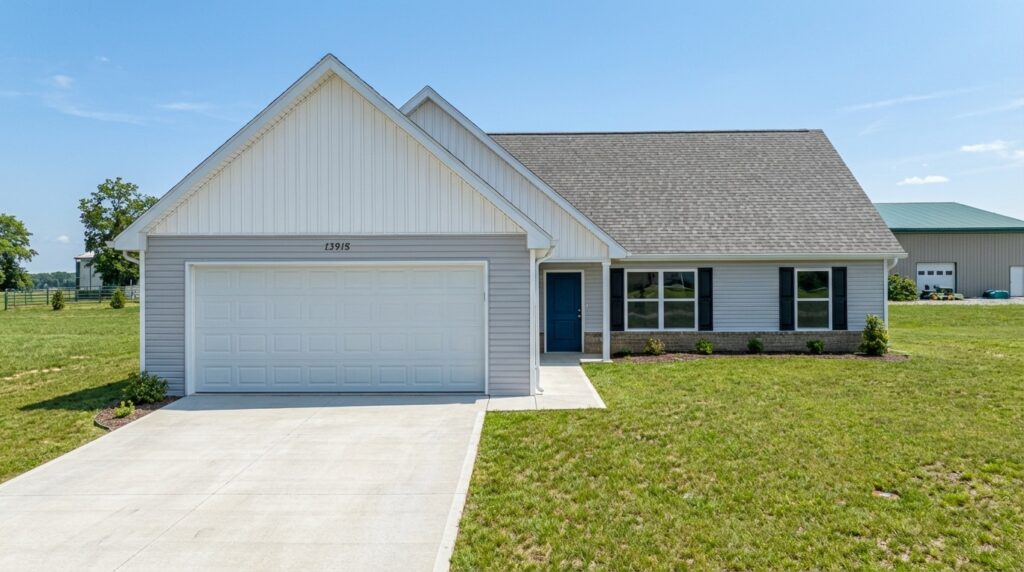
Rates are near a multi-year low. Value Built Homes offers site-built homes across Southwestern Indiana and the tri-state area — with floor plans starting in the $130s, a 5–7 month build timeline, and Free Construction Financing that removes construction loan interest from the equation entirely.
The best way to understand what building with Value Built Homes looks like for your budget is to have a real conversation. Contact the Value Built Homes team to ask questions, discuss your situation, and explore what’s possible.
Or browse available lots and subdivisions — including Willow Crossing in Evansville, Baldwin Estates in Princeton, and Poulton Place in Boonville — to see what’s currently available.