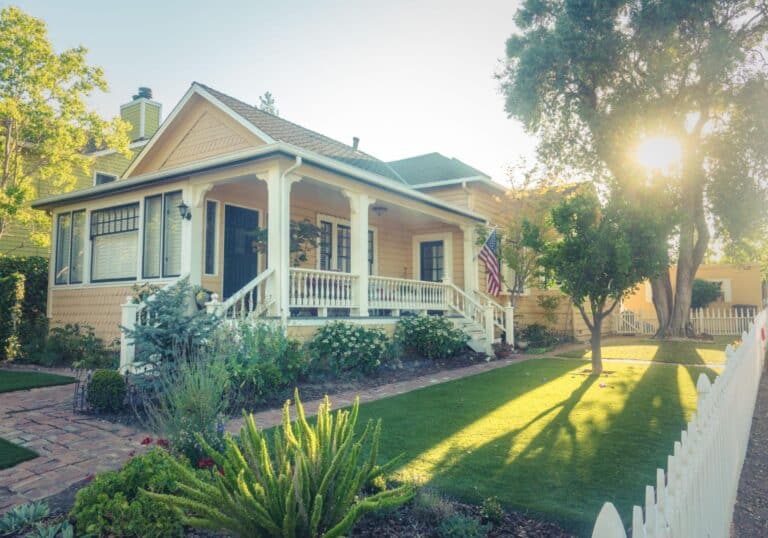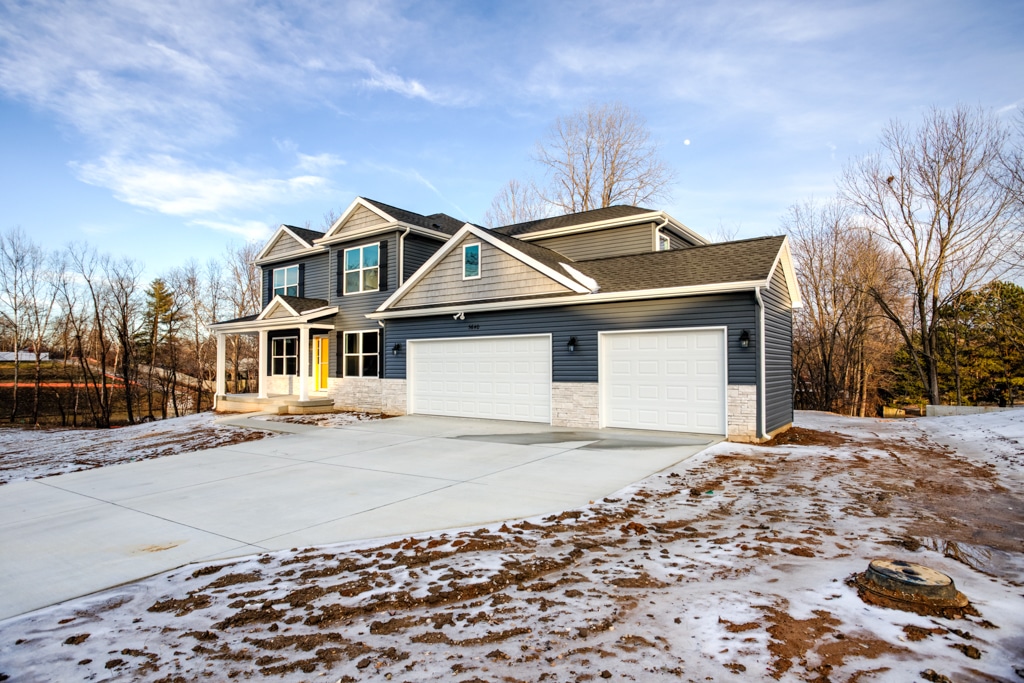
For many Indiana homeowners, the comfort of home comes with a painful tradeoff: high utility bills in the dead of winter and during sweltering summer heat waves. Heating and cooling costs can swing dramatically from month to month, making it hard to budget and even harder to feel fully comfortable in your own space.
Energy-efficient homes are changing that reality. By using better building materials, smarter systems, and thoughtful design, these homes deliver year-round comfort while keeping energy use—and monthly bills—under control. Instead of dreading the next utility statement, you gain predictable costs and a more comfortable, healthier living environment.
Here in Indiana, where temperatures can plunge below freezing in January and soar into the 90s by July, energy efficiency isn’t just a “nice to have”—it’s a smart, long-term financial strategy. At Value Built Homes, we design and build with our state’s unique climate in mind so your home can stay comfortable and affordable in every season.
What Is an Energy-Efficient Home (and Why It Matters in Indiana)?
An energy-efficient home is designed and built to use less energy while maintaining or improving comfort, health, and durability. It combines high-performance insulation, advanced windows, efficient heating and cooling systems, and energy-saving appliances and fixtures to reduce wasted energy and keep indoor temperatures stable. The result is a home that costs less to operate, is more comfortable to live in, and is better for the environment.
In Indiana, this matters more than most people realize. Our state experiences cold, often snowy winters, humid summers, and big temperature swings in between—conditions that can drive up heating and cooling costs in a typical home. An energy-efficient home helps buffer you from those extremes, meaning your furnace and air conditioner don’t have to work as hard, your utility bills are more predictable, and your home feels more comfortable in every room, all year long.
For a broader overview of the key elements that make a home energy efficient, including how design, materials, and systems all work together, explore our main guide: The Ultimate Guide to Energy-Efficient Homes: 5 Core Pillars of Design.
Core Features of an Energy-Efficient Home
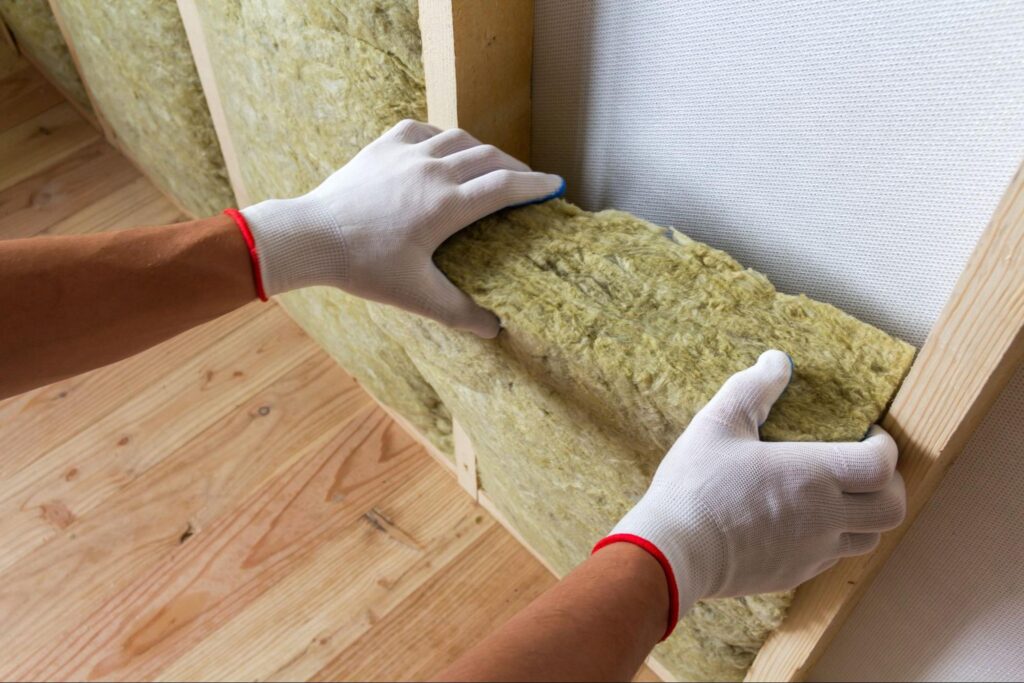
Creating an energy-efficient home means combining smart design with quality materials and systems that reduce energy use without sacrificing comfort. These key features work together to keep your home comfortable, your utility bills lower, and your energy use in check—especially in Indiana’s variable climate.
High-Performance Insulation & Advanced Windows: The Foundation of Efficiency
High-performance insulation uses modern materials—such as spray foam or rigid foam boards—to trap conditioned air inside your home. By slowing down heat transfer, insulation helps your heating and cooling systems work less, which reduces energy use and wear on equipment.
Advanced windows provide another critical layer of protection. Double- or triple-pane glass with low-emissivity (Low-E) coatings helps maintain a stable indoor temperature and reduces noise. In Indiana, where temperatures can swing from below freezing in winter to hot and humid in summer, quality insulation and windows help minimize temperature swings, reduce moisture issues, and cut peak heating and cooling costs.
Efficient Heating, Cooling & Smart Appliances
Heating and cooling are among the largest energy users in any home. Installing an efficient HVAC system—ideally ENERGY STAR®-rated—keeps your home comfortable without overworking expensive equipment. Modern furnaces, air conditioners, and heat pumps are engineered to deliver the same or better comfort using less energy.
Energy-efficient, ENERGY STAR®-rated appliances further reduce energy and water use throughout the home. Smart thermostats and connected appliances can optimize operation based on your schedule and habits, helping you avoid waste and potentially lowering your monthly utility bills over time. Actual savings vary with climate, home design, and usage, but these upgrades consistently move your costs in the right direction.
Water & Lighting Efficiency: Small Changes, Big Savings
Even simple upgrades in water and lighting can yield meaningful savings. Low-flow faucets, showerheads, and toilets reduce water use without sacrificing performance. Switching from traditional bulbs to LED lighting can significantly cut electricity usage and reduce how often bulbs need to be replaced.
The U.S. Department of Energy’s research shows that these kinds of improvements, applied consistently throughout the home, add up to substantial long-term reductions in energy and maintenance costs. Together with high-performance insulation, windows, and efficient systems, they create a more comfortable, cost-effective, and sustainable home.
Real-World Impact: Lower Bills, More Comfort
Energy-efficient homes don’t just sound good on paper—they translate into lower monthly bills, more consistent comfort in every room, and greater financial peace of mind over time.
Comparing Energy-Efficient Homes to Traditional Homes
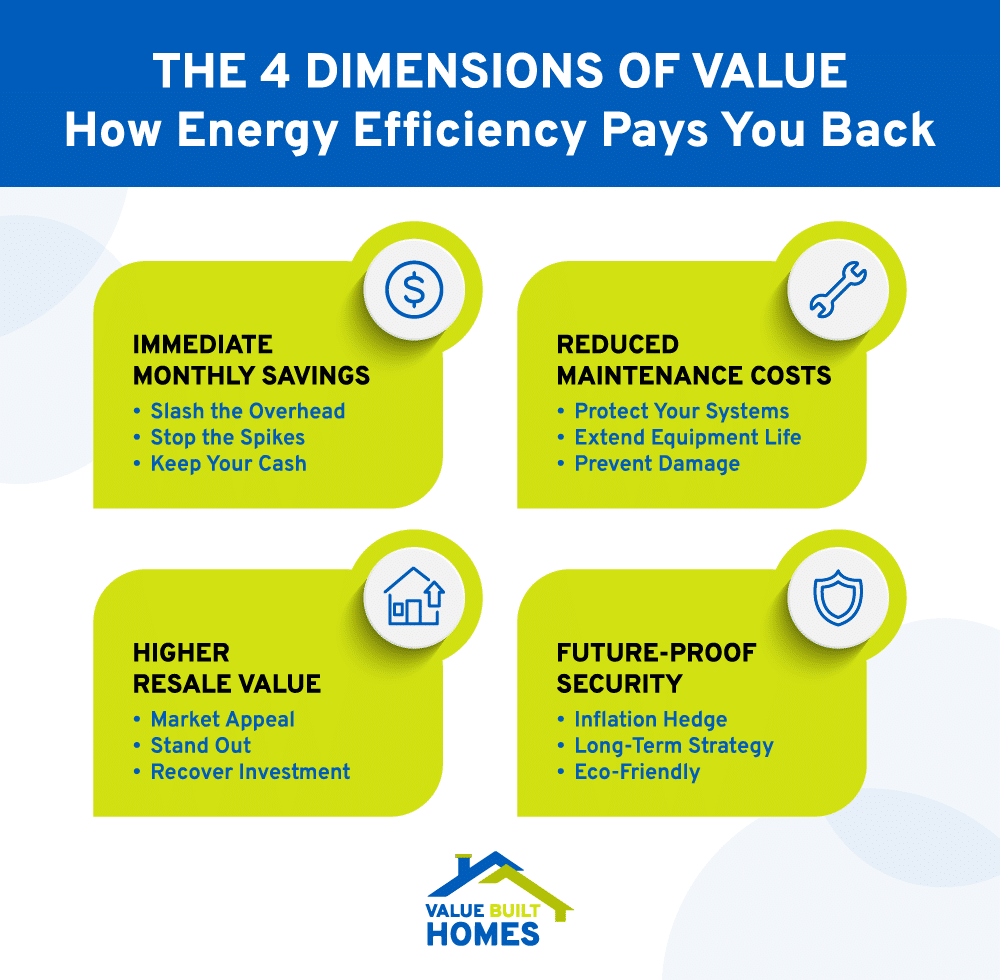
Older homes often rely on basic insulation, single-pane windows, and outdated appliances, which result in significant energy losses and fluctuating monthly bills—high heating expenses in winter and steep air conditioning costs in summer. In contrast, energy-efficient homes are designed with modern materials that help stabilize indoor temperatures and reduce energy loss. By leveraging improvements such as enhanced insulation, modern windows, and ENERGY STAR® appliances, these homes can achieve notable reductions in energy bills. Some estimates suggest that, under optimal conditions, overall savings could approach a range of around 20–30%; however, actual percentages can vary with factors such as installation quality and local energy rates.
Achieving Financial Stability with Predictable Utility Costs
More predictable monthly expenses can be as important as overall savings. Traditional homes may suffer from utility bill spikes due to changing weather or rising fuel prices. Energy-efficient homes, with their superior insulation and smart design, tend to offer a more stable cost structure. This increased predictability can make budgeting easier and reduces financial stress, allowing you to enjoy long-term economic benefits.
Indiana-Specific Considerations for Energy Efficiency
Indiana experiences a wide range of weather conditions—from cold winters to hot, humid summers. While some regions might experience incremental utility costs in the range of $150–$200 during periods of heavy heating or cooling demand, overall utility expenses can differ markedly based on usage and home efficiency. Upgrading to an energy-efficient home with modern insulation and high-performance HVAC systems can help Indiana homeowners moderate these additional costs, leading to annual savings that contribute to both comfort and financial stability.
Beyond Bills: How Energy Efficiency Protects Your Wallet Over Time
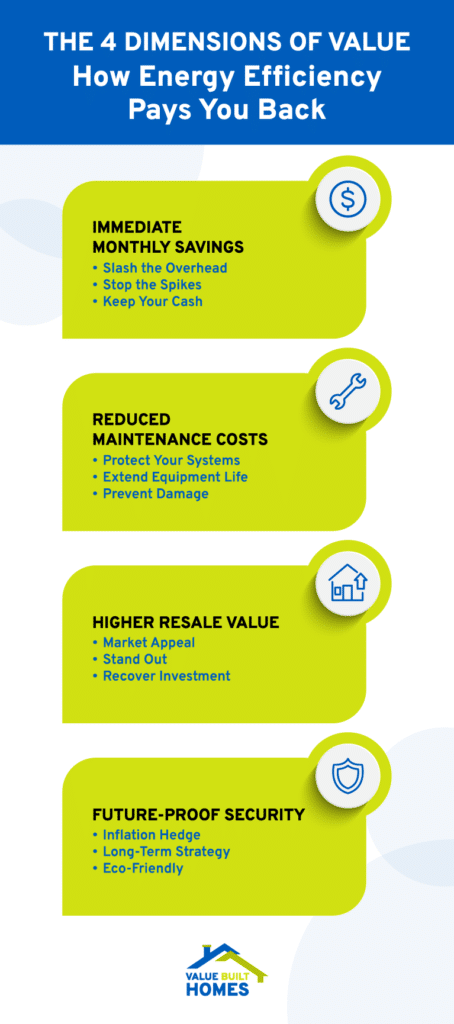
Energy-efficient homes do more than lower your monthly utility bills—they also help protect your wallet over time through reduced maintenance, fewer repairs, and stronger long-term value.
Reduced Maintenance and Fewer Repairs
Homes designed with energy efficiency in mind are often built to last. High-quality insulation and airtight construction reduce the strain on heating and cooling systems, resulting in fewer repairs and a longer lifespan for major appliances. Moreover, improved moisture control helps prevent water damage and mold, keeping maintenance expenses lower over time.
Higher Resale Value and Market Appeal
Modern homebuyers increasingly value energy efficiency. Homes that feature advanced insulation, contemporary windows, and efficient appliances not only promise reduced operating costs but also signal a commitment to sustainability. This enhanced market appeal can increase resale value, helping you recover much of your investment if you decide to sell.
A Future-Proof Investment
Choosing an energy-efficient home is an investment in your future. As energy prices fluctuate and environmental concerns grow, well-designed, energy-conscious homes continue to offer cost advantages over time. Reduced consumption not only cuts costs but also lowers greenhouse gas emissions, benefiting both your wallet and the planet.
How to Choose an Energy-Efficient Home (or Builder) in Indiana
Maximizing your savings starts with making informed decisions during the purchase or building process. Energy efficiency should be a key criterion when evaluating a property or selecting a builder.
Look for Key Features of Energy-Efficient Homes
When reviewing a property or builder’s portfolio, prioritize features proven to impact energy consumption, such as:
- High R-value insulation and advanced window systems that effectively reduce heat transfer.
- ENERGY STAR®-rated HVAC systems and appliances known for their efficiency.
- Upgrades like LED lighting and low-flow water fixtures that provide immediate reductions in monthly usage.
Questions to Ask Builders and Realtors
Whether you’re purchasing a new build or a resale property, be sure to inquire about the home’s energy performance:
- What types of insulation and window technologies are used?
- How efficient is the HVAC system?
- Has the home undergone an energy audit, and what were the findings?
- Are there standardized energy ratings or scores available for this property?
Clear answers to these questions can ensure that your new home is well-equipped to handle extreme seasonal demands while keeping utility costs in check.
Take Advantage of Incentives and Tax Credits
There are many government rebates, incentives, and tax credits available to help offset the cost of energy-efficient upgrades. Local and state programs often offer support for improvements such as advanced insulation and high-efficiency HVAC systems. By leveraging these incentives, you can shorten the payback period and begin enjoying lower monthly bills sooner.
Why Choose Value Built Homes for Your Energy-Efficient Home
At Value Built Homes, energy efficiency is built in—not added on later as an expensive upgrade. We design our homes for Indiana’s real-world conditions, using high-performance insulation, advanced windows, and efficient heating and cooling systems to help keep your home comfortable and your utility costs more predictable all year.
Because we focus on smart design and quality construction from the start, you get long-term savings and performance without sacrificing affordability. Our team also takes the time to explain how each feature works and what it means for your monthly bills, so you can feel confident you’re choosing a home that’s both budget-friendly and energy wise.

Frequently Asked Questions About Energy-Efficient Homes in Indiana
What exactly is an energy-efficient home?
An energy-efficient home is designed to use less energy while maintaining or improving comfort, typically through high-performance insulation, advanced windows, efficient heating and cooling systems, and energy-saving appliances and fixtures.
How much can I actually save on utility bills in Indiana?
Many estimates suggest efficient new homes can reduce energy use by roughly 20–30% compared to older homes, which can translate into noticeably lower heating and cooling costs during Indiana’s winters and summers.
Is it more expensive to build an energy-efficient home?
Some features can add modest upfront cost, but smart design and standard high-performance materials often keep prices reasonable, and lower monthly utility bills can help you save money over time.
What features should I look for in an energy-efficient home?
Look for quality insulation, double- or triple-pane windows with Low-E coatings, ENERGY STAR®-rated HVAC and appliances, LED lighting, low-flow water fixtures, and good air sealing to reduce drafts and hot or cold spots.
Does energy efficiency increase my home’s resale value?
Yes, many buyers prefer homes with lower operating costs and modern efficient systems, which can help your home stand out and potentially sell faster and at a stronger price.
Are there rebates or tax credits for energy-efficient homes in Indiana?
Often there are federal tax credits and state or local incentives for certain efficient systems and upgrades, so it’s wise to check current programs with the U.S. Department of Energy, your utility provider, or your builder.
How can I tell if a home is truly energy efficient?
Ask about insulation type and R-value, window specs, and whether the HVAC and major appliances are ENERGY STAR®-rated, and request any available energy ratings or audit results to see how the home should perform in everyday use.
Build a Future of Comfort and Savings with Energy Efficiency
Choosing an energy-efficient home is more than just a cost-saving measure—it’s an investment in a sustainable, comfortable lifestyle for years to come. Features like enhanced insulation, modern windows, efficient HVAC systems, and ENERGY STAR® appliances work together to create predictable, lower utility costs, reduced maintenance, and a healthier living environment.
At Value Built Homes, we are dedicated to making energy efficiency accessible and affordable for every Indiana homeowner. Our innovative, cost-effective designs ensure that each home delivers lasting comfort and measurable savings.
Ready to transform your living experience? Contact Value Built Homes today to schedule a consultation and discover how our energy-efficient solutions can help you build a secure, comfortable, and cost-effective home for your family.