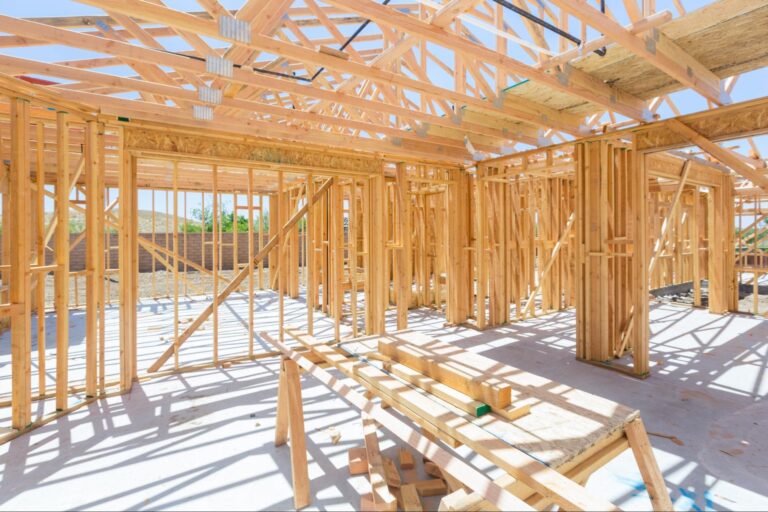
Building a new home is exciting, and it can also feel overwhelming once the costs start to add up. Closing costs on new construction homes are one of the things buyers ask about most, because they land on top of your down payment and the price of the home itself. This guide breaks down what those costs are, how much to expect, who pays them, and how builder and lender credits really work, so you can budget with confidence and avoid surprises at the closing table.
If you want the bigger picture first, it helps to see the full budget of building a new home. Here, we will focus on the closing costs specifically.
Key Takeaways
- Yes, new construction homes have closing costs. They apply to a newly built home just like any other purchase, and they are separate from your down payment.
- Closing costs typically run 2% to 5% of the purchase price. A new build can also carry extra builder, permit, and utility fees that a resale purchase does not.
- Closing costs are a stack of separate charges, not one fee: lender charges, third-party services like title and appraisal, government fees, and prepaid taxes and insurance (CFPB).
- Building usually adds construction-loan closing costs on top of your mortgage. A two-time-close loan means two closings and two sets of costs.
- Builder, seller, and lender closing-cost credits are not truly free. The cost is usually built into a higher price or interest rate, and builder incentives can be tied to using the builder’s preferred lender.
New Construction Closing Costs at a Glance
Here is a quick look at the closing costs you are likely to see on a new construction home, what each one covers, and who typically pays it.
| Cost item | What it is | Who typically pays / notes |
|---|---|---|
| Origination and lender charges | Lender fees for making the loan (origination, application, underwriting, processing). Origination is typically 0.5% to 1% of the loan amount. | Buyer |
| Third-party services | Appraisal, title search and title insurance, and survey, required to close and confirm clear title (CFPB). | Buyer; some are shoppable |
| Government fees | Recording and transfer or deed fees charged by state and local government; amounts vary by state and local agency. | Buyer; varies by locality |
| Prepaid expenses and escrow | Prepaid interest to month-end, first-year homeowners insurance, and an initial escrow deposit for taxes and insurance (CFPB). | Buyer |
| Construction-loan costs (if building) | Costs tied to the construction loan; a two-time-close loan adds a second closing and a second set of costs. | Buyer |
| Builder-specific fees | Builder administrative fees, impact or permit fees, and utility connection fees; some new communities add HOA setup. | Buyer; a builder may credit some (may require the builder’s preferred lender, and not truly free) |
Specific dollar amounts vary by lender, county, and home, so they are left off here on purpose. Your Loan Estimate and Closing Disclosure give the real numbers for your build.
Are There Closing Costs on a New Construction Home?
Yes. A newly built home carries closing costs just like any other home purchase. Closing costs on new construction homes are the fees you pay to finalize the purchase and, if you are building, to set up your construction loan.
These are separate from your down payment and from the price of the home. They cover the work needed to close your loan and transfer ownership: lender charges, third-party services, government fees, and prepaid taxes and insurance (CFPB). That is the full stack you are budgeting for.
How Much Are Closing Costs on a New Construction Home?
Closing costs typically run 2% to 5% of the home’s purchase price. For example, on a $200,000 home, which sits within Value Built Homes’ floor plan price range, that is roughly $4,000 to $10,000.
New construction can also carry costs a resale home does not, such as builder administrative fees, impact or permit fees, and utility connection charges. One of the larger single line items is the loan origination fee, typically 0.5% to 1% of the loan amount.
Treat any percentage as a planning estimate, not a quote. Your actual costs depend on your lender, county, and loan type, and your Loan Estimate shows the real figures early on.
5 Typical Closing Costs for New Construction Homes
New construction closing costs are a stack of separate charges, not one line item. Here are the five you are most likely to see:
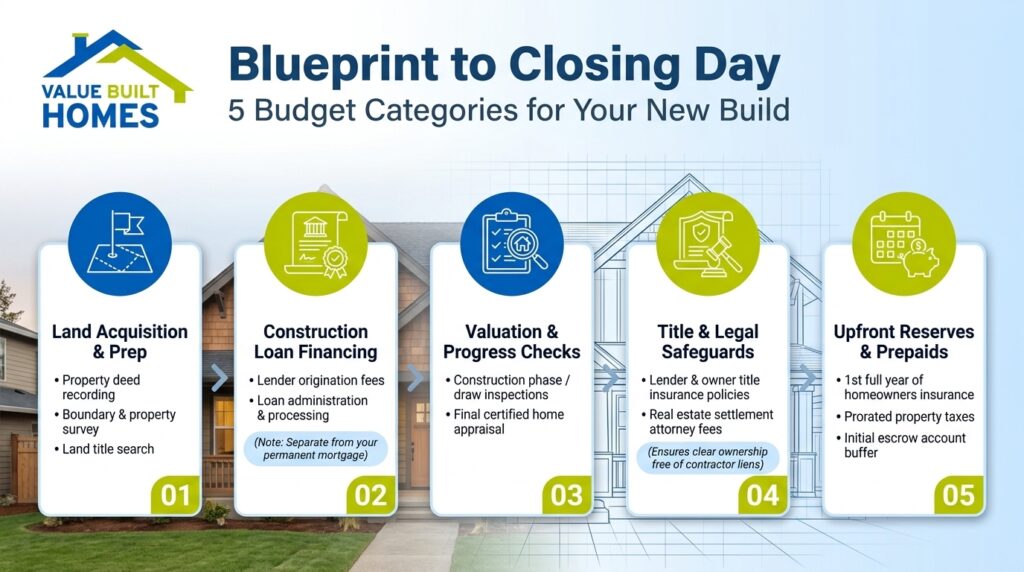
- Land purchase costs: If you are buying land for your new home, budget for the land itself plus title search, survey, and recording fees. These fall under third-party services and government fees.
- Construction loan fees: Financing your build through a construction loan brings its own charges, such as origination, administration, and processing fees. These are lender charges, and they are separate from your eventual mortgage.
- Inspection and appraisal fees: Before your home is finished and financed, it needs inspections and an appraisal, and those come with fees.
- Title and attorney fees: You will pay for title insurance, and in some closings attorney fees, to confirm the property is free of liens and to transfer clear title.
- Taxes and insurance: Expect to prepay property taxes and the first year of homeowners insurance, plus an initial escrow deposit.
In Southern Indiana, the government-fee piece means county recording fees and any local transfer or deed fees, which vary by state and local agency. New builds can also carry utility connection or tap fees, and some newer subdivisions add an initial HOA setup fee.
Are Closing Costs Cheaper on New Construction Than a Resale Home?
Generally, no. A new build is not automatically cheaper at closing. It can add builder-specific fees, such as administrative, impact, permit, and utility connection charges, that a resale purchase does not include, and those can push closing costs a little higher.
The wild card is incentives. Some builders and lenders offer credits that offset closing costs, with trade-offs we cover below. If you want the full side-by-side of building versus buying existing, including how the closing process and timeline differ, see our guide to new construction versus resale and the closing process. And if you would rather skip the construction-loan step entirely, a move-in-ready home for sale closes more like a standard purchase.
Construction Loan Types and Their Closing Costs
Yes, there are closing costs on a construction loan, and they come on top of the closing costs for your eventual mortgage. How many times you pay depends on the loan type.
A construction loan is a short-term loan that funds the cost of building your home, and it is paid out in stages as the work progresses. It comes in two main types, and the difference between one-time-close and two-time-close construction loans decides how many times you pay closing costs:
- Construction-to-permanent loans (one-time-close): These convert into your mortgage once the home is complete, so you close once and pay one set of closing costs.
- Standalone construction loans (two-time-close): These require a separate mortgage after the home is built, which means two closings and two sets of closing costs.
Construction loans also tend to carry higher interest rates than a standard mortgage, because the lender takes on more risk. For what lenders expect locally, see our overview of Indiana construction loan requirements.
Builder Closing Costs: What to Expect
Builder-related charges are part of new construction closing costs too. These can include permit fees, impact fees, and utility connection charges, and they vary by builder and by location.
How Builder and Lender Closing-Cost Credits Actually Work
Some builders, sellers, and lenders offer to cover part of your closing costs, but these credits are not truly free. The cost is usually built back into a higher home price or a higher interest rate, and builder incentives can be tied to using the builder’s preferred lender.
That does not make incentives bad. It just means you should read what an offer is attached to: what the credit applies to, whether it requires a specific lender, and how it changes your price or rate. Your Loan Estimate lets you compare offers side by side.
Do Builders Pay Closing Costs on New Construction?
Sometimes, in part, but rarely all of them and rarely with no strings. When a builder advertises paying closing costs, it is usually a credit that can require a preferred lender or is built into the price.
Value Built Homes takes a more transparent approach. Its Free Construction Financing covers the interest on your construction loan while your home is being built, which lowers your carrying costs. That is not the same as paying your closing costs, and Value Built Homes does not claim to. It simply removes one of the biggest upfront cost stressors of building.
Tips for Budgeting and Planning for Closing Costs
A few habits make closing costs much easier to handle:
- Ask for estimates early. Talk with your lender and builder up front so you can list expected costs (loan fees, inspections, title, taxes, and insurance) before they are due.
- Use your Loan Estimate and Closing Disclosure. Your lender must provide a Loan Estimate after you apply and a Closing Disclosure before closing. These show your real numbers, so review them and ask about anything that changed.
- Save on purpose. A dedicated savings account for closing costs, plus trimming nonessential spending during the build, keeps you from scrambling at the end.
- Look at the whole monthly picture. Closing costs are one piece. Our all-in monthly payment checklist for Indiana homebuyers helps you plan the ongoing budget too.
Frequently Asked Questions About Closing Costs on New Construction Homes
Who pays closing costs on a new construction home?
The buyer generally pays most closing costs, though a seller or builder may cover some depending on your contract or state law (CFPB). On a new build, watch for builder-specific fees, and read any credit offer to see what it is tied to.
Are closing costs included in the price of a new construction home?
No. Closing costs are separate from the home’s purchase price and from your down payment. They are the fees to close your loan and transfer ownership, and you will see them itemized on your Closing Disclosure.
Can you negotiate or reduce closing costs on a new build?
Some costs are shoppable, such as title services and certain inspections, so you can compare providers. You can also ask about builder or lender credits, but remember those can be tied to a preferred lender and may be built into your price or rate. Your Loan Estimate makes it easy to compare offers.
Can closing costs be rolled into a construction loan or mortgage?
Sometimes, depending on your loan type and lender. Rolling costs into the loan means you finance them and pay interest over time rather than paying cash at closing. Your lender and your Loan Estimate will show whether that is an option for your loan.
Get Closing Cost Transparency with Value Built Homes
Closing costs are a real part of building, but they are manageable once you know what to expect and can see the numbers early. Understanding the stack helps you budget for your forever home with confidence.
At Value Built Homes, we build homes across Southern Indiana and the tri-state area, and we believe in clear, upfront communication about costs. Have questions, or want a personalized estimate? Contact the Value Built Homes team to get started.