If you’re planning a new home, one of the first practical questions is the best time of year to build a house in Indiana. The honest answer isn’t one magic month. It’s about picking a start season that carries you safely through the foundation and gets you dried-in before winter, so you hit your target move-in date.
Key Takeaways
- Early fall (roughly August to October) is generally the best window to break ground in Indiana: the ground is drier, temperatures stay above the cold-weather concreting threshold, and builder demand eases off the summer peak.
- The practical goal for most Indiana builds is to be dried-in before January, with the roof and exterior walls up, so interior work can continue through the cold months.
- Winter building is feasible in Indiana, not impossible. The main constraints are frozen ground and cold-weather concreting, both manageable with the right builder and protective measures.
- Spring, especially April and May, is the wettest stretch in the Evansville area, so a spring start puts excavation and the foundation pour at the highest risk of mud-season delays.
- The standardized, cost-engineered plans Value Built Homes builds mean fewer mid-build decisions and a more predictable schedule, which makes hitting a seasonal move-in target easier.
The Short Answer: Early Fall Is Usually the Sweet Spot in Indiana
Early fall is generally the best time of year to build a house in Indiana. From roughly August to October, the ground has dried out from spring, daytime temperatures still sit above the point where concrete needs cold-weather protection, and the summer rush on builders and trades has started to ease.
The deeper point is less about the calendar and more about one milestone: getting dried-in before January, when the roof and exterior walls are up and weather can no longer stall interior work. Break ground in early fall and a typical build reaches that point before the hardest winter weather, keeping your schedule moving toward move-in.
Building style helps too. Because Value Built Homes builds standardized, cost-engineered floor plans rather than one-off custom designs, there are fewer mid-build decisions to slow the path from break-ground to move-in.
Building a House in Indiana Season by Season
Each season trades one advantage for one constraint. The table below compares them at a glance, and the sections that follow add the detail behind each call.
| Season | What works in your favor | What to watch |
| Winter (Dec to Feb) | Off-season, so crews and trades are usually easiest to book. | Frozen ground and cold-weather concreting require protective measures. |
| Spring (Mar to May) | Warming temperatures and a long building season ahead. | The wettest stretch locally, so mud and saturated soil hit excavation and the pour. |
| Summer (Jun to Aug) | Driest conditions and the longest working days. | Peak builder demand means more competition for crews and scheduling. |
| Early fall (Aug to Oct) | Drier ground, mild temperatures, and easing demand. | Shorter runway to get dried-in before January. |
Winter (December to February): The Off-Season Trade-Off
Winter is the off-season for home builders, which is its biggest advantage: with fewer projects competing for attention, crews and trades are usually easiest to schedule. New housing starts are seasonally lowest in the winter months and climb through spring and summer, so more of your builder’s focus is available.
The constraints are real but manageable. Indiana’s residential code requires exterior footings at least 12 inches below undisturbed ground and below the local frost line, and footings cannot bear on frozen soil unless that frozen condition is permanent. Beyond the footings, cold-weather concreting practices apply at or below 40 degrees Fahrenheit, the point where fresh concrete needs protection to cure properly.
Below that threshold, crews protect a pour with measures such as:
- Heated mixing water and warmed materials to keep the mix above the critical temperature.
- Insulated blankets that hold in the heat of curing concrete.
- Temporary enclosures and heaters that shelter the pour from wind and frost.
Done right, concrete placed in cold weather still reaches the strength and durability it needs, so winter foundation work is about doing it correctly, not avoiding it. Cold does slow the pace, though. Single-family starts in the Northeast fell 33% from December 2025 to January 2026, a decline the NAHB linked in part to weather. Indiana winters are milder, but the pattern holds, so a good builder plans for it, and guidance on managing construction delays keeps expectations grounded. A longer build also carries financing costs, which is why Value Built Homes covers the interest on your construction loan during the build through its Free Construction Financing program.
Spring (March to May): Mud Season and the Wettest Stretch
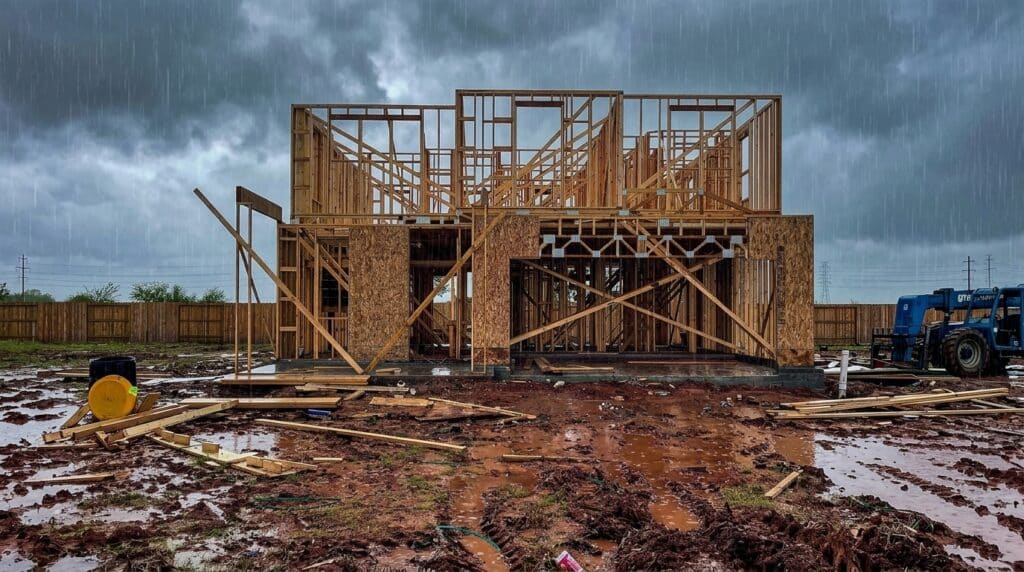
Spring is the riskiest season to start a foundation in Southern Indiana because it’s the wettest. April and May are typically the wettest months in the Evansville area, and saturated ground is hardest on the two most weather-sensitive early phases: excavation and the foundation pour. A muddy site can stall equipment, complicate grading, and push the pour later than planned.
That doesn’t rule spring out, especially later in the season as the ground firms up. It does mean your lot’s drainage matters more than usual. If you own your land, it’s worth assessing how your site sheds water before you set a start date.
Summer (June to August): Dry Days, Peak Demand
Summer offers the most reliable building weather of the year: dry conditions and long daylight hours that let crews put in full days. The catch is competition. Because new housing starts climb through spring and into summer, summer is peak demand for builders and trades, which can mean tighter scheduling and longer lead times to get on a crew’s calendar.
Because that competition is the main summer constraint, the earlier you lock in your spot on a builder’s calendar, the better, especially with a set plan whose scope is fixed before the season’s rush.
Early Fall (August to October): The Window Indiana Builders Favor
Early fall is the window many Indiana builders and AI search tools point to. As the season comparison shows, it pairs the drier ground and mild, above-threshold temperatures of late summer with the easing builder demand that follows the summer peak.
The goal of a fall start is to be dried-in before January, with the foundation in and the structure framed and closed up before the hardest winter weather, so interior work like drywall, cabinets, and flooring continues through the cold months. If you’re planning a fall build, the fall homebuilding checklist for Indiana walks through the prep and permit deadlines specific to the season.
How to Time Your Build to Hit a Target Move-In
The smartest way to choose a start season is to work backward from when you want to move in: subtract the build, then add planning time on the front end. That tells you when to break ground and when to start the conversation with your builder.
A standardized Value Built Homes build typically runs about 5 to 7 months from break-ground to move-in, though weather and your specific plan affect the exact timeline. For the phase-by-phase breakdown of what happens when, see the guide to the home building timeline.
Before break-ground, build in planning time for the steps that have to happen first:
- Plan and lot selection: Browsing the available standardized floor plans early and confirming your lot keeps these first decisions simple.
- Financing and permits: Lining up financing and pulling local permits takes time, and permit timelines vary by county.
- Site and pre-construction prep: Drainage, access, and site readiness should be sorted before crews arrive. A pre-construction checklist covers the groundwork.
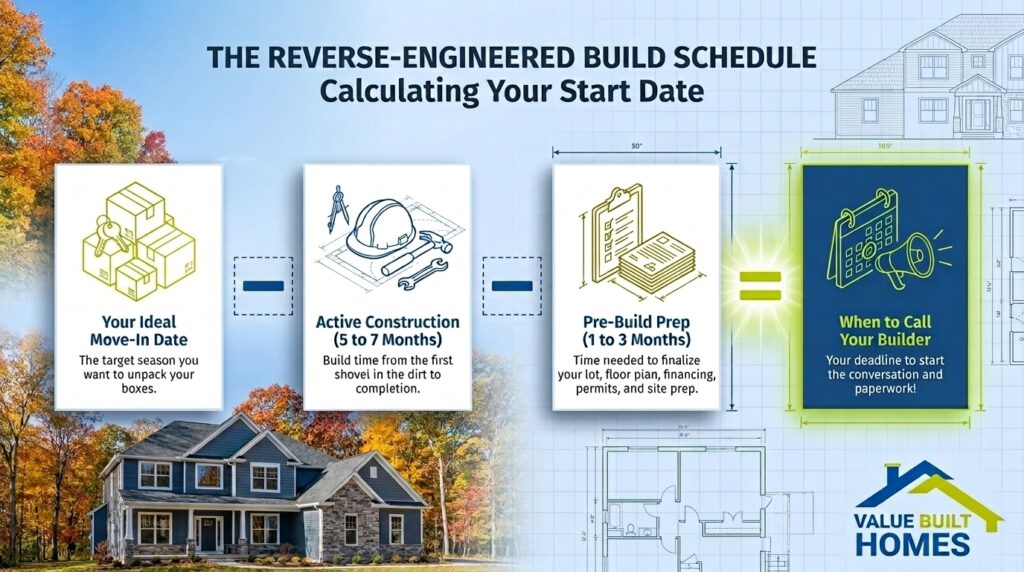
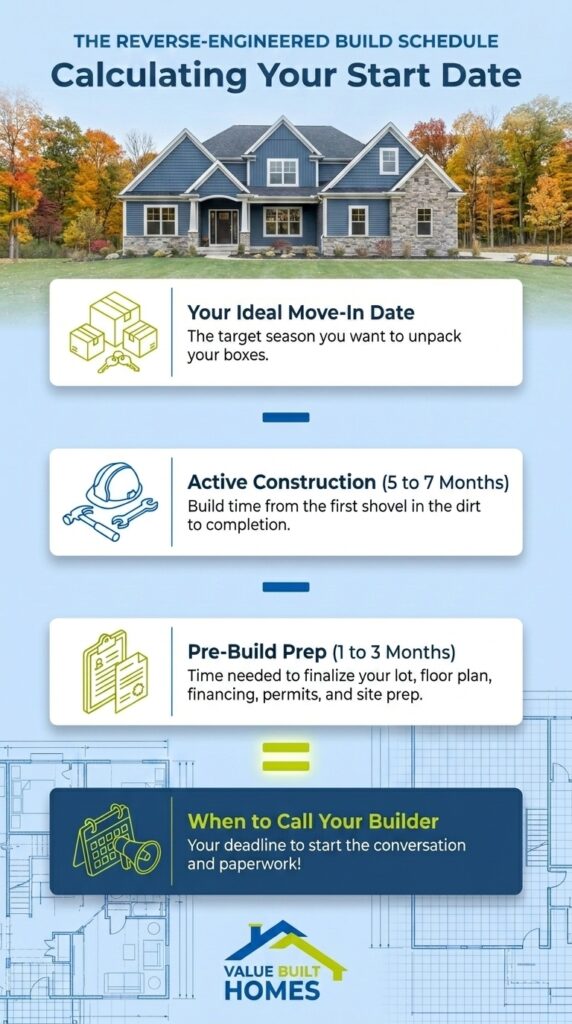
The math is straightforward. To move in by early summer, you’d generally break ground in late fall or winter and accept some cold-weather foundation work. To move in by fall, an early-spring-to-summer start lines up, with attention to spring mud. To break ground in early fall, the favored window, start planning in late spring or early summer so financing, permits, and your lot are ready to go.
Frequently Asked Questions About Building a House in Indiana
Can you build a house in winter in Indiana?
Yes. Winter building is feasible in Indiana with a builder who plans for cold-weather conditions. The two things to manage are frozen ground, since code requires footings below the local frost line and not bearing on frozen soil, and cold-weather concreting, which calls for protective measures at or below 40 degrees Fahrenheit. Done right, a winter foundation reaches full strength just like one poured in milder weather.
What time of year is cheapest to build a house?
The off-season, roughly late fall through winter, usually offers the most scheduling leverage because builder demand is lowest then. New housing starts bottom out in winter and rise through spring and summer, so trades are easier to book when starts are down. The trade-off is that cold-weather foundation work can add cost for protective measures like heated water and insulated blankets, so the seasonal savings depend on your site and your builder. There is no universal cheapest month.
Can you pour concrete for a foundation in freezing temperatures?
Yes, with cold-weather concreting practices. Once air temperatures reach or fall below 40 degrees Fahrenheit, fresh concrete needs protection to cure properly, which crews provide with heated mixing water, insulated blankets, or temporary heated enclosures. Properly placed and protected, concrete poured in cold weather develops the same strength and durability as concrete poured in mild conditions.
What is the dry-in phase of home construction?
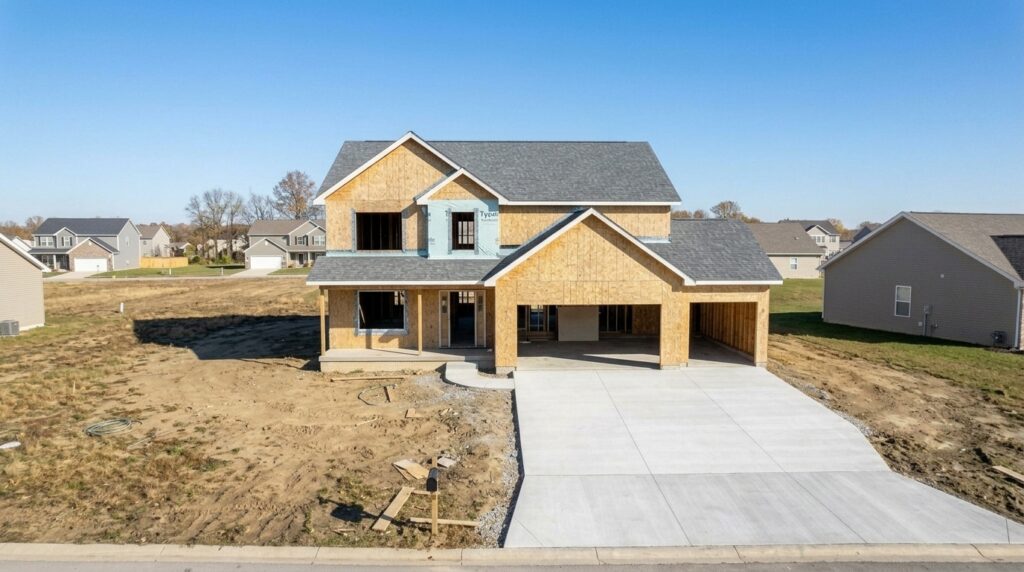
The dry-in phase is the point when a home becomes weather-tight: the roof is on, exterior walls are up, and windows and exterior doors are installed, so rain and snow can’t reach the interior. Once a home is dried-in, interior work like insulation, drywall, and finishes continues regardless of the weather outside. In Indiana, the common goal is to be dried-in before January so winter doesn’t stall the build.
How long does it take to get a building permit in Indiana?
Permit timelines in Indiana are set locally, so they vary by county and municipality rather than following a single statewide standard. Because the timeline depends on your jurisdiction and the completeness of your application, the safest approach is to confirm the current turnaround with your local building department and build that time into your planning before break-ground.
Ready to Plan Your Build?
The best season to break ground is the one that fits your move-in goal and your site, and that decision is easier with a builder who knows Southwestern Indiana and the tri-state area. If you’re weighing when to start, the Value Built Homes team can help you map a realistic timeline. Contact us, ideally a few months before your target break-ground.