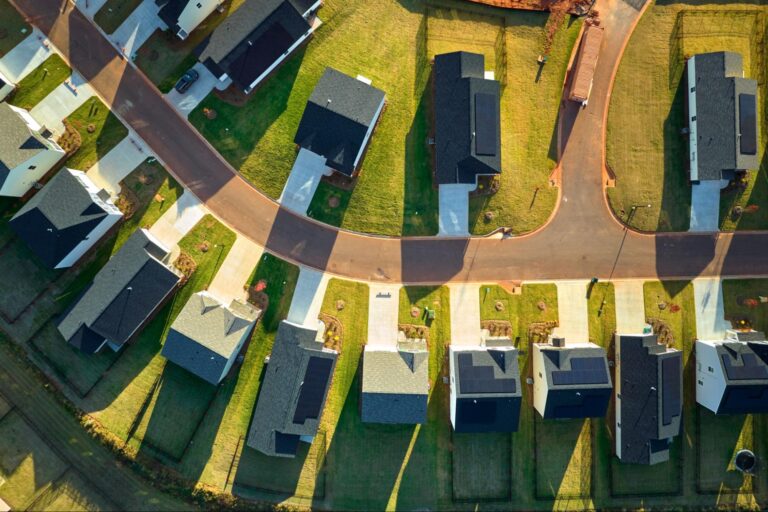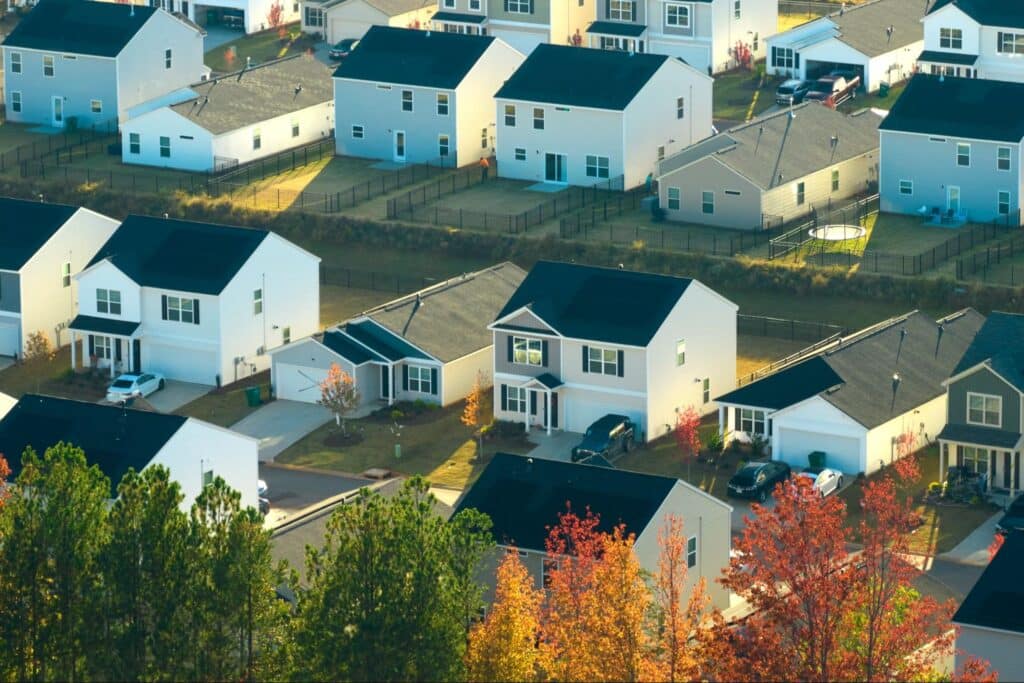
Choosing between a single-story and a two-story home isn’t just a style preference—it affects how you move through your day, how much privacy you have, what your home costs to build, and how well it fits your life years from now. The right layout can make mornings smoother, chores easier, and routines more comfortable as your household changes.
In this guide, we’ll compare single-story and two-story living through the lens of lifestyle and budget—including build-efficiency considerations, privacy and noise, stairs and long-term planning, outdoor space, and which option tends to work best for different household types. As an Indiana home builder, Value Built Homes helps families choose floor plans that feel practical now and flexible later—so you can build with clarity and move in with confidence.
Cost & Budget Guidance: What Impacts Price Most
When comparing a single-story vs. two-story home, the “best value” usually comes down to how much square footage you want, what your lot allows, and how complex the build will be.
- Two-story homes can be more cost-efficient per square foot because they often use less foundation and less roof area to achieve the same total living space. (You’re “stacking” square footage instead of spreading it out.)
- Single-story homes may cost more per square foot at the same size because they typically require a larger footprint, which can mean more foundation, more roofing, and more exterior materials overall.
- Lot size and width can drive the decision. A single-story plan may require a wider lot to keep rooms comfortable and hallways minimal, while a two-story home can fit more space on a smaller footprint—often leaving more yard area.
- Stairs aren’t usually the budget breaker—structure can be. Two-story designs can involve additional structural engineering (floor systems, load paths), and sometimes added HVAC planning for comfort across levels.
- Plan complexity matters as much as story count. Long rooflines, multiple bump-outs, extra corners, and large spans can raise costs in either layout—sometimes more than simply choosing one story vs. two.
Budget note: Home pricing varies by floor plan, structural options, site work (grading, utilities, foundation conditions), and finish selections—so the most accurate way to compare is to price two specific plans at similar square footage and finish level on your lot.
A Day in a Single-Story Home
Imagine beginning your day in a home where accessibility and convenience come first.
Effortless Mornings
Without the need to navigate stairs, your morning routine can be more comfortable and accessible—particularly benefiting parents, caregivers, and elders. While the absence of stairs minimizes physical obstacles, it also contributes to a smoother start to your day overall.
Relaxing Evenings and Easy Bedtime Routines
An open, flowing layout naturally encourages family togetherness. Enjoy evenings in spacious living areas that connect seamlessly to outdoor patios—ideal for casual chats with neighbors or an intimate family dinner. When night falls, the simplicity of having all rooms on one level supports straightforward bedtime routines.
Streamlined Chores and Daily Living
Daily tasks like laundry and tidying up can feel more manageable with everything on a single floor. This design not only saves time but also enhances accessibility for all family members. A single-story home’s clear and open layout sets the stage for a lifestyle focused on comfort and ease of movement.
Exploring Daily Life in a Two-Story Home
A two-story layout provides a unique blend of functionality and organized separation. It offers defined spaces that can serve as both lively social hubs and tranquil retreats.
Organized Routines with Dedicated Spaces
Imagine starting your day with a bit of quiet time upstairs, while the main floor is ready for the bustle of daily activity. Bedrooms and bathrooms typically occupy the upper level, providing a private retreat where you can refresh before joining family life downstairs.
Versatile Spaces for Entertainment and Privacy
A two-story design naturally divides public living areas from private zones. You could host a vibrant dinner party on the main floor while the upper level remains a calming space for quiet reflection. This layout accommodates both social gatherings and private downtime, striking a balance between communal fun and restful seclusion.
Noise, Privacy, and Personal Space
Noise control and personal space are key considerations when choosing a home layout.
Single-Story: Open Yet Customizable
A single-story home’s open design fosters interaction among family members. With thoughtful design choices—such as quiet corners or sound-absorbing materials—this type of layout can still balance social time with individual downtime.
Two-Story: Natural Zoning for Serenity
Having bedrooms upstairs naturally separates private, quieter areas from active communal spaces below. This built-in zoning helps maintain a peaceful atmosphere where both shared and personal activities easily coexist.
Stairs, Mobility, and Long-Term Planning
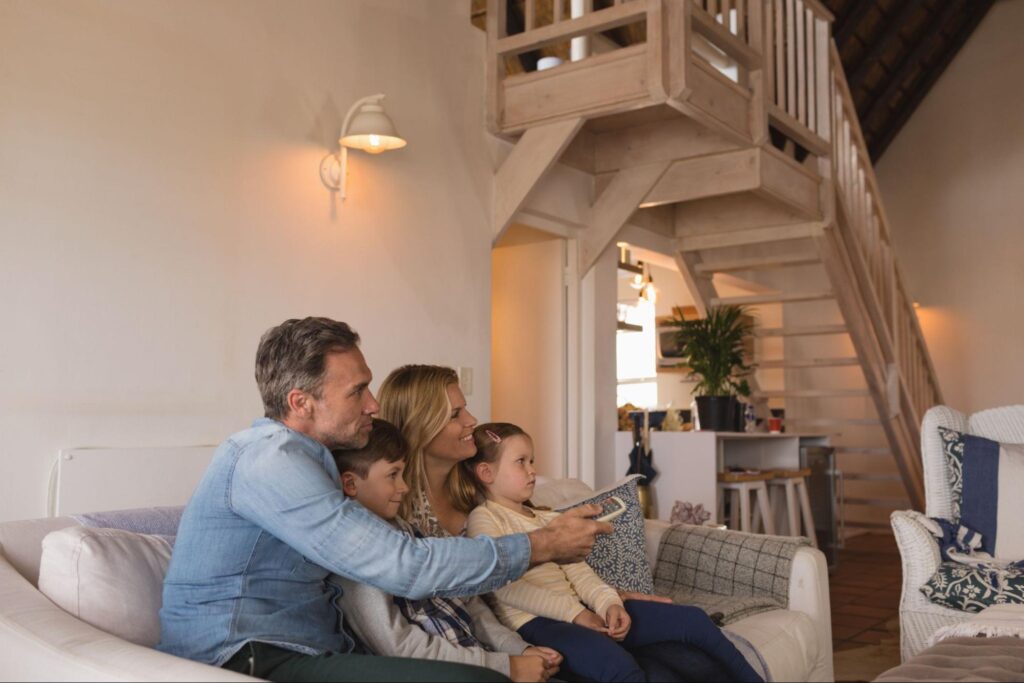
Stairs can be a notable factor in everyday convenience and in your long-term lifestyle plans.
Enjoying the Simplicity of Single-Story Living
Without stairs, single-story homes remove common obstacles that can slow down daily routines. This design is beneficial for families with small children or for anyone planning to age in place, minimizing the need for future structural modifications.
Embracing the Advantages of Two-Story Design
Though stairs can be a consideration for some, they also help create distinct zones within your home. By incorporating safety features and proper design, stairways can become practical pathways that connect different areas without sacrificing style.
Connecting Your Home to the Outdoors
Your home should feel like an extension of the outdoors, providing fresh air and a calming sense of space.
Single-Story Homes: Seamless Indoor-Outdoor Flow
Large windows and direct access to patios naturally merge indoor living with the surrounding environment. Minimal barriers between inside and outside invite abundant light and fresh air into every room.
Two-Story Homes: Maximizing Outdoor Potential
A two-story design typically occupies a smaller portion of the lot, leaving more space outside for a garden, play zone, or peaceful retreat. This layout offers ample outdoor possibilities, creating a versatile extension of your home environment.
How Different Household Types Benefit from Each Layout
Below is a quick comparison of how different household types might thrive in a single-story or two-story layout:
| Household Type | Single-Story Advantage | Two-Story Advantage |
| Young Families with Toddlers | Barrier-free access that’s convenient and safe for little ones. | Designated play and study areas, though extra caution around stairs is necessary. |
| Families with School-Age Children | Encourages natural supervision and family togetherness. | Creates separate zones for homework and relaxation, supporting a structured routine. |
| Multi-Generational Households | Keeps everyone on one level for simplicity and cohesiveness. | Offers distinct spaces for different age groups and activities. Learn more about multi-generational households. |
| Empty Nesters/Retirees | Eliminates stair-related challenges, promoting easy upkeep and comfort. | Accommodates guests upstairs while centralizing daily activities down below. |
| Work-From-Home Professionals | Can include a quiet nook or zone that’s ideal for focused work. | Offers an upstairs room easily dedicated to a home office for better separation and minimal distractions. |
| Entertaining Enthusiasts | Fosters a natural indoor-outdoor flow, perfect for social gatherings. | Separates formal entertaining areas from private retreat spaces for maximum hosting versatility. |
Future-Proofing Your Home: Flexibility, Comfort, and Long-Term Value
No matter which layout you choose, the best floor plan is one that can adapt as your life changes—while staying comfortable, efficient, and appealing over time. Focus on these future-ready design choices:
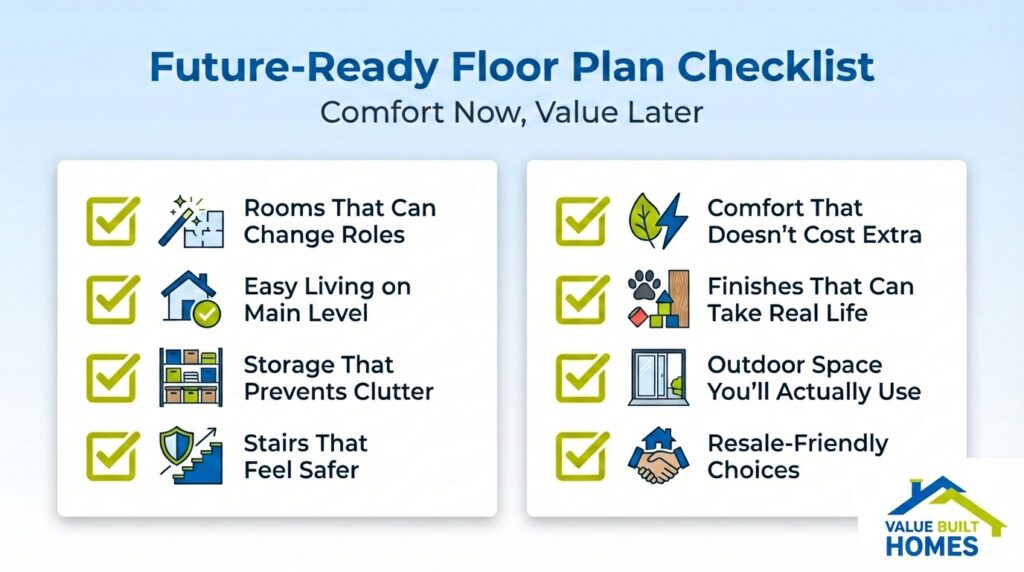
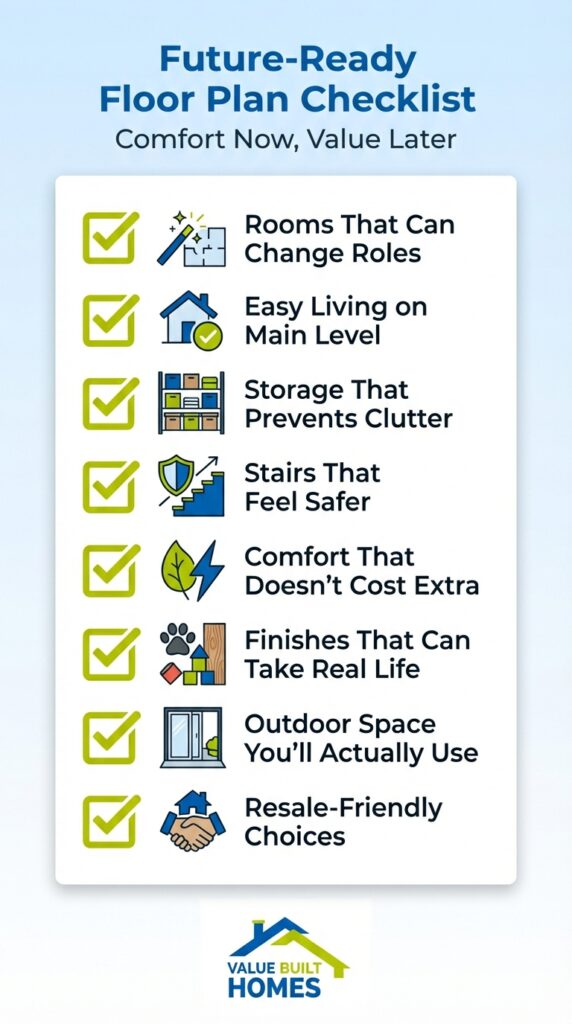
Design for flexibility: Choose rooms that can easily shift from bedroom → home office → hobby room → guest space.
- Plan for aging in place: Prioritize wider hallways/doorways, minimal thresholds, and the option for a main-level bedroom and full bath. If “aging in place” is part of your long-term plan, AARP’s HomeFit Guide is a helpful overview of home features that support safer, more comfortable living over time.
- Build in smart storage: Add built-ins, pantry space, linen storage, and “drop zone” entry storage to reduce clutter as needs grow.
- Think ahead on stairs (if two-story): Include safe stair design (good lighting, consistent risers, sturdy railing) and consider under-stair storage.
- Improve comfort + efficiency: Use LED lighting, quality insulation, and (if two-story) consider HVAC zoning or thermostat placement for balanced temperatures.
- Choose durable, low-maintenance finishes: Select materials that hold up to kids, pets, and everyday wear to reduce long-term upkeep costs.
- Make outdoor living usable: Plan for a patio/porch connection, convenient exterior doors, and yard flow that supports entertaining and play.
- Protect resale appeal: Favor timeless layouts and practical features (storage, functional bedrooms, sensible traffic flow) that stay attractive to future buyers.
Bottom line: A thoughtful, adaptable layout paired with efficiency and durability upgrades helps your home stay livable now—and valuable later.
Turning Insights into Action When Choosing a Floor Plan
Now that you understand how layout choices affect your daily life, it’s time to turn insights into tangible decisions. Here’s a simple action plan:
- Reflect on your current routines and long-term goals.
- Decide whether the simplicity of a single-story home or the distinct zones of a two-story design aligns best with your lifestyle.
- Collaborate with a trusted builder to select a floor plan that meets your needs.
By following these steps, you can create a home that truly supports your ideal lifestyle.
Frequently Asked Questions: Single-Story vs Two-Story Homes
Is a single-story home more expensive to build than a two-story?
It can be. Single-story homes often require a larger footprint, which may increase foundation, roofing, and exterior costs. Two-story homes can sometimes be more cost-efficient per square foot because they “stack” space and may use less roof and foundation area for the same total square footage.
Which is cheaper to heat and cool: one story or two story?
It depends on insulation, air sealing, window placement, and HVAC design. Two-story homes can experience temperature differences between floors (heat rises), so many homeowners choose HVAC zoning or smart thermostat strategies for comfort. A well-built, well-insulated home can perform efficiently in either layout.
Which layout is better for aging in place?
Single-story layouts are often easier long-term because daily living can stay on one level, reducing stair use. If you prefer a two-story, consider a plan with a main-level bedroom and full bath so you have options as needs change.
Are two-story homes safe for toddlers and young kids?
They can be, but stairs add an extra safety consideration. Features like sturdy railings, good lighting, consistent stair heights, and properly installed safety gates can make a two-story home more child-friendly.
Which layout is better for privacy and noise control?
Two-story homes typically offer more natural separation between “public” spaces (kitchen/living) and “private” spaces (bedrooms). Single-story homes can still feel private with smart bedroom placement, doors, and sound-reducing materials—especially if you want everything on one level.
Do two-story homes have better resale value?
Resale value depends on your local market, school districts, neighborhood norms, and buyer demand. Two-story homes may appeal to buyers who want more space and separation, while single-story homes often attract buyers prioritizing accessibility and easy upkeep. The best resale outcomes usually come from a functional, flexible floor plan and durable finishes.
Should I choose a two-story home if I want more yard space?
Often, yes. Because two-story homes can place more square footage on a smaller footprint, they may leave more usable outdoor space for patios, gardens, or play areas—depending on your lot and setbacks.
What’s the best layout for working from home?
If you need quiet and separation, a two-story home can make it easier to place an office away from main living areas. In a single-story plan, look for an office/den positioned away from the kitchen and great room, or consider doors and sound-control features to reduce distractions.
Making the Right Choice for Your Lifestyle and Future
There’s no one “best” choice—only the layout that best supports your routines, your household, and your budget. Single-story homes often shine for accessibility, simple daily flow, and aging-in-place comfort. Two-story homes can be a smart fit when you want more space on a smaller footprint, more separation between living and sleeping areas, and a layout that supports privacy and quiet zones. If you’re deciding between one story and two, the fastest way to get clarity is to compare a few plans at a similar size and finish level—then see how each one lives on your lot.
Ready to narrow it down? Explore our single-story and two-story floor plans and find a layout that fits your lifestyle and budget. When you’re ready, contact Value Built Homes to price a couple of options and talk through the best plan for your timeline and property.