Choosing the right room sizes is more than just a design decision—it’s the foundation of a comfortable, functional home. By planning dimensions carefully, you avoid cramped layouts, wasted square footage, and awkward traffic flow that can make everyday living feel inconvenient. When each room is sized with intention, your home feels easier to furnish, move through, and enjoy, whether you’re relaxing, working from home, or hosting family and friends.
This guide breaks down ideal dimensions for key spaces—living rooms, bedrooms, kitchens, dining areas, bathrooms, home offices, and storage—so your new Indiana home supports how you actually live. You’ll find practical size ranges, clearance recommendations, and layout tips that work in a variety of floor plans and budgets. Whether you’re building your first home or right-sizing for a new season of life, these room sizing guidelines will help you make smart decisions today that still feel comfortable and functional years down the road.
Living Room: The Heart of the Home
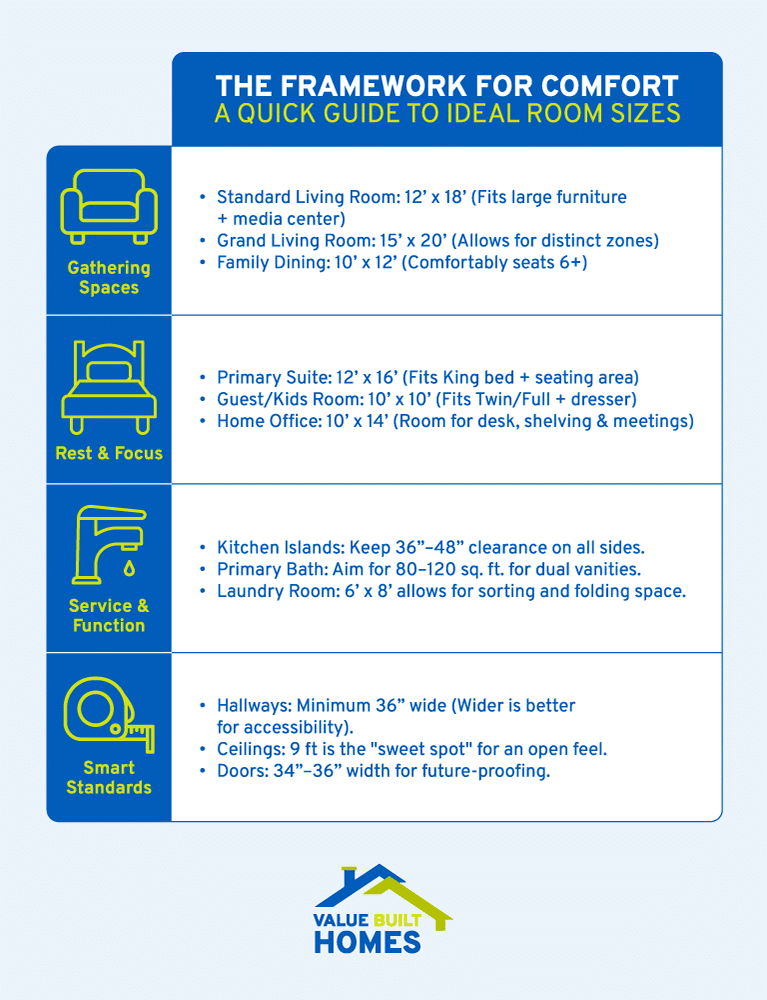
The living room is where relaxation, entertainment, and family connections flourish. Designing it with appropriately scaled dimensions ensures that it meets your needs without feeling overcrowded or sparse. While room dimensions can vary based on individual preferences and design choices, here are some general guidelines:
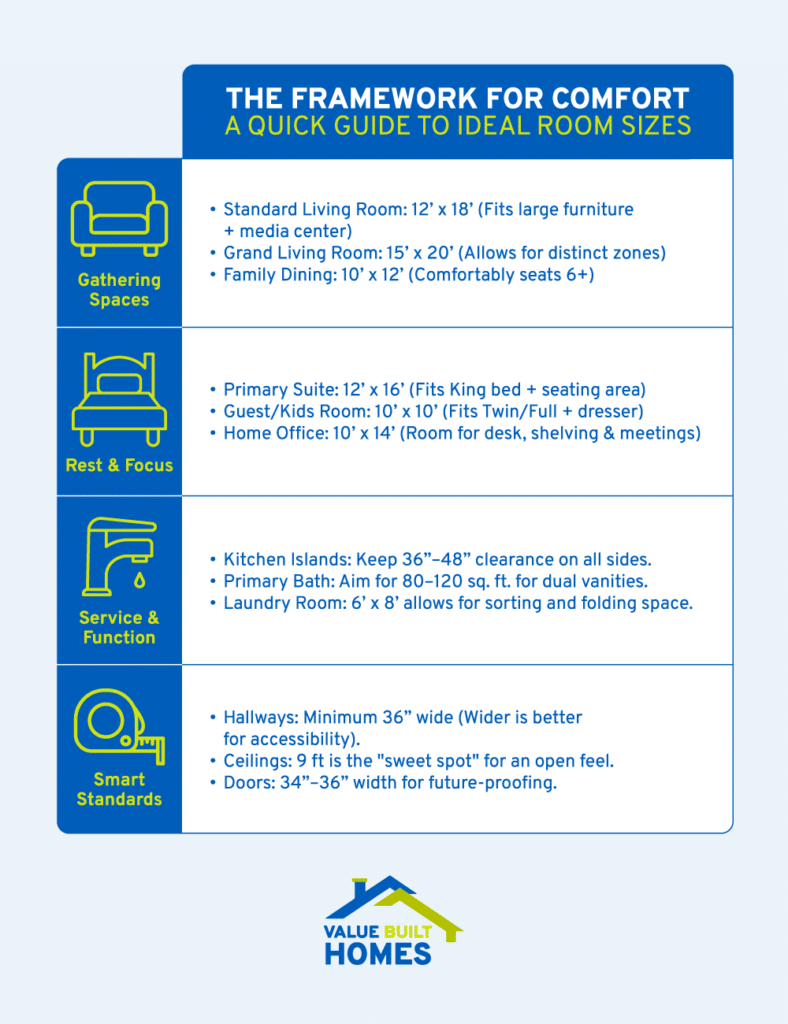
- Small Layout: Living rooms averaging around 10 by 13 feet offer a cozy setting that comfortably fits essential seating and a coffee table. This size works well for intimate spaces or apartments.
- Medium Layout: Medium-sized living rooms, typically about 12 by 18 feet, have enough space to accommodate larger furniture, with room to include features such as a media center or a reading nook.
- Large Layout: For larger spaces, dimensions in the range of approximately 15 by 20 feet provide flexibility to designate distinct zones—such as areas for entertainment, conversation, and play—while ensuring ample room for movement.
Keep in mind that these dimensions serve as a general guide; exact sizes and configurations may vary based on overall home size and design preferences. Maintaining at least 3 feet of clearance around large furniture pieces and considering the placement of windows and lighting fixtures will further enhance the room’s functionality and ambiance.
Bedrooms: Balancing Privacy and Functionality
Bedrooms serve as personal retreats, and getting the size right means ensuring each space supports both rest and functionality.
- Smaller Bedrooms: Rooms around 10 by 10 feet are sufficient for children’s rooms or guest spaces, fitting a twin or full-size bed plus basic furnishings.
- Primary Bedrooms: For a master suite that accommodates a queen- or king-sized bed, nightstands, and additional furniture, aim for at least 12 by 16 feet. This size also provides room for a seating area or extra storage.
- Flexibility: Position the bed to optimize natural light and airflow, and plan closet placement carefully to keep the layout streamlined. Adequate floor space also allows for easy rearrangements to adapt to changing lifestyle needs.
Kitchen: Merging Function and Design
The kitchen is the home’s work zone—where meal preparation and family gatherings intersect. Its size and layout should promote efficiency while maintaining a friendly, open feel.
- Layout Options: Whether you choose a galley, L-shaped, or open-concept kitchen, leave 3 to 4 feet of clearance in galley layouts and maintain 36 to 48 inches around any island for L-shaped configurations.
- Working Triangle: Ensure the sink, stove, and refrigerator form an optimal working triangle to minimize unnecessary steps.
- Counter and Storage: Include sufficient countertop space for meal prep, and utilize pull-out drawers or pantry systems to reduce clutter.
Dining Room: A Welcoming Gathering Space
A well-sized dining room enhances daily meals and special occasions by providing both comfort and practicality. For seating four, an 8 by 10-foot dining area can be sufficient. Rooms closer to 10 by 12 feet allow for a larger table seating six or more:
- Circulation: A minimum of 36 inches of clearance around the table accommodates both seated diners and those passing by.
- Design Considerations: In open-concept homes, subtle elements like area rugs or pendant lighting help define the dining space without interrupting the overall flow.
Bathrooms: Prioritizing Function and Comfort
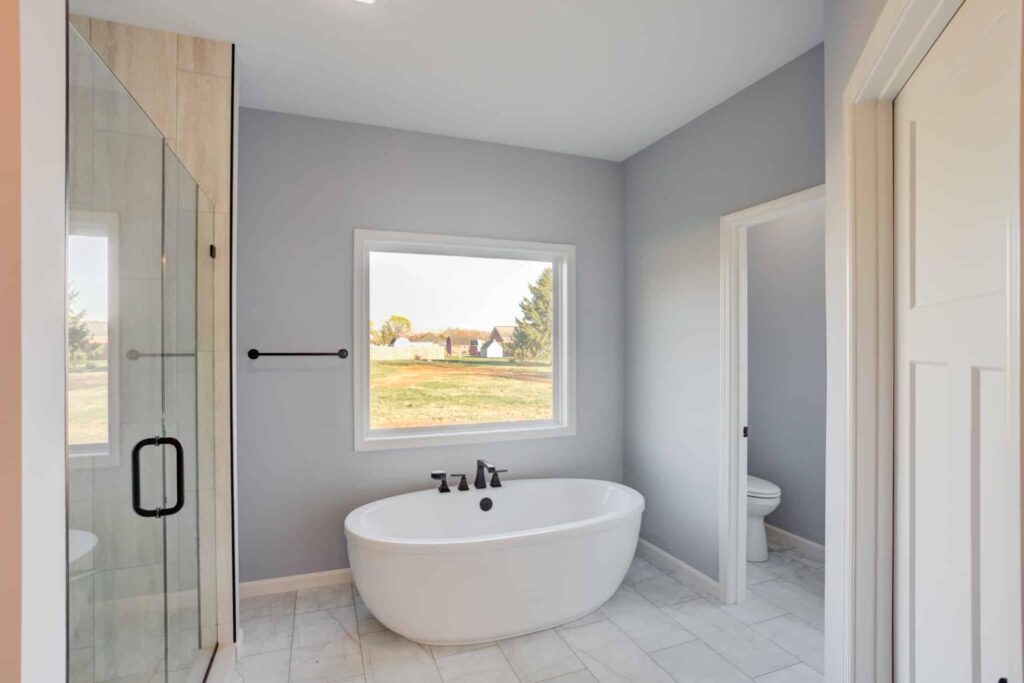
Bathrooms are essential for routines and relaxation. Size them according to purpose:
- Half Bathrooms: A compact half-bath at roughly 3 by 6 feet (20–30 square feet) is enough for a sink and toilet.
- Full Bathrooms: Typical full bathrooms measure between 35 to 50 square feet and accommodate a bathtub or shower, sink, and toilet.
- Primary Bathrooms: Larger spaces (80 to 120 square feet or more) allow for double vanities and separate bathtub and shower areas. Aim for at least 21 inches of clearance in front of fixtures and a 60-inch turning diameter if considering accessibility.
A balanced mix of natural and task lighting, along with smart storage solutions such as mirrored cabinets, can help create a clean, efficient space.
Home Office: Designing for Productivity
A well-designed home office boosts focus and comfort. For minimal setups, a space around 5 by 7 feet might hold a desk and chair but can feel restrictive over long work sessions. If you frequently work from home or need visitor seating:
- Roomy Office: Aim for around 10 by 14 feet (or more) to accommodate bookshelves, storage, and even a small meeting nook.
- Organization and Ergonomics: Keep cables managed with effective cable solutions, and position furniture to support good posture and reduce strain.
Closets and Storage: Maximizing Organization and Adaptability
Closets and storage solutions play a pivotal role in keeping your home neat and your belongings accessible. Roomy storage areas also help your home adapt to changing needs over the years.
- Bedroom Closets: A standard reach-in closet can measure around 2 feet deep with a width of at least 4 to 6 feet, providing ample space for hanging garments and storage above the rod. Walk-in closets for primary bedrooms typically start around 6 by 8 feet, offering room for shelving, drawers, and clothing racks.
- Hall and Linen Closets: Linen closets near bathrooms generally measure around 18 to 24 inches deep, while coat closets at entry areas should be at least 2 feet deep.
- Adaptability: For evolving storage needs, consider modular units or adjustable shelving that can be reconfigured or expanded without major renovations.
Everyday Spaces That Make a Big Difference
Beyond bedrooms and living areas, small “workhorse” spaces shape how organized and comfortable your home feels.
Entry / Foyer
- A compact entry around 4′ x 6′ gives guests room to step inside and remove shoes.
- A larger foyer around 6′ x 8′ can add a bench, hooks, or a small table.
Mudroom
- A simple mudroom or garage entry around 5′ x 7′ works for hooks and a bench.
- Around 6′ x 8′ or more allows cubbies and extra storage, and can often be combined with the laundry area.
Laundry / Utility Room
- A compact laundry around 5′ x 6′ fits a side-by-side washer and dryer with storage above.
- A more comfortable space around 6′ x 8′ or larger can add folding space, cabinets, and hanging rods.
Tradeoffs and Priorities: Where to Spend and Where to Shrink
Even with a great floor plan, most families still have to make choices about where to invest square footage. Thinking in terms of tradeoffs helps you right-size your home for the way you actually live, not just what looks good on paper.
When square footage is limited, it often makes sense to prioritize:
- Kitchen efficiency over a separate formal dining room: Many Indiana homeowners use an everyday dining area far more than a formal dining room. A well-planned kitchen with a comfortable eat-in space or dining nook usually delivers more value than dedicating extra square footage to a rarely used formal room.
- Shared family spaces over oversized bedrooms: A living room that comfortably fits your seating, media, and traffic flow will be used all day, every day. Slightly smaller—but still functional—bedrooms (especially for kids or guests) can free up space for a more generous family room or open-concept living area.
- Adequate storage so smaller rooms still feel uncluttered: Well-placed closets, pantry space, and a practical laundry or mudroom can make modestly sized bedrooms and living areas feel larger. It’s often better to add a bit of depth to a closet or utility area than to add a few extra feet to a bedroom you’ll end up filling with freestanding storage.
By setting clear priorities early, you can choose a floor plan—and make small adjustments—that keep your home feeling open, organized, and comfortable without increasing overall square footage.
Ceiling Heights and Future-Proofing
Ceiling heights significantly influence a room’s sense of space and comfort. While 8-foot ceilings were once standard, many new home constructions now feature higher ceilings to create an open, airy feel.
- Recommended Heights:
- 8-foot ceilings: Suitable for smaller rooms or tight spaces.
- 9-foot ceilings: A popular choice for a more expansive feel.
- 10-foot ceilings: Ideal for open-concept areas or for achieving a grander atmosphere.
- Future-Proofing Layouts:
- Universal Design: Wider doorways (34 to 36 inches) and hallways (at least 36 inches) accommodate mobility aids if needed.
- Flex Rooms: Bonus or transitional rooms can serve multiple purposes, from guest accommodations to a future home office.
- Accessible Fixtures: Choose adjustable or lower-level cabinets and appliances that suit users of varying heights and abilities.
Taking these steps ensures your home remains functional, comfortable, and marketable should your needs change or you decide to sell.
How Value Built Homes Helps You Right-Size Your Floor Plan
Getting room sizes right can feel overwhelming on your own. Value Built Homes makes it easier with floor plans that are already well-proportioned—and flexible enough to fit the way you live.
Our standardized plans use:
- Balanced room sizes so living areas, bedrooms, and baths all feel functional.
- Efficient circulation between key spaces.
- Built-in storage in closets, utility rooms, and halls.
Because these plans have been used and refined across many Indiana homes, you get layouts that work in real life—without the cost of a fully custom design.
From there, you can choose smart customization options, like:
- Slightly shifting space between living areas and bedrooms.
- Selecting kitchen and bath layouts that adjust counters, islands, and fixtures.
- Defining flex rooms as an office, guest room, or hobby space.
Our team will walk you through how you’ll use each room, explain tradeoffs, and compare plans side by side. The result is a right-sized, site-built home that feels comfortable on day one and adapts to your needs over time—while still staying within your budget.
Frequently Asked Questions About Room Sizes for New Homes
What is a good size for a living room in a new home?
For most new homes, a comfortable living room is around 12′ x 18′, which fits a full-size sofa, extra seating, and a media center with good walking space. Smaller homes can work with about 10′ x 13′, while larger homes often use 15′ x 20′ or more to create multiple seating zones.
How big should a primary bedroom be?
A comfortable primary bedroom is typically around 12′ x 14′ for a queen bed, nightstands, and a dresser. If you plan on a king bed and a small seating area, aim for 12′ x 16′ or larger.
How much space do I need for a kitchen and dining area?
A small, efficient kitchen can fit in about 8′ x 10′, while 10′ x 12′ or more is ideal for extra counter space or an island. For dining, plan around 8′ x 10′ for four seats and 10′ x 12′ or larger for six or more, with 36-42 inches of clearance around the table.
How much clearance should I leave around furniture and in walkways?
Plan at least 36 inches (3 feet) for main walkways and hallways. Around beds, sofas, and dining tables, aim for 30-36 inches where people walk regularly, and 36-42 inches from table edges to walls or other furniture.
How can I decide where to add or reduce square footage in my floor plan?
When space is limited, it usually pays to prioritize kitchen efficiency, shared family spaces like the living room, and good storage over oversized bedrooms or rarely used formal rooms. Working with a builder like Value Built Homes can help you compare plans and make smart tradeoffs based on how you’ll actually live in the home.
Optimizing Your Home’s Layout for Long-Term Enjoyment
Thoughtful room sizing shapes how your home feels every day. When living areas, bedrooms, kitchens, bathrooms, and storage are right-sized, your home is easier to furnish, move through, and keep organized—without wasting square footage. By using simple guidelines for room dimensions, clearances, and everyday spaces like entries, mudrooms, and laundry rooms, you can prioritize the areas you use most and avoid cramped or underused rooms.
If you’re planning a new home in Indiana, Value Built Homes can help you turn these guidelines into a floor plan that fits your lifestyle and budget. Contact us today to explore right-sized floor plans and layout options for your next home.