Key Takeaways
- Your total project cost includes land, sitework, the house, utilities, permits, financing, and move-in essentials — not just the builder’s base price.
- The NAHB reports construction costs hit $162 per square foot nationally in 2024, though Midwest costs typically run lower at $100–$150 per square foot.
- Allowances and open-ended estimates are the most common sources of budget overruns. Some builders eliminate them entirely by pre-selecting every material and finish before quoting a guaranteed price.
- For projects with allowances or unknowns, budget a 5–15% contingency. With a guaranteed-price builder, that contingency may not be needed at all.
- Builders who bundle more into their base price — foundation, septic, utilities, driveways — make your budget dramatically simpler and reduce surprise costs.
The price on a builder’s brochure is almost never the price you’ll actually pay. That base house price is just one piece of a much larger new home construction budget. Land, sitework, utilities, permits, financing, and move-in essentials all sit outside that number — and if you don’t plan for them upfront, you’re planning for a budget blowout.
According to the National Association of Home Builders (NAHB), construction costs alone averaged $428,215 for a typical single-family home in 2024 — and that doesn’t include the lot, financing, or overhead. The gap between what buyers think a home costs and what it actually costs is where stress and stalled projects come from.
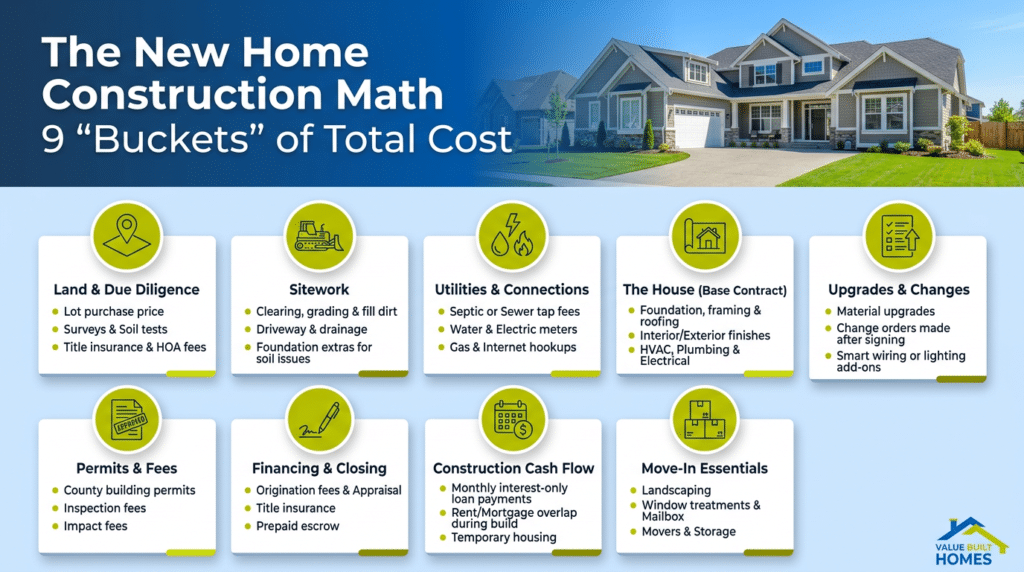
This guide walks you through every cost category involved in building a new home — the full picture that most builder quotes leave out. We’ll break down the nine “cost buckets” that make up your total project cost, show you what to watch for in each one, and explain how certain builders structure their pricing to eliminate many of these unknowns before you ever sign a contract.
Whether you’re comparing builder quotes or planning your first new home construction project in Southwestern Indiana, you’ll know exactly where every dollar goes.
Before You Start: The Two Numbers That Matter Most
Total Project Cost (TPC)
Your total project cost is the all-in number: every dollar from lot purchase to move-in day. It includes land, site prep, the house, utility connections, permits, financing costs, and move-in essentials.
Most builder quotes cover only a portion of this total. A quote might include the house and foundation but leave out the driveway, septic, or utility hookups. Other builders take a different approach. Value Built Homes, for example, includes home, foundation, driveway, sewer connections, water, and electric in their standard package — and every item is priced upfront with no allowances and no estimates. The more a builder bundles into a guaranteed price, the closer their quote gets to your real TPC.
Cash Needed and When
Your second critical number is cash flow: how much money you’ll need out of pocket, and when. This includes your down payment, closing costs, interest payments during construction, insurance, and any costs that can’t be rolled into your loan. If you’re still paying rent or a mortgage during the build, that’s a double housing cost for several months or more.
Understanding the Full Cost: Nine Budget Categories
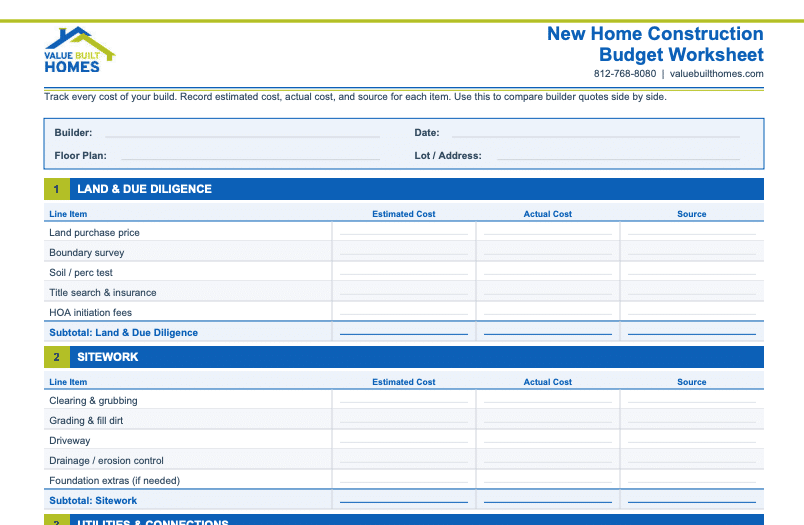
To get a clear picture of what your new home will actually cost, it helps to organize every expense into categories. For each line item, track three things: the estimated cost (your baseline before construction), the actual cost (filled in as the build progresses), and the source of estimate (builder quote, contractor bid, or your own research). This structure lets you spot overruns early and compare builder proposals honestly.
If you’re working with a builder who uses allowances and estimates, this tracking is essential. If you’re working with a guaranteed-price builder like Value Built Homes, many of these categories are already locked in — but understanding them still helps you evaluate the true value of what’s included.
A Note on Allowances
An allowance is a placeholder amount a builder sets for a category — like flooring or lighting — without finalizing the product. They’re common across the industry, and they’re the most frequent source of budget surprises. Watch for allowances that seem unrealistically low, line items listed as “allowance” with no dollar amount, and quotes that don’t clearly separate allowances from fixed costs.
Not all builders use allowances. Builders who use standardized, value-engineered floor plans can pre-select every material and finish before quoting you a price, which eliminates the allowance model entirely. At Value Built Homes, there are no allowances — every item is chosen and priced before construction begins. The price on your cost sheet is the price you pay.
Download the free worksheet: We’ve created a printable budget guide that organizes all nine cost categories covered in this article into a simple two-page PDF. Download the New Home Construction Budget Worksheet to track your estimates, compare builder quotes side by side, and see which costs a guaranteed-price builder has already handled for you.
Cost Bucket #1: Land and Due Diligence
Your land costs include the lot purchase price, a boundary survey ($300–$800), soil and perc tests if septic is needed ($500–$1,500), title search and insurance ($500–$1,500), and any HOA initiation fees or covenants review in a subdivision.
If you already own land, its appraised value may count toward your down payment. If you’re still looking, Value Built Homes has lots available across Southwestern Indiana in communities like Evansville, Boonville, Princeton, Poseyville, and Vincennes. For a deeper look at what to evaluate before buying, see our guide to selecting a lot for new construction.
Cost Bucket #2: Sitework
Sitework covers everything that happens to your lot before the house goes up — and it’s the cost bucket that catches the most buyers off guard. Key line items include clearing and grubbing, grading and fill dirt, driveway installation, drainage and erosion control, and any foundation extras triggered by poor soil conditions.
With most builders, you’ll need to get separate bids for much of this work. With Value Built Homes, sitework essentials like driveways are included in your home package. A build-ready subdivision lot with grading and utilities already done will have much lower sitework costs than raw land — which is one reason building in a planned community like Willow Crossing in Evansville or Poulton Place in Boonville simplifies your budget.
Cost Bucket #3: Utilities and Connections
Every home needs water, sewer or septic, electricity and/or gas, and internet. For buyers working with most builders, these are separate line items to budget for: municipal tap fees or a private well ($5,000–$15,000), septic installation if needed ($5,000–$10,000 in the tri-state area), electric service and meter, gas line, internet hookup, and utility-related permits.
At Value Built Homes, water, electric, and sewer connections are included in every new home package. That’s one entire cost bucket you don’t have to chase separate bids for.
Cost Bucket #4: The House (Base Contract)
This is the single largest line item — and what’s included in that base price varies enormously between builders. When reviewing any builder’s contract, check whether the following are covered:
- Foundation/basement and garage
- Framing, roofing, siding, windows, and doors
- Interior finishes (drywall, paint, trim, flooring, cabinetry, countertops)
- Plumbing, electrical, and HVAC systems
- Insulation and appliances
- Driveway, sidewalks, porches, and patios
- Septic/sewer and water/electric service
Any item not included is a cost you’ll add to another bucket. Value Built Homes’ packages include all of the above with named-brand materials — GAF roofing, Sun Windows, and Dreamweaver carpets — across floor plans from 870 to 2,514 square feet. And because every material and finish is pre-selected, there are no allowances to manage and no estimates to wonder about. The price on Value Built Homes’ cost sheet is the final number.
Cost Bucket #5: Upgrades and Change Orders
With many builders, the base contract is a starting point and most builds involve upgrades: countertop upgrades (granite or quartz vs. laminate), flooring changes (hardwood or LVP vs. carpet), additional electrical outlets or smart wiring, upgraded lighting, and expanded patios or decks.
Change orders — modifications after the contract is signed — almost always cost more than if the change had been made upfront. This is one of the major advantages of building with a company that uses standardized plans: materials, finishes, and layouts are already selected and priced before construction begins. There are no placeholder allowances that balloon later, and fewer decisions to second-guess mid-build.
Cost Bucket #6: Permits, Inspections, and Fees
Building permits in most Indiana counties range from $500 to $2,000 depending on project size. You’ll also face inspection fees during construction (foundation, framing, electrical, plumbing, HVAC), a certificate of occupancy fee, and potentially municipal impact or development fees. Your builder should know the local requirements and be able to give you an accurate estimate.
Cost Bucket #7: Financing and Closing Costs
Construction loans carry their own fees. Budget for a loan origination fee (0.5–1% of the loan amount), appraisal ($400–$600), title insurance ($500–$1,500), recording fees, and prepaid escrow items like homeowner’s insurance and property taxes. According to the Consumer Financial Protection Bureau, total closing costs on a mortgage typically range from 2–5% of the loan amount.
One significant way to cut this bucket: Value Built Homes offers free construction financing, meaning the interest on your construction loan is covered during the build phase. Over a typical 4–6 month build, that can save you thousands in out-of-pocket interest.
Cost Bucket #8: During-Construction Cash Flow
This bucket covers the money you spend while the house is being built. Standard construction loans require monthly interest-only payments that increase with each draw. If you’re paying rent or a mortgage on your current home, you’re carrying double housing costs for the duration of the build. You may also need temporary storage or short-term housing if your lease ends before the home is done.
The faster the build, the less you pay in overlap. Value Built Homes’ typical build time of approximately 4–6 months — combined with their free construction financing — keeps this bucket smaller than most.
Cost Bucket #9: Move-In and “Make It Livable” Costs
Your home is built and closed on, but you’re not done spending. Plan for landscaping ($2,000–$5,000 for basic seed/sod and shrubs), window treatments ($1,000–$3,000), a mailbox, moving costs ($500–$2,000 locally), and any appliances or essentials not included in the builder’s package.
As one Value Built Homes homeowner shared: “Value Built Homes was able to take care of everything. They took care of all the headache items like septic, foundation and water.” When your builder handles more of the heavy lifting, your move-in list gets shorter.
How Value Built Homes Eliminates Budget Uncertainty
If you’ve made it through all nine cost buckets, you might be feeling the weight of just how many line items go into building a new home. That’s the reality for most buyers working with most builders — and it’s exactly why the builder you choose matters so much.
Value Built Homes takes a fundamentally different approach. Instead of handing you a base price full of allowances and estimates, you get a cost sheet that tells you exactly what you’ll pay. Every material is pre-selected. Every finish is chosen. There are no placeholders, no open-ended budgets, and no surprises when the invoices come in.
Here’s what that looks like in practice:
- Sitework and utilities: Included in your Value Built Homes package. No separate bids to chase down for sewer, water, or electric hookups.
- Construction loan interest: Eliminated. Through Value Built Homes’ approach to construction-to-permanent financing, interest during the build is covered — removing one of the biggest during-construction cash flow expenses.
- Zero allowances: Value Built Homes doesn’t use allowances at all. Every item — from roofing to carpets to appliances — is pre-selected with named brands before construction begins. The price on your cost sheet is the price you pay.
- Guaranteed pricing: Value Built Homes doesn’t give you a budget or an estimate. You get a cost sheet that breaks down exactly what you’ll pay. The only rare exception is if an unknown site condition is discovered on a customer-owned lot — like a previously unknown spring, well, or poor soil.
- Faster build timeline: A typical Value Built Homes build takes approximately 4–6 months, which reduces your double housing costs and gets you moved in sooner.
The result? A total project cost that’s predictable from day one and a building process with far less stress. If you’re tired of chasing down quotes for every line item on a budget worksheet, contact Value Built Homes to find out how much of it we’ve already handled for you. Instead of a budget full of estimates, you’ll get a cost sheet — one number, guaranteed.
Contingency: What Other Builders Require and Why Value Built Homes Doesn’t
A contingency is a budget reserve for the unexpected. When you’re building with a company that uses allowances, estimates, and open-ended pricing, industry professionals and lenders generally recommend setting aside 5–7% of construction costs for a project with a detailed, fixed-price contract, or 10–15% for projects with significant unknowns like raw land or heavy use of allowances. The Consumer Financial Protection Bureau advises all homebuilders to budget a buffer for unforeseen costs, and some lenders require a contingency reserve of around 10%.
With a guaranteed-price builder like Value Built Homes, the contingency conversation changes entirely. Because every material is pre-selected and the price is locked before construction begins, there’s no budget to overrun. A contingency reserve is neither required nor recommended. The only scenario where additional cost could arise is on a customer-owned lot where an unknown soil condition is discovered during site preparation — something like a previously unknown spring, well, or unusually poor soil. On Value Built Homes subdivision lots, even that risk is largely eliminated because site conditions are already known.
How to Compare Builder Quotes Using This Guide
Once you understand all nine cost buckets, use them to compare quotes side by side. For each builder’s proposal, assign every line item to the appropriate cost category, identify items not covered by the quote, flag any allowances, and total the full project cost — not just the contract price.
Key questions to ask every builder before signing:
- What exactly is included in your base price? Can I get an itemized breakdown?
- Which items are allowances, and what products fit within those amounts?
- What costs are NOT included that I’ll need to budget separately?
- Do you charge for change orders, and how much?
- Who pays the construction loan interest during the build?
- What warranty coverage do you provide after move-in?
A builder quoting $180,000 but leaving out driveway, septic, utilities, and appliances may cost more than a builder quoting $200,000 with all of that included. When you map every cost into these nine buckets, the true comparison becomes clear. For a complete list of what to ask before signing, see our guide to choosing a home builder.
How Your Starting Point Changes the Budget
To show how much your lot situation affects total cost, consider two simplified scenarios. These are illustrative — actual costs vary by location and builder.
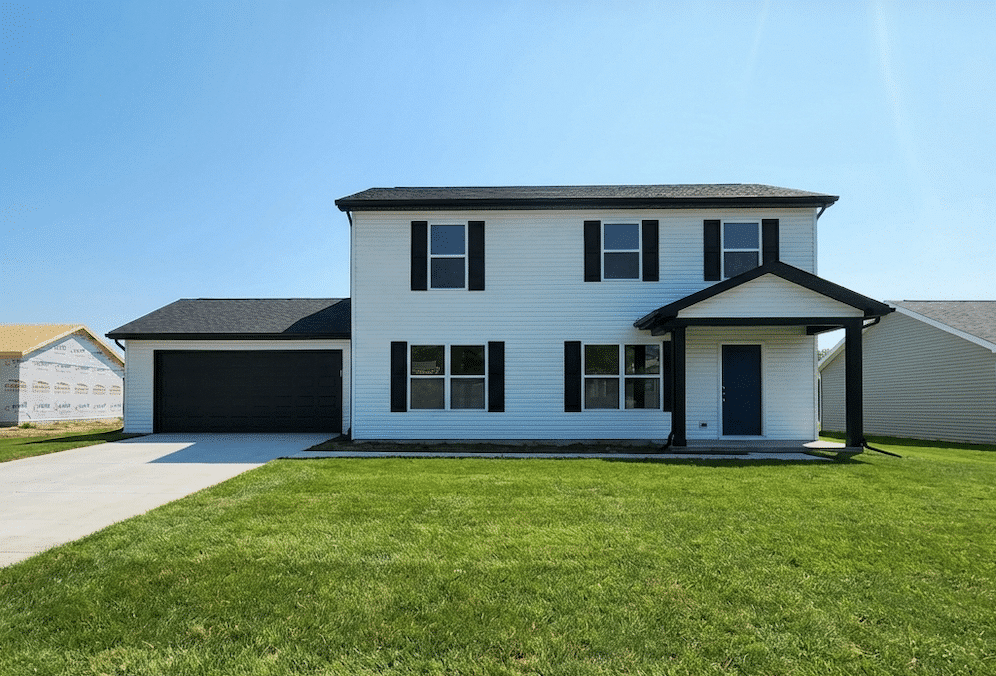
Build-ready subdivision lot: When you buy a prepped lot in a community like Farmington Ridge in Poseyville, grading and utility access are already handled. Sitework drops to $1,000–$3,000, utility costs may be included in your builder package, and with a guaranteed-price builder like Value Built Homes, you may not need a contingency at all. Combined with a Value Built Homes package, land, permits, financing, and move-in costs, a total project cost in the range of $190,000–$290,000 is realistic for many buyers.
Raw rural land: Building on unimproved acreage means paying for clearing, grading, a long driveway, a private well or septic, and potentially an electric line extension. Sitework and utilities alone can add $20,000–$50,000 beyond what a subdivision buyer pays, and if you’re working with a builder who uses allowances, your contingency should be 10–15%. The same house on raw land could cost $50,000–$100,000+ more in total project cost.
The takeaway: where you build matters as much as what you build. A build-ready lot eliminates many of the unknowns that blow budgets on raw land.
Frequently Asked Questions About New Home Construction Budgets
How much does it really cost to build a new home in Indiana?
It depends on the home’s size, your lot, and what’s in the builder’s contract. Nationally, the NAHB reports $162 per square foot, but Midwest costs are typically lower. Value Built Homes offers floor plans ranging from approximately $128,100 to $236,700 for packages that include foundation, driveways, sewer connections, utilities, and more — all at a guaranteed price with no allowances. Your total project cost will also include land, permits, financing, and move-in expenses.
What costs are usually not included in a builder’s base price?
Common exclusions include land, sitework, utility connections, permits, landscaping, window treatments, and closing costs. The extent varies widely. Some builders include only the structure; others — like Value Built Homes — bundle in foundation, driveways, sewer connections, water, electric, and more. Always ask for an itemized list before comparing quotes.
What is a good contingency amount for building a new home?
For builders who use allowances and estimates, most lenders and advisors recommend 5–15% of construction costs. With a fixed-price contract and standardized plans, 5–7% is generally sufficient. Projects with raw land, extensive site prep, or heavy allowance use should aim for 10–15%. If your builder offers a guaranteed price with no allowances — as Value Built Homes does — a contingency reserve may not be necessary at all.
Do I have to pay construction loan interest while my home is being built?
With most construction loans, yes — you’ll make interest-only payments that increase with each draw. Value Built Homes’ free construction financing program eliminates this cost by covering the interest during the build phase.
How do I compare builder quotes if they include different things?
Map every line item from each quote into standardized cost categories using the framework in this guide. Then total each builder’s true all-in cost. The lowest base price isn’t always the most affordable once you account for what’s excluded.
Take the Guesswork Out of Your New Home Budget
Building a new home doesn’t have to mean guessing at the final price. With the right framework for understanding costs and a builder who puts transparency first, you can walk into the process knowing exactly what to expect.
Ready to explore your options? Contact the Value Built Homes team to see what’s included in every package and get your cost sheet — not an estimate, not a budget, but the actual price you’ll pay. We’re here to make building affordable, simple, and stress-free.