Building your dream home in Indiana is an exciting venture—especially when working with an experienced home builder like Value Built Homes. A critical aspect of this journey is utilities planning, ensuring each step of building utilities in Indiana is handled properly to save on costs and avoid delays. From securing municipal water services and sewer connections to setting up electricity, natural gas, and communications, proper planning helps you comply with local regulations and maintain control over your budget. This guide provides a focused overview of the essentials to plan and install utilities on your lot, aligning all steps with your lot development goals and simplifying your home construction experience.
Lot Utilities 101: The Basics
Understanding the basics of utility installations is key to preparing for your home build. Essential utilities include:
- Water: In urban areas, municipal water services are common, while rural builds may require a private well. Municipal connections involve tap fees and inspections; well installations demand drilling permits and water quality tests.
- Sewer: Developed areas usually connect to city sewer systems, whereas rural lots often rely on septic systems. Septic systems require soil testing (perc tests) to evaluate drainage—learn more through this guide to percolation testing.
- Electricity: Power installation involves determining whether overhead or underground lines are required. Local electric providers supply detailed guidance on permits, meter installation, and inspection processes.
- Natural Gas/Propane: Where natural gas is available, connection entails setting up a meter and trenching. In its absence, propane tanks offer an alternative, subject to safety regulations.
- Telecommunications: Modern homes depend on reliable internet, phone, and cable services. Early coordination with service providers will ensure that necessary conduits or cable pathways are in place.
- Waste and Stormwater Management: Arrange for trash pickup and recycling per local guidelines. In some areas, stormwater management systems such as drains or retention basins are necessary to control runoff.
Ensuring these utilities are planned from the outset not only simplifies construction but also sets a solid foundation for your home’s functionality and future value.
Pre-Construction Utilities Assessment
Before breaking ground, a thorough assessment of your lot’s utility readiness is essential. Start by confirming the availability of services using resources like Indiana 811, which marks underground lines to avoid damage during excavation.
Evaluate your lot for:
- Existing Utility Infrastructure: Check county sources such as public records and review plat maps for water mains, electrical lines, or other easements. Knowing who maintains these services streamlines scheduling and permits.
- Site-Specific Challenges: Consider factors such as soil type, drainage, and topography. Poor drainage or a high water table can complicate septic or well installations.
- Zoning and Regulatory Compliance: Local counties enforce zoning codes that determine placement of wells, septic systems, and utility lines. Verify setback requirements and minimum distances to ensure your design remains compliant.
By identifying potential obstacles early, you can adjust your plans, coordinate effectively with utility providers, and avoid delays during construction.
Permits, Permissions, and Legal Requirements

Navigating the legal landscape is a foundational step in your utility installation journey. Think of this phase not as a hurdle, but as a blueprint for safety and compliance that protects your investment. State-level oversight is managed by the Indiana Utility Regulatory Commission (IURC), which sets the standards for utility providers across Indiana. The overall process involves understanding local codes, filing for the right permissions, and scheduling key inspections.
- Understanding Local Codes: Every Indiana county and municipality has specific building codes that dictate everything from the depth of a trench to the distance a septic tank must be from your home. Your builder or contractor will be your primary resource for navigating these local requirements.
- The Role of Inspections: Permits are typically followed by inspections. A certified inspector will visit your site at critical stages—like after trenching is complete but before lines are buried—to ensure the work meets all safety and quality standards. Passing these inspections is required to move on to the next phase of construction.
- The Golden Rule: Call 811 Before You Dig: Before any excavation begins, Indiana law requires you to contact Indiana 811. This free service sends professionals to your lot to locate and mark all existing underground utility lines. This simple call prevents dangerous accidents, costly damages, and significant project delays.
Securing permits and adhering to legal requirements not only speeds up the process but also provides peace of mind that your home will be safe and efficient once completed.
A Chronological Guide to Utility Installation
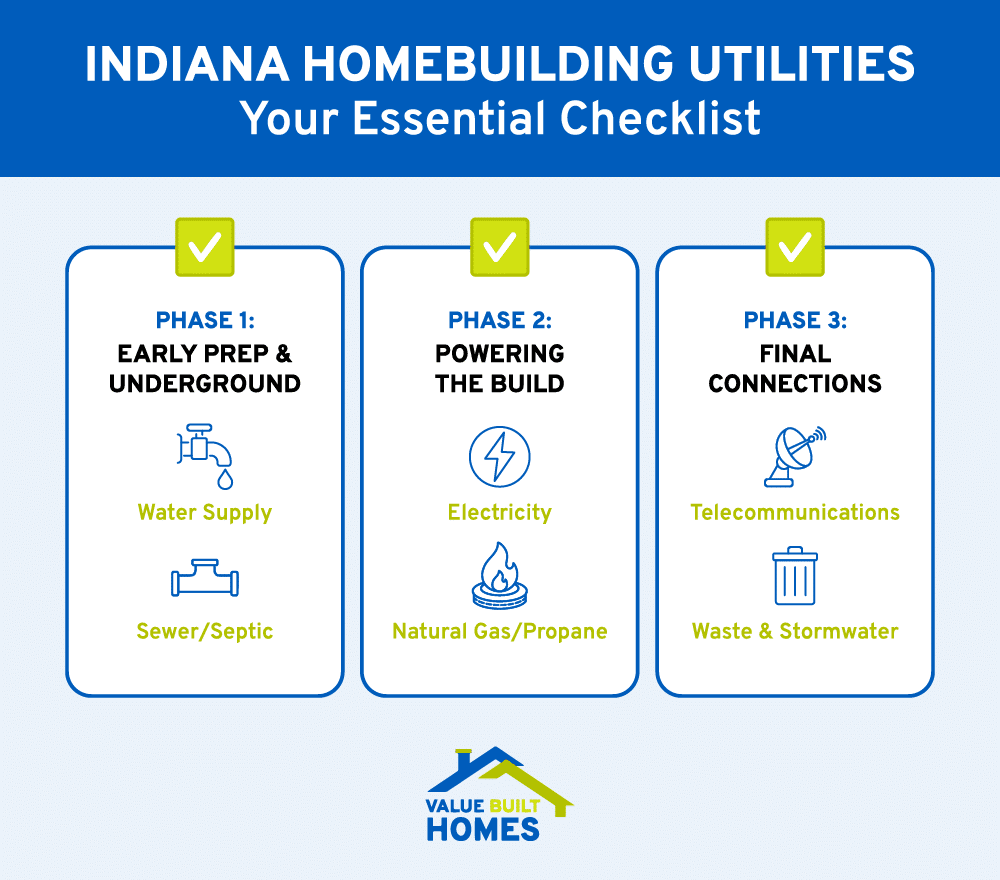
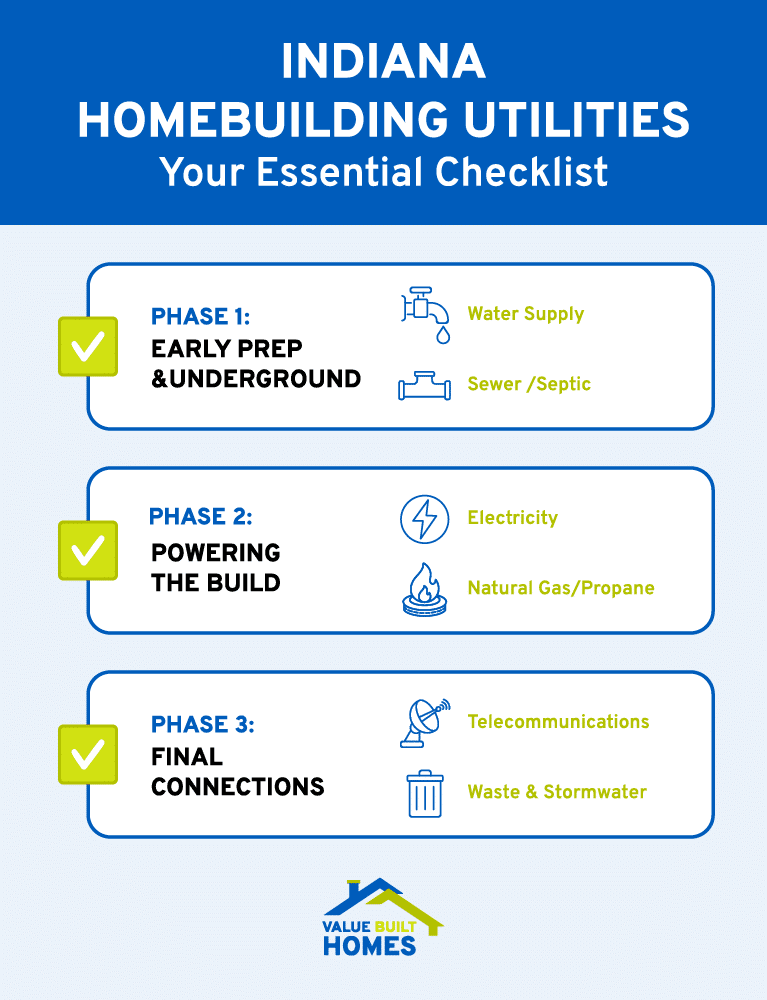
An efficient utility installation strategy is built on a logical timeline. By sequencing tasks correctly, you can prevent costly rework and keep your construction schedule on track. This guide breaks down the process into three key phases, from initial site work to final connections.
Phase 1: Early Phase (Site Prep & Underground Utilities)
This initial phase begins after your lot has been cleared and graded. The focus here is on the “heavy lifting”—the utilities that require extensive excavation and must be in place before the foundation is poured.
Pro Tip: To save significant time and money, coordinate the trenching for multiple utilities (like water, sewer, and gas lines) to happen at the same time.
1. Water Supply
For lots with access to municipal water, your first step is applying for service with the local provider. If you’re in a rural area, you’ll work with a licensed contractor to drill a private well.
- Compliance Check: For municipal service, confirm the required tap fees and meter installation costs with the city or county. For private wells, your contractor must secure a drilling permit and ensure the well location adheres to all mandatory setbacks from property lines and septic systems.
2. Sewer or Septic Systems
If municipal sewer is available, the process involves connecting a lateral line from your home to the main system. On lots without sewer access, a septic system is required and is one of the first major installations.
- Compliance Check: A septic system installation begins with a percolation (perc) test to confirm the soil can handle drainage. The system design must then be approved by the local health department, following guidelines set by the Indiana Department of Environmental Management (IDEM), before a permit is issued. This is one of the most critical regulatory steps for rural builds.
Phase 2: Mid-Construction (Powering the Build)
Once the foundation is in and framing has begun, the focus shifts to installing the systems that will power your home. This phase often includes setting up temporary power for construction crews, followed by the permanent service hookups.
3. Electricity Service
Contact your local electric provider to schedule a site evaluation. They will help determine the best way to run power to your home, whether via overhead or underground lines.
- Compliance Check: Your electrical contractor will manage the permitting process. A crucial milestone is the final inspection after the meter is installed. This inspection confirms that all connections are secure and code-compliant before permanent power is activated.
4. Natural Gas or Propane
For homes with access to natural gas, coordinate with the utility provider to install a service meter and run the gas lines from the main to the house. If natural gas isn’t available, a propane tank can be installed.
- Compliance Check: Natural gas connections require a specific permit and inspection. For propane, the installation is governed by strict fire safety codes, which dictate the tank’s size and its minimum distance from your home and property lines.
Phase 3: Late Phase (Final Connections)
As your home nears completion and the interior work is underway, it’s time to arrange the final utility services that make a house a modern, functional home.
5. Telecommunications
Modern homes require robust planning for internet, phone, and cable. The best practice is to install conduit (the protective tubing for cables) during the early phases of construction, with the final connections happening now.
- Permit Pointer: While specific permits are less common for low-voltage wiring, ensure the conduit placement is coordinated with your other utilities to prevent conflicts. Having the conduit ready allows service providers to quickly pull their cables and activate your services once construction is complete.
6. Waste and Stormwater Solutions
Finalize your arrangements for trash and recycling pickup with a local provider. Depending on your lot’s grading and location, you may also need to implement or finalize your stormwater management plan.
- Compliance Check: Some municipalities require a formal stormwater management plan to be approved, especially if your property has significant runoff. This can include installing drainage systems or retention basins to meet local environmental standards. Your builder will ensure this is completed before the final occupancy permit is granted.
Budgeting and Cost Breakdown

Effective budgeting is essential to avoid financial surprises. While costs can vary based on your specific lot conditions and county regulations, here are some typical price ranges for new utility installations in Southwest Indiana to help you plan.
Permits, Fees, and Initial Tests
- Municipal Water & Sewer Tap Fees: For homes connecting to city services, expect to pay a one-time tap fee. In cities like Evansville, this can range from $1,500 to $3,000+, often calculated based on your property’s frontage.
- Percolation (Perc) Test: This is a mandatory first step for any septic system. In Southwest Indiana, the cost for a professional perc test typically falls between $300 and $600.
Installation of Major Systems (Rural Lots)
- New Well Installation: If you need to drill a private well for your water supply, the total cost for a complete system (drilling, casing, and pump) for a standard residential well (around 150 feet deep) generally ranges from $5,000 to $9,000. This can increase if the well needs to be deeper or if drilling conditions are difficult.
- New Septic System Installation: The cost for a new, conventional septic system (suitable for a 3-4 bedroom home) in this region typically ranges from $6,500 to $12,000. More complex systems, such as mound or aerobic systems required for challenging soil conditions, can cost significantly more.
Excavation and Labor
- Trenching Costs: You will need to dig trenches to lay pipes and conduits for water, sewer, gas, and electrical lines. In Indiana, the cost for trenching is usually calculated per foot. Expect to budget between $8 and $15 per linear foot for standard trenching. The price can be higher for rocky soil or difficult terrain.
Cost-Saving Measures & Financial Planning
- Contingency Fund: It is crucial to set aside a contingency fund of at least 10-15% of your total utility budget. This will cover unforeseen expenses like hitting unexpected rock during excavation, needing an engineered septic design, or requiring longer trenching distances than initially planned.
- Bundle Your Work: One of the most effective ways to save money is to have the excavation contractor dig trenches for multiple utilities (e.g., water, electrical, and gas) at the same time. This minimizes labor and equipment rental costs.
- Get Multiple Quotes: Always get detailed quotes from at least three qualified, licensed contractors for major installations like well drilling and septic systems.
By using these figures as a baseline, you can create a more accurate and realistic budget, ensuring your utility installation process is as smooth and predictable as possible. These figures are estimates based on current data for Southwest Indiana and are intended for planning purposes only. Actual costs can vary based on site-specific conditions, the contractors hired, and local material prices.
Common Challenges and How to Avoid Them
Homeowners often encounter several pitfalls during utility installations:
- Scheduling Delays: Begin the permit process early and follow up regularly to avoid setbacks.
- Incomplete Paperwork: Double-check forms and documentation to prevent rejections and rework.
- Code Violations: Work with licensed professionals who are familiar with Indiana codes to ensure initial inspections pass.
- Future Expansion Overlooked: Incorporate additional capacity, like larger conduits for potential EV charging stations or extra cabling for future technology upgrades.
- Poor Coordination: Maintain clear communication between all parties—from your builder to utility providers—to harmonize schedules and tasks.
By proactively addressing these potential issues, you can keep your construction project on track and avoid unnecessary frustration and delays.
Frequently Asked Questions (FAQ)
How long does it typically take to install utilities in Indiana?
Timelines vary depending on lot location and complexity. Urban lots may have faster connections due to established infrastructure, while rural lots can take longer, particularly if well or septic systems are required. Starting the permit process early is key.
Do I need a licensed contractor for utility installations?
Most utility installations require licensed professionals to ensure safety and compliance with Indiana codes. While some preparatory tasks can be managed by experienced homeowners, electrical, gas, and septic connections should be performed by certified experts.
What if my lot fails the perc test for a septic system?
A failed perc test may require alternative septic solutions or engineered systems designed for challenging soil conditions. Consultation with local health departments and experienced contractors can identify the best path forward.
Seamless Utility Planning for New Home Construction
Proper utility planning is an essential part of your New Home Construction. By starting early, carefully assessing your lot, and following a structured installation process, you can minimize delays, ensure legal compliance, and maintain control over your budget.
If you’re ready to turn your lot into the home of your dreams, Value Built Homes is here to help. Contact us today to explore our affordable site built homes designed with simplified floor plans, quick construction timelines, and high quality craftsmanship. Let our experts guide you through a streamlined, stress-free homebuilding process.