Building a new home raises a question that goes beyond the price tag: will this house actually work for the way your family lives? For Indiana families weighing new construction in 2026, that answer has less to do with square footage than with design. The right home design features — built around how families in Indiana actually live — reduce daily friction, lower monthly costs, and hold their value for years.
Key Takeaways
- Kitchen layout is the highest-impact design decision in a family home. An open floor plan that connects the kitchen to the main living area supports how families actually gather and use the space together every day.
- A dedicated entry area or drop zone manages the daily coming-and-going flow of a busy household. NAHB’s 2026 housing trends research identifies organized entry and transition spaces as among the most wanted features in new construction.
- Laundry room placement on the main floor or near the bedrooms eliminates unnecessary daily trips. A laundry room ranks consistently among the most wanted features for home buyers, per NAHB’s What Home Buyers Really Want study (2024 Edition).
- Energy-efficient building practices lower monthly utility bills directly, freeing up more of the family budget for everything else. Homes built after 2020 carry a 19% value premium over homes built before 2010, per NAHB’s analysis of the 2023 American Housing Survey.
- Well-distributed storage throughout the home, not just in bedrooms, prevents clutter and reduces daily stress in ways that become more valuable the longer you live there.
- Outdoor space, including the porches and patios included in every Value Built Homes package, extends daily usable living space and contributes meaningfully to long-term resale value.
The Kitchen Is the Heart of a Family Home
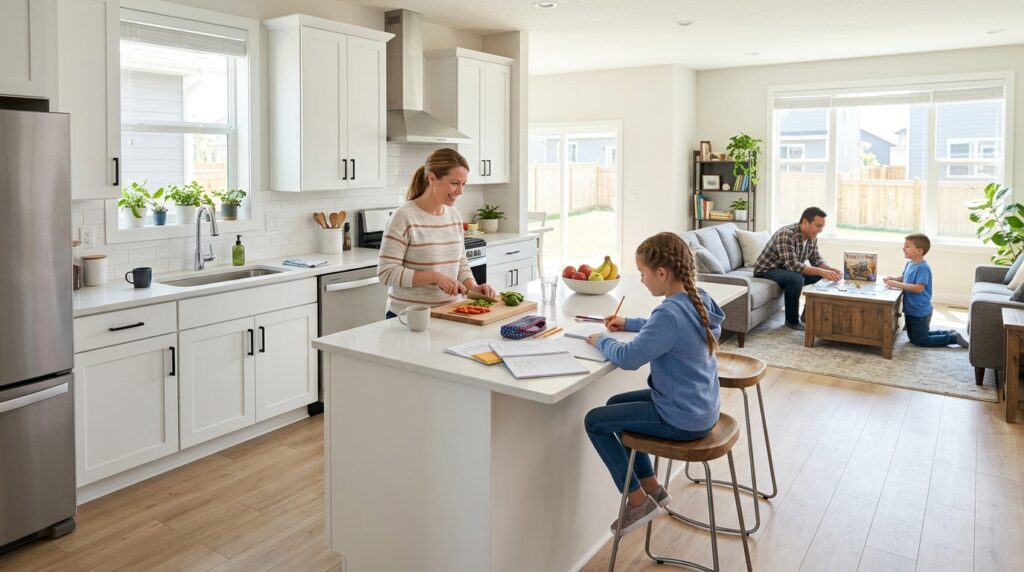
The kitchen is where a family’s daily life actually happens: meals, homework at the counter, and conversations that would never occur if everyone retreated to separate rooms. The design feature that earns the highest marks from families in 2026 is a kitchen that is open to the main living area, functional for more than one person at a time, and built to take real daily use.
An island or peninsula is one of the most practical additions to a family kitchen. A well-positioned island serves multiple functions at once:
- A secondary work surface for cooking and food prep
- A spot for kids to sit and do homework while dinner is being made
- A gathering point that keeps the cook connected to the rest of the family
Professionals surveyed in Thumbtack’s 2026 Home Trend Predictions Report cited the kitchen as the top remodel category for 2026, driven by demand for multifunctional layouts. That demand signals what families have already figured out on their own: the kitchen does more than cook food. Durable, easy-to-clean surfaces matter more in a family kitchen than anywhere else in the house, and cabinetry that holds up to daily use looks better longer and costs less to maintain.
Fifty percent of entry-level homebuyers prefer traditional architectural style, according to Houzz’s 2026 design research. Value Built Homes builds traditional site-built homes with open-concept layouts designed around practical family function. See what their completed homes look like.
Entry Spaces and Drop Zones Keep Family Life Running Smoothly
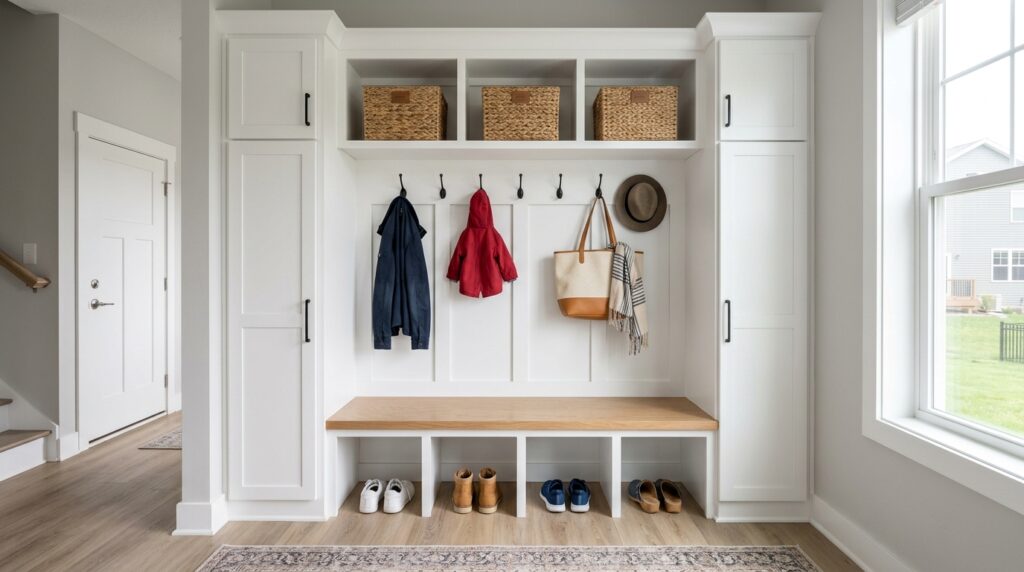
A dedicated entry area, often called a drop zone or mudroom, is one of the most practical features in a family home. It gives every person who walks through the door a defined place to land: a hook for the coat, a bench for the shoes, a cubby for the bag. When that system is built in from the start, the rest of the house stays more organized with far less effort.
Organized entry and transition spaces are among the most wanted features in new construction. The reason is straightforward: a home without a defined entry zone absorbs the chaos of coming and going directly into the main living space. A home with one contains it.
The essentials of a functional drop zone don’t require a large footprint. The basics are:
- Hooks or a coat closet for outerwear
- A bench or seat for putting on and taking off shoes
- Cubbies or shelving for backpacks, sports gear, and everyday items
- A hard-surface floor that cleans easily
For a closer look at family-oriented design considerations for Indiana homes, including safety features specific to kids, Crafting a Kid-Friendly Indiana Home covers that territory in full.
Where You Put the Laundry Room Makes a Real Difference
A laundry room ranks consistently among the most wanted features for home buyers, according to NAHB’s What Home Buyers Really Want study (2024 Edition). The reason isn’t complicated: a well-placed laundry room on the main floor or near the bedrooms eliminates one of the most repetitive daily logistics problems families face. Carrying loads up and down stairs every day is friction that adds up fast.
For families with young children, proximity to where clothes actually get worn and changed makes laundry a manageable daily task instead of a once-a-week mountain. It’s one of those features that looks ordinary on a floor plan and becomes essential within the first week of living in the home.
New construction gives you the opportunity to get laundry placement right from the start. Here’s how that compares to buying an existing home:
- Building new: laundry placement is decided before construction begins, at no additional cost and with full flexibility based on your floor plan.
- Buying existing: relocating a laundry room typically requires a renovation, adding cost and disruption after you’ve already moved in.
Energy Efficiency Is a Family Feature, Not an Upgrade
Energy-efficient construction lowers the monthly cost of living in a home. For Indiana families managing their budgets, lower utility bills mean more money available for everything else. This isn’t a premium feature reserved for custom builds. It’s what quality new construction delivers in 2026.
Home prices have risen 53% since 2019 while median household income has grown only 24%, according to NAHB’s February 2026 housing report. That gap makes monthly operating costs more relevant to family finances than they’ve been in decades. A home that costs less to heat and cool every month fits the family budget better every single year.
Value Built Homes builds with modern insulation techniques and energy-saving materials designed to perform across Indiana’s full range of seasons. Standard materials include:
- Sun Windows
- Typar House Wrap
- GAF Shingles and Roof System
One Value Built Homes homeowner put it clearly: “My Value Built Homes home is very energy efficient, low/no maintenance, and just perfect for my lifestyle.” That kind of result reflects what quality new construction delivers over time, not just at move-in. For more detail on how energy-efficient building practices translate to long-term savings, Building an Energy Efficient Home covers the specifics.
Storage That Actually Works for How Families Live
Adequate, well-distributed storage is one of the features families notice most after they’ve been living in a home for a year. A house that looked spacious on a tour can feel cramped within months if closets are undersized, linen storage is missing from the bedroom level, or the garage has nowhere to put anything. Well-designed storage in 2026 means storage located where it’s actually used, not just where it was easiest to build.
The most valuable storage features in a family home include:
- Walk-in closets in the primary bedroom and at least one secondary bedroom
- Linen closets on bedroom levels, not just in a central hallway
- A coat closet or organized storage near the main entry
- Garage space with adequate clearance for real-world storage use
- Pantry or pantry cabinet space in the kitchen
Houzz’s 2026 design trend research identifies smart, distributed storage as one of the defining features of homes built to function well for years, not just to look good on moving day.
Storage decisions are embedded in the floor plan itself. When comparing options, look at where storage falls on each level, not just total square footage. Two homes with identical footprints can feel very different depending on how well storage is distributed throughout.
Outdoor Spaces the Whole Family Can Use
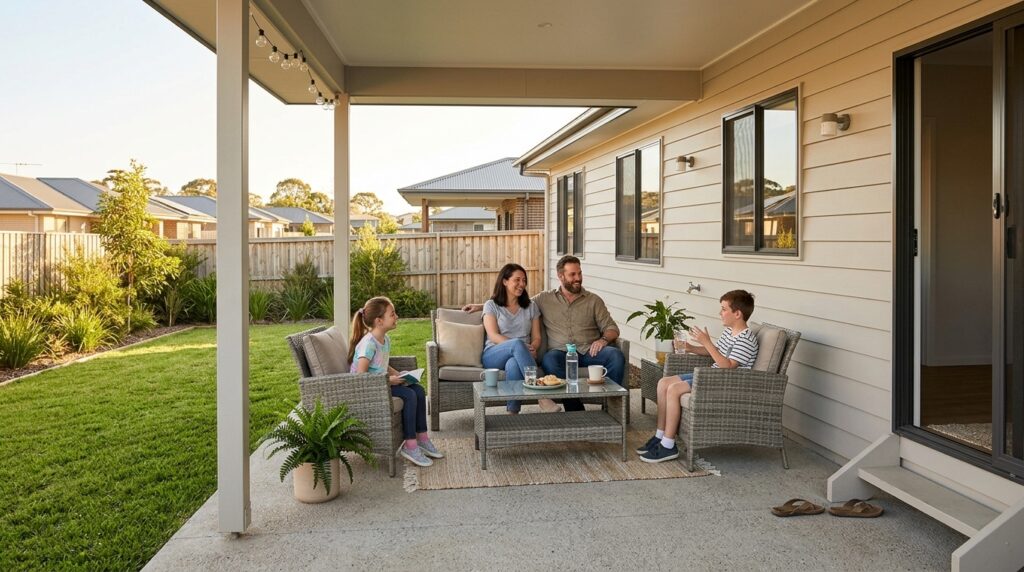
Covered outdoor space adds real daily usability to a family home. A porch or patio extends the functional footprint of the house for three or more seasons in Indiana, gives kids outdoor space regardless of weather, and creates a natural gathering spot for the whole family. Every Value Built Homes package includes porches and patios as a standard feature, not an add-on.
“People want to be out, they want to be mobile, they want to be a part of their community. It’s all part of wellness, which is a huge trend.” — Don Ruthroff, Founding Principal, Design Story Spaces, as quoted in NAHB’s 2026 housing trends report
For Indiana families, a covered front porch handles spring and early fall evenings, and a back patio becomes the default outdoor gathering space from April through October. These aren’t luxury additions. They’re the spaces families use the most, season after season.
Frequently Asked Questions About Home Design Features for Families
What home features add the most value for families?
The features that add the most value for families combine daily function with long-term resale potential. An open kitchen, a dedicated entry zone, main-floor laundry, and distributed storage consistently rank highest in buyer research and hold their value because they solve real problems every day.
What should I look for in a new construction home floor plan?
The most important things to evaluate in a floor plan are laundry placement, kitchen layout, storage on every level, and how the entry connects to the main living space. A plan that gets those four right will feel functional from the first week you’re living in it, regardless of total square footage. Value Built Homes floor plans range from 2 to 5 bedrooms across multiple layout configurations, so you can compare how different options match your family’s daily routine.
Is it worth building new versus buying an existing home for a family in Indiana?
New construction means starting with features designed for how families live in 2026: open layouts, optimized laundry placement, energy-efficient systems, and a warranty that covers you from day one. Existing homes often require renovation to add what should have been there from the start, adding cost and disruption after move-in.
What makes a home layout work for a busy family?
A family-functional layout keeps the rooms that get the most daily use connected and accessible. For most families, that means:
- The kitchen is open to the main living area
- Laundry is on the floor where it’s actually needed
- The entry has a defined zone for coming and going
- Bedrooms are grouped for manageable morning routines
It’s less about total square footage and more about how the space flows. For a broader look at features worth evaluating when comparing homes, The Homebuyer’s Guide to Must-Have Features covers the full checklist.
Ready to See Which Plans Work for Your Family?
The right home for a busy Indiana family isn’t the biggest floor plan available. It’s the one where the kitchen works for how your family gathers, the laundry room is in the right place, and there’s a spot for everything that comes through the door every day. Value Built Homes builds traditional site-built homes across Southwestern Indiana with a focus on practical, high-quality construction at an achievable price.
Have questions about building in your area? Contact the Value Built Homes team to get started.