If you’re thinking about building a home in Southern Indiana, you probably have a long list of construction loan questions. Between credit requirements, draw schedules, and appraisal timelines, it’s easy to get overwhelmed before you even break ground.
This guide answers the most common questions we hear from buyers in the tri-state area. It’s organized by building stage so you can skip straight to the questions that matter to you right now. For a deeper dive into any single topic, we’ve linked to detailed guides throughout.
Key Takeaways
Here are the most important things Southern Indiana buyers should know about construction financing:
- Most lenders require a credit score of 680 or higher and a debt-to-income ratio under 45% to qualify for a construction loan.
- Down payments typically range from 10% to 20% of total project cost, but land equity can often count toward or replace the cash requirement.
- Interest-only payments during the build phase increase gradually as your builder draws more funds, not all at once.
- Construction-to-permanent (one-time-close) loans eliminate the need for a second closing, saving you time, paperwork, and fees.
- Rural Southern Indiana builds may face extra steps for well and septic permits, utility access, and appraisals of comparable properties.
- Value Built Homes’ Free Construction Financing program covers interest payments during the build, saving buyers thousands in upfront costs.
Before You Apply: Key Construction Loan Questions
These are the questions most Southern Indiana buyers ask before they ever sit down with a lender. Getting clear on these basics helps you move forward with confidence.
What credit score do I need for a construction loan?
Most lenders look for a minimum credit score of 680 for a conventional construction loan. Some programs, including FHA construction loans, may accept lower scores with a larger down payment, but qualification requirements are generally stricter than a standard mortgage. Lenders view construction loans as higher risk because the home doesn’t exist yet as collateral.
If your score is below 680, focus on paying down revolving debt and correcting any errors on your credit report before applying. Even a small improvement can open up better rates and terms. For a full breakdown of what Indiana lenders look for, read our guide to Indiana construction loan requirements.
How much of a down payment do I need to build a home?
Down payments for construction loans typically range from 10% to 20% of the total project cost. The exact percentage depends on your lender, loan type, and financial profile. According to the Consumer Financial Protection Bureau, shopping multiple lenders is one of the most effective ways to find favorable terms.
The good news for buyers who already own their lot: your land equity can often serve as all or part of your down payment. If you purchased your land more than 12 months ago, many lenders will credit the current appraised value toward your required equity. Our detailed guide explains exactly how to use land equity for a construction loan down payment.
What’s the difference between pre-qualification and pre-approval?
Pre-qualification is an informal estimate of how much you might borrow based on self-reported financial information. Pre-approval is a formal process where the lender verifies your income, assets, credit, and debt to issue a conditional commitment for a specific loan amount.
For construction loans, pre-approval matters more than pre-qualification. Builders and sellers take pre-approved buyers more seriously, and you’ll need verified numbers to finalize your construction budget. Get pre-approved before you choose a floor plan so you know exactly what you can afford.
Can I get a construction loan with less than 20% down?
Yes. While 20% is common for conventional construction loans, some lenders and programs allow 10% down or even less. FHA construction loans may accept as little as 3.5% for qualified borrowers. If you own your land free and clear, your equity may cover the entire down payment. Explore all your options in our down payment guide for Indiana buyers.
How long does it take to get approved for a construction loan?
Construction loan approval typically takes 30 to 45 days from application to closing, though it can be faster if you have all your documentation ready. You’ll need tax returns, pay stubs, bank statements, your builder’s contract, construction plans, and a project budget. Having these organized before you apply speeds up the process significantly.
Is building a new home actually more affordable than buying an existing one in Southern Indiana?
It depends on your area and what you’re comparing. New construction gives you modern energy efficiency, current building codes, and a home warranty, which can save you money on maintenance and utility costs over time. Value Built Homes’ standardized, cost-engineered approach helps save most buyers between 20% and 30% compared to building new homes elsewhere. To see how the numbers break down, read building an affordable home in Southern Indiana.
Choosing Your Construction Loan Type
Not all construction loans work the same way. The loan structure you choose affects how many times you close, what you pay during the build, and how your permanent mortgage is set up. Your builder’s programs can also change the equation.
What is a construction-to-permanent loan?
A construction-to-permanent loan (also called a one-time-close loan) combines your construction financing and your long-term mortgage into a single loan with one closing. During the build, you make interest-only payments on the amount drawn. When construction is complete, the loan automatically converts to a permanent mortgage at the rate you locked in at closing.
This structure saves you from paying closing costs twice and eliminates the uncertainty of qualifying for a separate mortgage after the build. It’s the most common loan type for Indiana buyers building on their own lot. We walk through the full process in our guide to construction-to-permanent financing.
Should I choose a one-time-close or two-time-close loan?
Here’s a quick comparison to help you decide:
- One-time-close: One application, one closing, one set of fees. Your rate is locked from day one. Less paperwork, less risk of rate changes. Best for most Southern Indiana buyers who want simplicity.
- Two-time-close: Separate construction loan and permanent mortgage. You close twice, which means two sets of closing costs. However, you have the option to shop for a better permanent rate after the build. This may work if you expect rates to drop significantly during your build timeline.
For most buyers, a one-time-close loan is the simpler and more cost-effective option. To understand the full scope of fees you’ll encounter, review our breakdown of common closing costs for new construction homes.
Does Value Built Homes help with construction financing?
Yes. Value Built Homes offers a Free Construction Financing program that covers interest payments on your construction loan during the build phase. This is a permanent program, not a limited-time promotion. The program saves buyers thousands in upfront costs and simplifies the financing process. As one customer shared: “My Value Built Homes home is very energy efficient, low/no maintenance, and just perfect for my lifestyle. After the initial ordering of my Value Built Homes home I was able to concentrate on moving and packing.”
During the Build: Draws, Interest, and Payment Questions
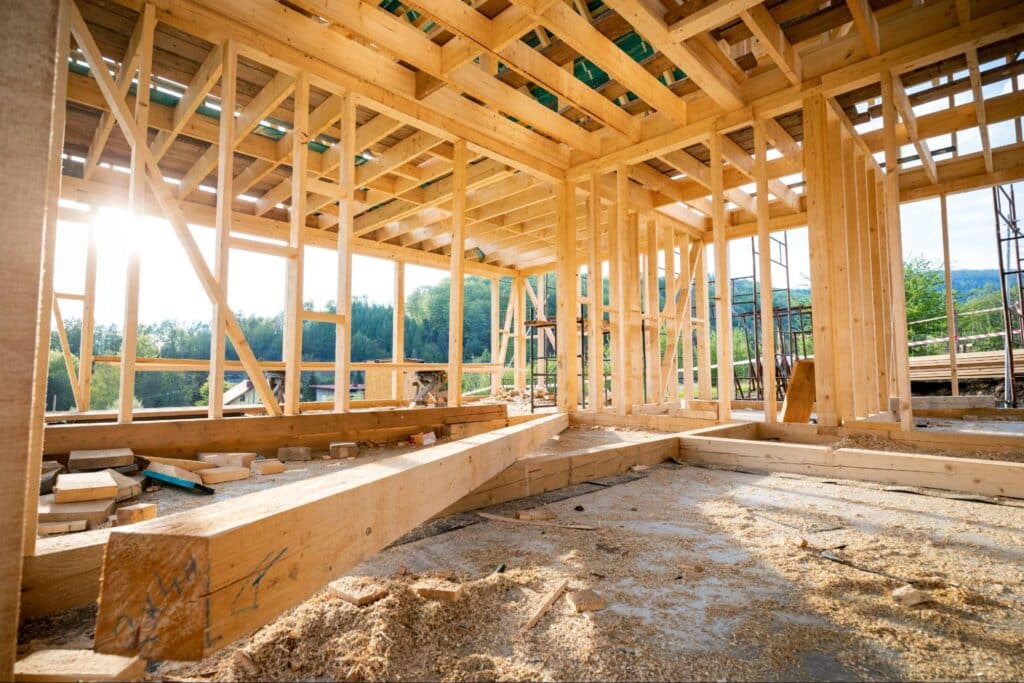
Once construction starts, your loan works differently than a traditional mortgage. Here’s what to expect as your builder moves through each phase.
How do construction loan draws work?
Unlike a traditional mortgage, you don’t receive your full loan amount at closing. Instead, funds are released in stages called “draws” as your builder completes specific milestones. Common draw stages include site preparation, foundation, framing, roofing, mechanical rough-in, drywall, and final completion.
Before each draw is released, the lender sends an inspector to verify the work has been completed. This process typically takes three to five business days. Builders who follow a standardized construction process tend to move through draw inspections faster because the work aligns with predictable milestones.
What are interest-only payments and how do they change during the build?
During construction, you only pay interest on the portion of the loan that’s been drawn, not the full loan amount. This keeps your early payments low. As your builder draws more funds at each milestone, your monthly payment gradually increases.
Here’s a simplified example of how payments might scale on a $200,000 construction loan at 7% interest:
- After first draw ($40,000): Approximately $233 per month in interest
- After third draw ($120,000): Approximately $700 per month
- Near completion ($190,000): Approximately $1,108 per month
Planning for these increasing payments is essential, especially if you’re also paying rent or an existing mortgage. Our guide to interest-only payments during home construction walks through budgeting strategies for each phase.
Value Built Homes’ Free Construction Financing program covers interest payments during the build phase, saving you thousands in upfront costs. That means you don’t make those escalating monthly payments while your home is under construction.
Can I make changes during construction without affecting my loan?
Minor changes like paint colors or fixture selections usually don’t affect your loan. Structural changes or additions that increase the project cost can trigger a change order, which may require lender approval and could affect your draw schedule or loan amount.
This is one of the advantages of building with standardized floor plans. When your design and materials are set from the beginning, you avoid the change orders and cost overruns that slow down the draw process and complicate financing.
What happens if construction takes longer than expected?
Most construction loans include a 12-month build window. If your project exceeds that timeframe, your lender may charge an extension fee or require you to requalify. Working with a builder who follows a consistent construction timeline reduces this risk. Value Built Homes typically completes builds in approximately five to seven months.
Construction Financing in Rural Southern Indiana
Building outside city limits comes with a few extra considerations. Rural properties are absolutely financeable, but knowing these details upfront helps you avoid surprises.
Does building in a rural area affect my loan approval?
It can. Rural properties in Southern Indiana sometimes present challenges that suburban builds don’t. Lenders may flag additional considerations including well and septic system requirements instead of municipal water and sewer, the cost of extending utility lines to the building site, road access and grading, and limited comparable sales data for the appraisal.
None of these are deal-breakers, but they do require planning. Make sure your builder accounts for these costs in the project budget so your loan covers everything. The USDA Rural Development program also offers loan options specifically for rural homebuyers in qualifying areas, which covers much of Southern Indiana.
Will my rural appraisal come in lower than expected?
Rural appraisals can be tricky when there are fewer comparable sales nearby. Appraisers may need to pull comparisons from a wider geographic area, which can introduce variability. In some cases, the appraised value may come in lower than the construction cost, which would affect your loan-to-value ratio.
To reduce this risk, work with a lender experienced in rural Indiana construction and a builder with a track record in the area. Value Built Homes builds across Southwestern Indiana, including active subdivisions in Princeton, Boonville, and Evansville, where comparable sales data is more established.
Closing and Converting to a Permanent Mortgage
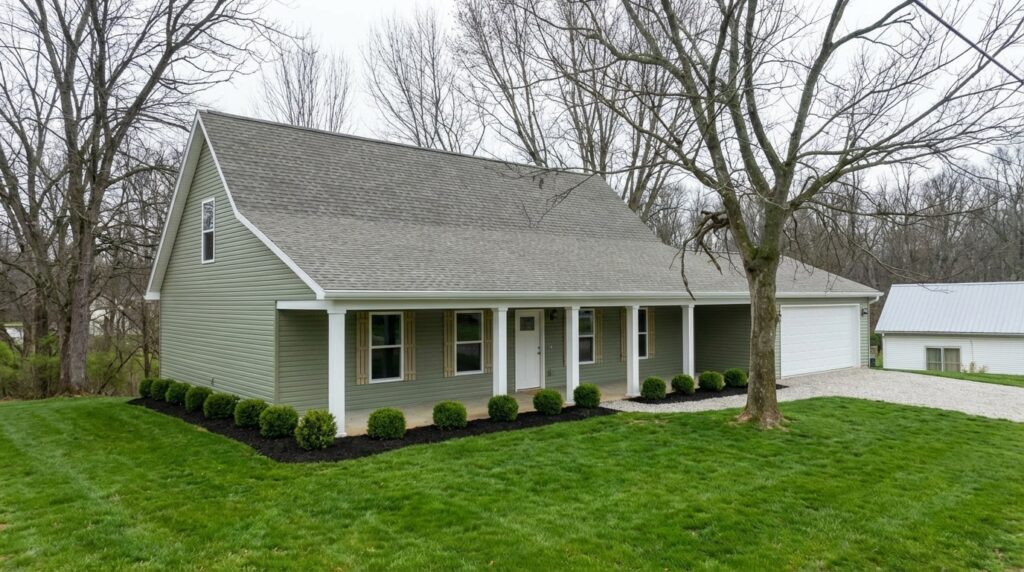
The finish line for your financing is closer than you might think. With the right loan structure, the transition from construction to permanent mortgage is straightforward.
What happens at closing for a construction loan?
With a construction-to-permanent loan, you close once before construction begins. At closing, you’ll sign the loan documents, lock in your interest rate, and pay your closing costs, which typically run 3% to 5% of the total purchase price. Your down payment (or land equity credit) is also finalized at this stage.
After closing, the lender sets up your draw schedule and the build begins. You won’t need to close again when the home is finished. The loan simply converts to your permanent mortgage at the agreed-upon terms.
When do my full mortgage payments start?
Full principal-and-interest payments begin after construction is complete and the loan converts to a permanent mortgage. If your build takes five to seven months, that’s roughly how long you’ll be in the interest-only phase before your regular mortgage payment begins.
The transition is automatic with a one-time-close loan. Your lender will notify you of your new payment amount and schedule once the final inspection is approved and your certificate of occupancy is issued.
Take the Next Step Toward Your New Home
Construction financing doesn’t have to be the hardest part of building a home. With the right builder and a clear understanding of the process, you can move from questions to keys faster than you think.
Ready to explore your options? Browse Value Built Homes’ floor plans to find the right fit for your family, or contact the Value Built Homes team to get your questions answered and start the process.