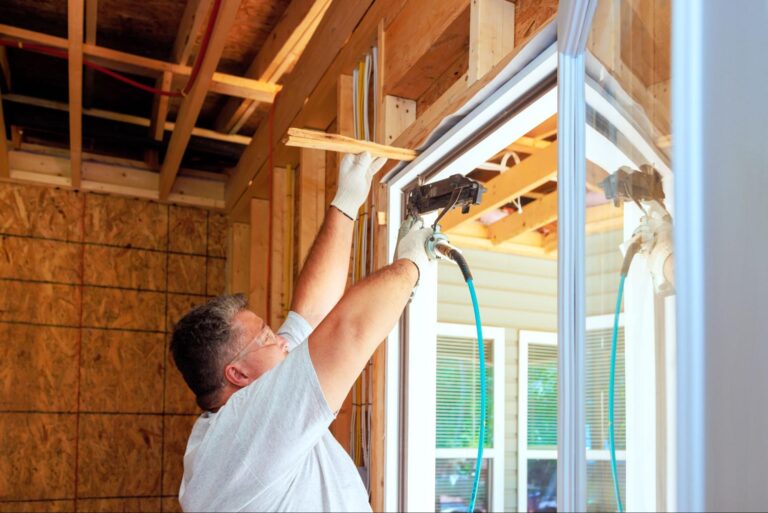
Key Takeaways
- Southwestern Indiana falls in IECC Climate Zone 4A, which requires minimum R-38 in attics, R-15 in walls, R-19 in floors, and R-10 for foundations under Indiana’s adopted 2018 IECC.
- The U.S. Department of Energy notes that air leakage losses can exceed conductive heat loss in a well-insulated home, making air sealing just as critical as R-value.
- The best insulation type depends on location: fiberglass batts work well in wall cavities, blown cellulose excels in attics, rigid foam handles basements and rim joists, and spray foam is best for irregular spaces and air-sealing-critical areas.
- Indiana’s humid shoulder seasons make vapor management and condensation control just as important as thermal resistance—especially in basements, crawlspaces, and exterior walls.
- According to ENERGY STAR, homeowners can save an average of 15% on heating and cooling costs by properly air sealing and insulating attics, floors over crawlspaces, and basement rim joists.
Choosing the best insulation for Indiana homes isn’t as simple as picking one material and using it everywhere. Southwestern Indiana sits in IECC Climate Zone 4A—a region with hot, humid summers, cold winters, and unpredictable shoulder seasons that create real condensation risks inside walls, attics, and crawlspaces. The insulation strategy that works in your attic may be the wrong choice for your basement.
This guide breaks down insulation choices by where they go in your home, what problems they solve, and what Indiana’s building codes actually require. Whether you’re planning a new home build in Southwestern Indiana or upgrading an existing house, you’ll walk away with a practical framework for making smart insulation decisions—room by room, assembly by assembly.
Insulation Basics: R-Value, Air Sealing, and the Three Control Layers
Insulation slows the transfer of heat through your home’s walls, ceilings, floors, and foundation. Its effectiveness is measured in R-value—the higher the number, the greater the resistance to heat flow. But R-value only tells part of the story. It’s measured under ideal lab conditions, and a poorly installed R-19 batt with gaps or compression can perform closer to R-11 in the real world.
According to the U.S. Department of Energy, energy losses from air leakage can actually be greater than conductive losses in a well-insulated home. That’s because a well-insulated home actually needs to manage three things at once:
- Thermal control (R-value): slowing heat transfer through the building envelope.
- Air control (air barrier): preventing warm, moisture-laden air from moving through gaps.
- Moisture control (vapor management): ensuring water vapor doesn’t condense inside wall cavities or attic spaces where it causes mold, rot, and structural damage.
In Indiana’s Climate Zone 4A, all three layers matter. Get the thermal layer right but ignore air sealing, and you’ll still have drafty rooms. Nail the air barrier but ignore vapor management, and you may end up with hidden moisture problems. When all three work together, you get a home that’s genuinely energy-efficient and durable.
Indiana Climate Reality Check: What You’re Designing Against
Indiana’s climate doesn’t let you take shortcuts with insulation. Here are the three conditions your building envelope has to handle:
- Extreme temperature swings: Southwestern Indiana regularly sees single digits in winter and upper 90s in summer—a range of 80–90°F across the year. The Evansville area averages around 4,500 heating degree days and 1,500 cooling degree days annually, meaning your insulation has to perform hard in both directions.
- Humidity and condensation risk during shoulder seasons: Spring and fall bring warm afternoons followed by cool nights, with consistently high relative humidity. When warm, humid air contacts a cool surface inside a wall cavity or attic, condensation forms. Over time, that trapped moisture leads to mold growth, wood rot, and degraded insulation performance. This is why vapor management matters in every insulation decision.
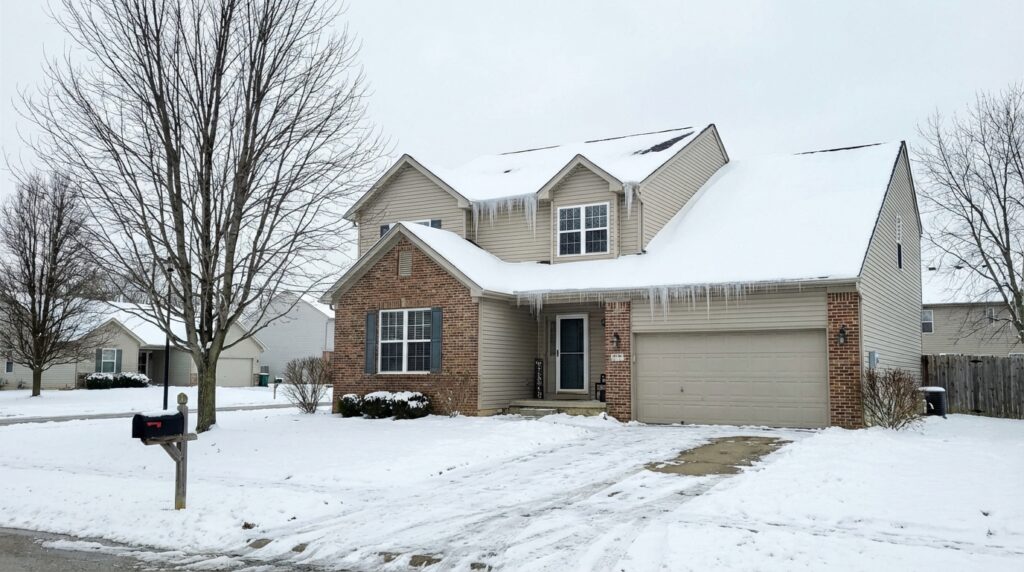
- Ice dams from attic heat loss: During prolonged cold snaps with snow cover, heat escaping through an under-insulated or poorly sealed attic melts snow on the roof. The meltwater refreezes at the eaves, causing damage. The fix is almost always an attic problem—inadequate insulation, missing air sealing, or both.
Attic and Roofline: Often the Highest-Impact Area
The attic is typically where the biggest energy gains are made. Heat rises, and in winter, your attic floor is the primary barrier between conditioned living space and cold air above. The right approach depends on your attic type:
- Vented attic (most common): Insulation goes on the attic floor, and soffit and ridge vents allow air circulation above. The attic stays unconditioned. This is the most cost-effective approach for most Indiana homes.
- Conditioned attic: Insulation goes at the roofline instead of the attic floor, bringing the attic inside the thermal envelope. This makes sense when HVAC equipment or ductwork is located in the attic. It typically requires spray foam and costs more.
Best-Practice Approach for Indiana Attics
Indiana’s adopted energy code requires a minimum of R-38 at the attic floor. ENERGY STAR and the Department of Energy recommend R-49 or higher for optimal energy performance.
- Air seal the attic floor first: Seal all penetrations—top plates, electrical boxes, plumbing vents, recessed lights, and attic hatches—before adding any insulation. This step alone can dramatically improve performance.
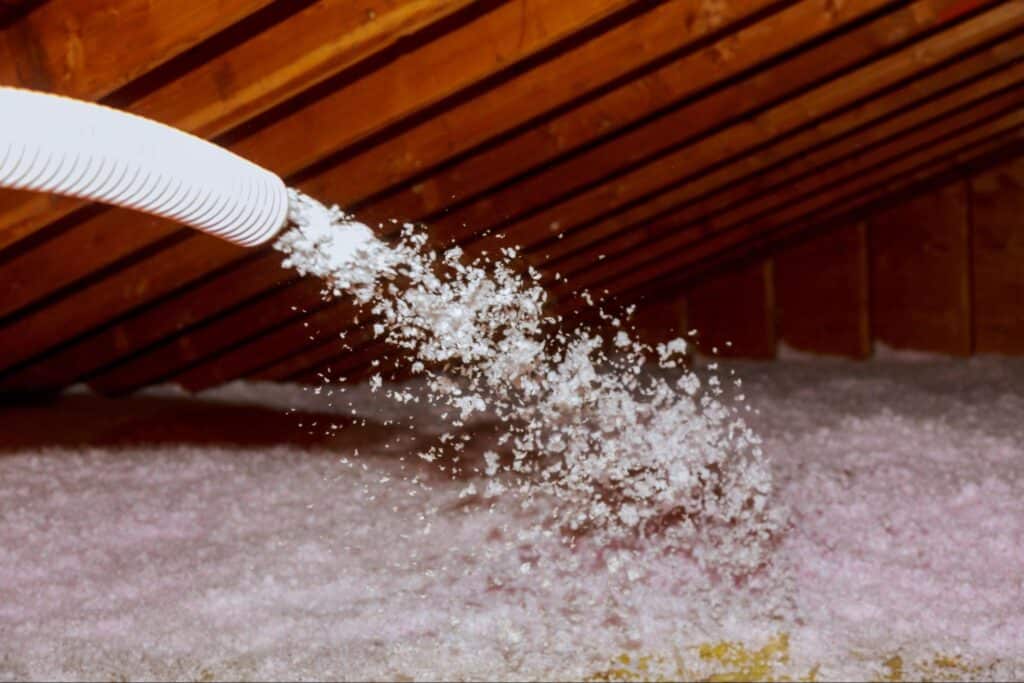
- Use blown-in cellulose or fiberglass: Blown insulation fills gaps and conforms to irregular joist spacing better than batts. You’ll need roughly 12–16 inches to hit R-49.
- Install baffles at eave vents: to maintain ventilation and prevent insulation from blocking soffit intake.
Common Attic Mistakes
- Insulating without air sealing: The most common and costly mistake—insulation without air sealing can lose 25–40% of its effective performance.
- Compressing batts: An R-30 batt stuffed into an R-19 space doesn’t deliver R-30. It delivers something closer to R-22.
- Ignoring the attic hatch: Attic hatches and pull-down stairs are often the biggest thermal holes in an otherwise well-insulated attic.
Exterior Walls: Comfort, Efficiency, and Hidden Risks
Indiana’s 2018 IECC (as amended) requires a minimum of R-15 for wood-frame walls in Climate Zone 4—a step up from the previous R-13. Here are the main options:
- Fiberglass batts (R-15 for 2×4, R-21 for 2×6): The most common and affordable choice. Grade I installation—full contact, no voids, no compression—is required under current Indiana code.
- Dense-pack cellulose: Fills cavities more completely than batts, provides better air resistance. Slightly more expensive but a strong choice for new construction.
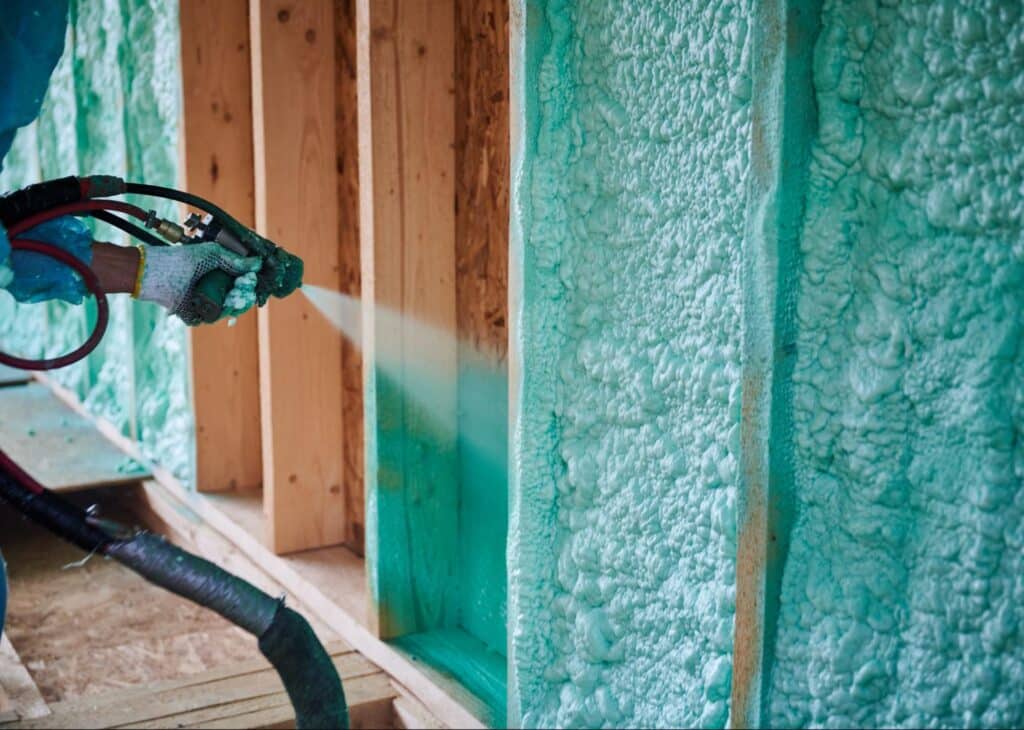
- Open-cell spray foam: Insulates and air seals in one application. Higher cost, but reduces the need for separate air sealing work.
- Cavity + continuous exterior insulation: R-13 cavity plus R-5 rigid foam exterior (R-18 total) exceeds code and significantly reduces thermal bridging. Best-performing wall assembly for Indiana if budget allows.
Thermal Bridging: Why Studs Short-Circuit R-Value
Wood studs conduct heat about four times faster than fiberglass. In a standard 2×4 wall, studs make up roughly 25% of the wall area—so even with R-15 batts, the whole-wall R-value drops to around R-11 to R-12. Continuous exterior insulation breaks this thermal bridging and raises the effective R-value of the entire assembly. Even R-5 of continuous foam makes a noticeable difference in comfort and energy performance.
Rim Joists and Band Boards: Small Area, Big Payoff
The rim joist sits on top of the foundation wall and supports the floor joists. It’s one of the most common sources of air leakage in Indiana homes—where framing meets the foundation, natural gaps let cold air pour in during winter and humid air seep in during summer. Despite being a small surface area, insulating and sealing the rim joist delivers one of the highest returns on investment of any insulation upgrade.
- Closed-cell spray foam (2” minimum): The gold standard. Insulates, air seals, and acts as a vapor retarder in one application. Two inches delivers approximately R-12 to R-13.
- Cut-and-cobble rigid foam: Cut rigid foam to fit each joist bay, seal edges with canned spray foam. A cost-effective approach with good thermal and moisture performance.
- Avoid fiberglass batts at rim joists. Batts don’t air seal, don’t control moisture, and tend to sag over time. In Indiana’s humid climate, this leads to condensation and mold.
Basements and Crawlspaces: Moisture-First Zones
Below-grade spaces are where moisture management leads—ahead of thermal resistance. Indiana’s clay-heavy soils hold water, and hydrostatic pressure can push moisture through foundation walls even without visible intrusion.
- Insulate foundation walls if the space contains HVAC equipment, ductwork, or plumbing. Indiana code requires R-10 minimum for foundation walls in Climate Zone 4. Rigid foam board or closed-cell spray foam are the best options because they resist moisture and don’t support mold.
- Insulate the floor above if the crawlspace is vented and outside the thermal envelope. Use R-19 minimum fiberglass batts secured with mechanical supports. This approach is less ideal in Indiana’s humid climate because vented crawlspaces introduce moisture problems.
Red Flags to Address Before Insulating
- Standing water or visible moisture on foundation walls—fix drainage and waterproofing first.
- Musty odors or visible mold—insulating over moisture problems traps them and makes them worse.
- Insulation sagging from floor joists—a sign of failed installation or moisture damage.
Air Sealing: The Performance Multiplier
You can install the highest R-value insulation available and still have a drafty home if you skip air sealing. For a deeper look at this topic, see our guide to air sealing in new construction. The most common leakage points in Indiana homes include:
- Top plates where interior walls meet the attic—the single largest source of attic air leakage in most homes.
- Recessed lights, electrical boxes, and plumbing penetrations through the attic floor.
- Rim joists at the basement or crawlspace level.
- Rough openings around windows and doors.
- HVAC duct connections, register boots, and return air plenums.
Indiana’s adopted 2018 IECC requires either a visual inspection of air barrier continuity or a blower door test confirming 5 ACH50 or less. If you’re building new, ask your builder specifically about their air sealing process—what they seal, when, and how they verify it.
Budgeting: Where to Spend More vs. Where to Save
Not every area deserves the same insulation budget. Here’s where upgrading beyond code minimums typically pays off fastest:
- Attic floor: Going from code-minimum R-38 to R-49 is inexpensive with blown insulation and delivers meaningful energy savings.
- Rim joists: Spray foam or rigid foam at the rim joist is one of the highest-ROI insulation investments in any Indiana home.
- Air sealing: Often the cheapest upgrade with the biggest impact. Caulk, canned foam, and gaskets cost very little relative to the savings.
- Continuous exterior wall insulation: Adding R-5 foam sheathing improves comfort and typically pays for itself in 5–10 years.
On the other hand, cutting corners in a few key areas tends to cost more later:
- Skipping rim joist insulation: Retrofitting later costs significantly more than doing it during construction.
- Fiberglass batts against basement walls: In Indiana’s humid climate, this is a recipe for mold. Pay for rigid foam or spray foam upfront.
- Under-insulating floors over garages or cantilevers: Code-minimum R-19 often produces chronically uncomfortable rooms. Spending more for R-30 with thorough air sealing during construction prevents comfort complaints for the life of the home.
A well-insulated, tightly sealed home also requires a smaller HVAC system—which saves on both equipment costs and monthly bills. The key is coordinating insulation, air sealing, and HVAC sizing early in the design process so the system is matched to the actual thermal load.
Quick Checklist: Is Your Insulation Plan on Track?
Use these five questions to gut-check your insulation plan:
- Does my attic meet or exceed R-38, with R-49 as the target? Has the attic floor been air sealed at all penetrations?
- Are exterior walls at least R-15, and are rim joists insulated with foam (not fiberglass batts)?
- Is below-grade insulation moisture-resistant (rigid foam or spray foam)—not paper-faced fiberglass?
- Has a blower door test been performed or planned to verify air leakage rates?
- Has the HVAC system been sized based on actual insulation and air sealing specs?
Frequently Asked Questions About Insulation for Indiana Homes
What R-value do I need in Indiana?
Southwestern Indiana is in IECC Climate Zone 4A. Under Indiana’s adopted 2018 IECC, code minimums are R-38 for attic ceilings, R-15 for wood-frame walls, R-19 for floors over unconditioned spaces, and R-10 for basement and crawlspace walls. The Department of Energy and ENERGY STAR recommend exceeding these minimums—particularly in the attic, where R-49 is the target for optimal energy performance.
Is spray foam always the best insulation choice?
Spray foam is excellent but not always necessary. It’s the best option for rim joists, crawlspace walls, and irregular spaces where air sealing and moisture resistance are critical. For standard wall cavities and attic floors, properly installed fiberglass or cellulose delivers comparable thermal performance at lower cost. Match the material to the assembly and priority.
Do I need a vapor barrier in my Indiana home?
In Climate Zone 4A, a Class III vapor retarder (like latex paint on drywall) is typically sufficient for above-grade walls. You generally don’t need a polyethylene sheet in walls—it can trap moisture. Below grade, foundation walls should use moisture-resistant insulation, and crawlspace floors should have a sealed 6-mil polyethylene vapor barrier. Always follow local code for your specific assembly.
Why is one room always hotter or colder?
Uneven temperatures usually point to insufficient insulation, air leakage, or a poorly balanced HVAC system. Rooms above garages, cantilevered sections, and rooms at the end of long duct runs are the most common culprits. In new construction, these issues are preventable through proper insulation specs and HVAC design from the start.
Can insulation help with noise?
Yes. Fiberglass batts and cellulose are the most commonly used materials for sound control in interior walls and mid-floor assemblies. For exterior noise reduction, the combination of insulation, air sealing, and high-performance windows makes the biggest difference.
Build Smarter, Stay Comfortable: Your Next Step
Choosing the right insulation isn’t about finding one magic material—it’s about matching the right strategy to each part of the house. When insulation, air sealing, and moisture management work together as a system, you get a home that stays comfortable year-round and keeps energy bills in check. Getting insulation right from the start is one of the smartest investments you can make.
At Value Built Homes, we build affordable, energy-efficient site-built (stick-built) homes using modern insulation practices and named-brand materials. Our standardized floor plans are designed to keep costs low and quality high—saving most buyers between 20% and 30% compared to building elsewhere. Contact Value Built Homes today to discover how a new home is built to stay comfortable and efficient from day one.